Venezuela slams US sanctions at 79th World Health Assembly in Geneva
Synopsis
At the 79th World Health Assembly in Geneva, Venezuela's Vice Minister of Hospitals accused US sanctions of crippling its health system — blocking medicines, draining doctors, and risking disease resurgence. With acting president Delcy Rodriguez simultaneously pushing back at The Hague, Caracas is waging a two-front diplomatic offensive against Washington's pressure campaign.
Key Takeaways
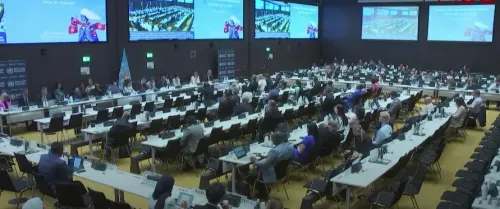
Venezuela formally condemned US unilateral coercive measures at the 79th World Health Assembly in Geneva on 21 May .
Vice Minister of Hospitals Mauricio Vega said sanctions have restricted access to medicines, medical supplies, and equipment , and reduced health personnel availability.
Venezuela warned of the potential resurgence of diseases due to structural limitations caused by the sanctions.
The delegation called for the 'total and unconditional elimination' of what it terms inhumane unilateral coercive measures.
Acting president Delcy Rodriguez separately reaffirmed Venezuela's sovereignty at The Hague , stating diplomacy remains the path forward with the US.
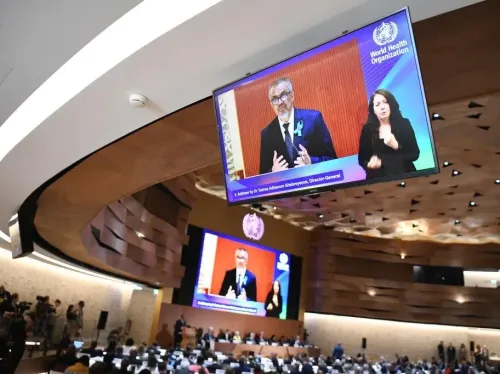
Venezuela formally condemned the impact of US unilateral coercive measures on its health system at the 79th World Health Assembly in Geneva on 21 May, asserting that the restrictions have severely hampered access to medical supplies, medicines, and equipment. The denunciation came as the country's delegation made its case before the World Health Organization (WHO) forum, drawing global attention to what Caracas describes as an ongoing humanitarian crisis driven by external pressure.
Venezuela's Position at the WHO Forum
Mauricio Vega, Venezuela's Vice Minister of Hospitals, led the country's delegation and addressed the assembly directly. He argued that the US-imposed restrictions have not only disrupted the supply chain for medical goods but have also affected the availability of health personnel, compounding an already strained system.
'Health is a fundamental human right, not a commodity,' Vega said, framing the country's public health model around principles of equity and primary care.
Brain Drain and Disease Resurgence Concerns
Vega acknowledged that Venezuela has witnessed a notable decline in health professionals due to mass migration in recent years. In response, the government says it has strengthened training programmes to produce a new generation of medical workers.
He also warned of the potential resurgence of diseases that had previously been brought under control, citing structural limitations caused by the sanctions as a key risk factor. This comes amid broader concerns from international health bodies about Venezuela's capacity to manage communicable disease outbreaks.
Demand for Unconditional Removal of Sanctions
Venezuela's delegation called for the 'total and unconditional elimination' of what it describes as inhumane unilateral coercive measures. The Venezuelan Health Ministry confirmed that the delegation's primary mandate was to reaffirm Caracas's stance on the negative humanitarian consequences of these restrictions.
Notably, this is not the first time Venezuela has raised the issue at a multilateral forum — the country has consistently used international platforms to build diplomatic pressure against the sanctions regime.
Sovereignty and Diplomacy: Rodriguez's Remarks
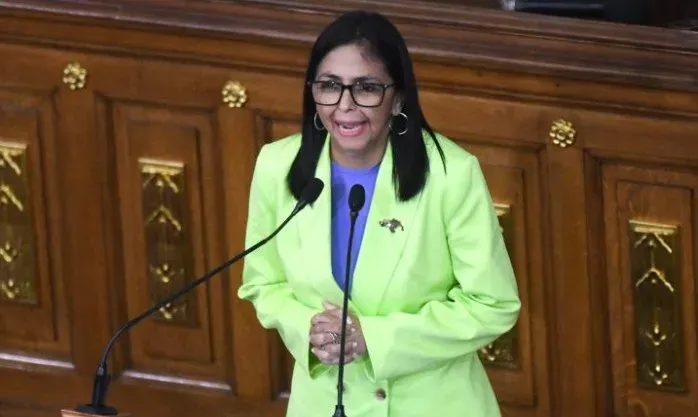
The WHO address came shortly after Venezuela's acting president Delcy Rodriguez rejected suggestions at a press conference in The Hague — where she was attending proceedings at the International Court of Justice — that Venezuela could become another US state.
'That is not planned. It would never be planned, because if there is one thing we Venezuelans have, it is love for our process of independence,' Rodriguez said. She also noted that US President Donald Trump 'knows we have been working on a diplomatic agenda of cooperation,' adding that diplomacy remains the path forward.
What Comes Next
Venezuela's appeal at the 79th World Health Assembly is unlikely to result in immediate policy shifts, but it signals Caracas's continued strategy of internationalising its grievances. Whether the WHO forum generates broader member-state support for reviewing the humanitarian impact of unilateral sanctions will be closely watched in the weeks ahead.
Point of View
But the underlying health data lends it weight that cannot be dismissed. The sanctions regime has been linked by independent observers to shortages of insulin, cancer drugs, and dialysis supplies — a reality that complicates Washington's framing of the measures as purely political. What is missing from Caracas's account, however, is any self-audit: governance failures and corruption in the state health system predate the sanctions and have independently degraded service delivery. The dual-front strategy — WHO podium plus The Hague proceedings — suggests Venezuela is betting on multilateral fatigue with unilateral coercion, a bet that may find more takers in the current global climate than it did five years ago.
NationPress
23 Sept 2026
Frequently Asked Questions
What did Venezuela say at the 79th World Health Assembly?
Venezuela's delegation, led by Vice Minister of Hospitals Mauricio Vega, condemned US unilateral coercive measures for restricting access to medicines, medical supplies, and equipment. The delegation also warned of a potential resurgence of diseases and called for the total elimination of the sanctions.
Who represented Venezuela at the WHO forum in Geneva?
Mauricio Vega, Venezuela's Vice Minister of Hospitals, headed the country's delegation to the 79th World Health Assembly in Geneva. He delivered the address condemning US sanctions and defending Venezuela's public health model.
How have US sanctions affected Venezuela's health sector?
According to Venezuela's government, US sanctions have hampered access to medical supplies, medicines, and equipment, reduced the availability of health personnel due to migration, and created structural limitations that risk the resurgence of previously controlled diseases.
What is Venezuela's diplomatic position on US sanctions?
Venezuela has called for the 'total and unconditional elimination' of US unilateral coercive measures, describing them as inhumane. Acting president Delcy Rodriguez has also reaffirmed Venezuela's sovereignty and said diplomacy remains the preferred path forward with Washington.
What did acting president Delcy Rodriguez say about Venezuela's sovereignty?
Rodriguez, speaking at a press conference in The Hague while attending International Court of Justice proceedings, rejected the idea of Venezuela becoming a US state. She said Venezuela's independence is non-negotiable and noted that diplomatic cooperation with the US remains ongoing.