Fed Chair Warsh declares 'global investment surge' at G20 Asheville meet
Synopsis
Federal Reserve Chairman Kevin Warsh used the G20 finance meeting in Asheville to retire two pillars of post-crisis economic orthodoxy — secular stagnation and the global savings glut — replacing them with a single phrase: 'global investment surge.' If he is right and the shift is structural rather than cyclical, the policy playbook that governed the world economy for a decade may need a complete rewrite.
Key Takeaways
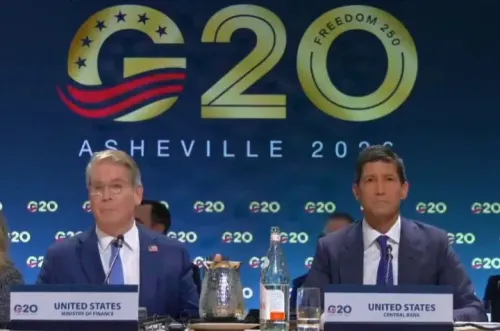
Fed Chair Kevin Warsh addressed G20 finance ministers and central bank governors on 31 August in Asheville, North Carolina .
Warsh declared the current moment one of a 'global investment surge' , replacing the era of secular stagnation.
He argued that both secular stagnation and the global savings glut theories are no longer relevant to present economic conditions.
G20 discussions will assess whether improved growth prospects are cyclical or structural .
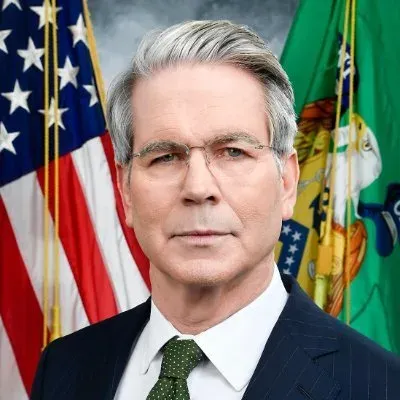
Treasury Secretary Scott Bessent placed economic growth at the centre of the US G20 agenda, calling for smart rules that do not stifle initiative.
The G20 comprises 19 countries , the European Union , and the African Union , established in 1999 .
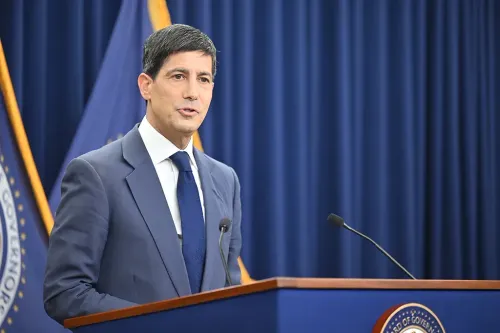
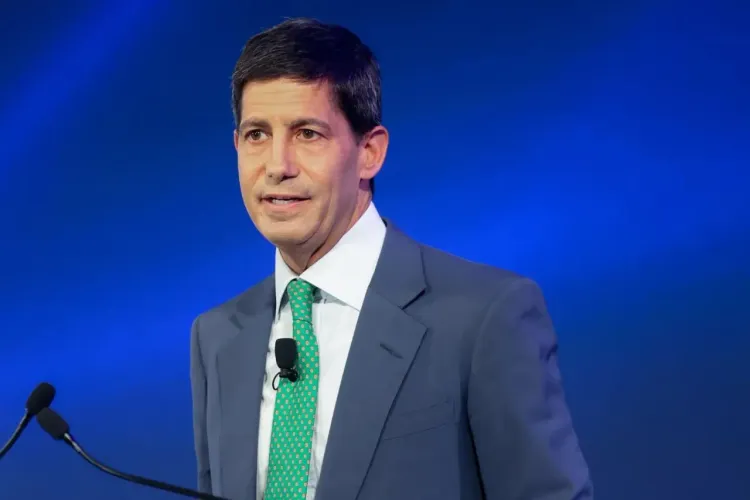
Federal Reserve Chairman Kevin Warsh told G20 finance ministers and central bank governors on 31 August that the world economy has moved decisively past the era of weak investment and prolonged stagnation, declaring the current moment one of a 'global investment surge'. His remarks came at the opening session of the G20 financial meeting in Asheville, North Carolina, marking his first appearance at the G20 finance track since assuming the Fed chairmanship.
A 'Hinge Point in History'
Warsh framed the present economic moment using language borrowed from a former mentor, describing it as 'a hinge point in history'. He argued that policymakers must draw on the institutional traditions and accumulated knowledge of their organisations while simultaneously recognising the imperative for change. The remark set the tone for what he characterised as a fundamental reassessment of the assumptions that have governed international economic policy for over a decade.
Two Theories Consigned to the Past
Warsh directly challenged two ideas that had long dominated academic and policy circles: secular stagnation and the global savings glut. Secular stagnation, he explained, described an economy trapped by persistently weak growth, limited investment, and a fatalistic belief that the most consequential innovations had already occurred. The global savings glut theory, meanwhile, held that vast pools of capital sat idle on the sidelines because productive investment opportunities were simply too scarce.
'Secular stagnation seems like a description of a past long ago,' Warsh said, echoing remarks he had delivered at Jackson Hole days earlier. 'The new period is one of secular growth.' On the savings glut, he was equally pointed: 'From our discussions even in the last day, that sure seems like a very long time ago.'
Cyclical or Structural: The Central Question
Warsh indicated that the G20 discussions over the following two days would focus on whether the improved growth prospects across member economies are cyclical — tied to shorter-term fluctuations in economic activity — or structural, reflecting more durable shifts in investment, productivity, and economic capacity. He also planned to share his assessment of conditions in the United States. The distinction matters enormously for policy: cyclical gains can reverse; structural ones compound.
Bessent and the US Growth Agenda
Treasury Secretary Scott Bessent, who opened the meeting, placed economic growth at the centre of the United States' G20 agenda. He identified abundant resources, clear rules, and strong markets as the foundational conditions for sustained expansion. Bessent said the US was convening business leaders and policymakers to identify barriers to growth and develop targeted reforms, with the initiative also intended to shape the modernisation of financial regulation and supervision. 'Smart rules preserve competence without smothering initiative,' he said.
What the G20 Finance Track Does
The G20 was established in 1999 as a forum for finance ministers and central bank governors following a series of financial crises that underscored the need for broader global economic coordination. Its mandate expanded significantly after the 2008 global financial crisis, when leaders' summits became a core component of the forum's work. The group today comprises 19 countries, the European Union, and the African Union, with the finance track specifically focused on international economic coordination, financial stability, sovereign debt, and development financing. The Asheville meeting continues the forum's tradition of convening ahead of broader G20 summits to align positions on shared economic challenges.
Point of View
He is signalling that the institution's forward guidance, risk assessments, and rate calculus may all be recalibrating. The cyclical-versus-structural question he posed to G20 peers is not academic: if growth is structural, central banks may need to rethink neutral rate assumptions that have anchored policy since 2008. What mainstream coverage underplays is the political dimension — Warsh is also, implicitly, endorsing the supply-side growth framing that the Bessent Treasury has championed, aligning Fed rhetoric with White House economic messaging in a way that bears watching.
NationPress
16 Oct 2026
Frequently Asked Questions
What did Fed Chair Kevin Warsh say at the G20 meeting in Asheville?
Warsh told G20 finance ministers and central bank governors on 31 August that the global economy has entered a period of a 'global investment surge', leaving behind the era of secular stagnation and a global savings glut. He described the moment as 'a hinge point in history' and said the economic assumptions that dominated post-crisis policy discussions no longer appear relevant.
What is secular stagnation and why did Warsh say it is over?
Secular stagnation is an economic theory describing persistently weak growth, limited investment, and a belief that the most important innovations have already occurred. Warsh said it 'seems like a description of a past long ago', arguing that the current period is instead one of 'secular growth', echoing remarks he made at Jackson Hole days before the G20 meeting.
What is the key question the G20 finance meeting in Asheville is examining?
The central question is whether the improved growth prospects across G20 member economies are cyclical — linked to shorter-term economic fluctuations — or structural, reflecting lasting changes in investment, productivity, and economic capacity. Warsh indicated this distinction would be a focus of discussions over the two-day meeting.
What did US Treasury Secretary Scott Bessent say at the Asheville G20 meeting?
Bessent, who opened the meeting, placed economic growth at the heart of the US G20 agenda, identifying abundant resources, clear rules, and strong markets as essential conditions. He said the US is bringing together business leaders and policymakers to identify barriers to expansion and modernise financial regulation, adding: 'Smart rules preserve competence without smothering initiative.'
What is the G20 finance track and why does it matter?
The G20 finance track is a forum for finance ministers and central bank governors from 19 countries, the European Union, and the African Union, focused on international economic coordination, financial stability, sovereign debt, and development financing. Established in 1999 and expanded after the 2008 financial crisis, it shapes the global policy positions that feed into broader G20 leaders' summits.