Trump tells crowd to watch Rubio on Cuba at White House event
Synopsis
At a White House Hispanic Heritage Month event, Trump twice told the crowd to 'watch what Rubio does with Cuba' — then said nothing more. The cryptic teaser from the President, directed at a Secretary of State whose entire political identity is shaped by Cuban exile politics, is the loudest signal yet that a significant Cuba policy move may be in the works.
Key Takeaways
President Trump urged the White House audience on 1 October to 'watch what Rubio does with Cuba,' without elaborating or announcing policy.
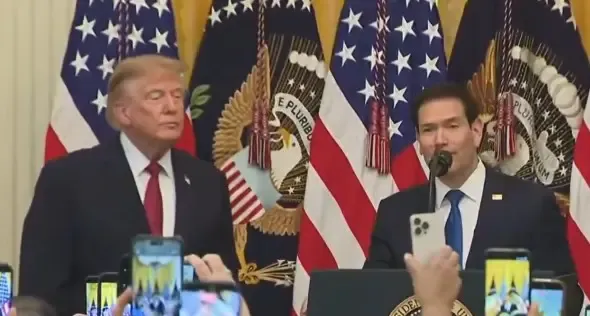
The remarks were made at a National Hispanic Heritage Month celebration at the White House .
Trump called Secretary of State Marco Rubio 'the highest-ranking Hispanic American in the history of our country.' Rubio , the son of Cuban immigrants, has long been a leading congressional and now Cabinet voice on Cuba and Venezuela policy.
No new US policy toward Cuba was announced; the comment is being watched as a possible signal of upcoming action.
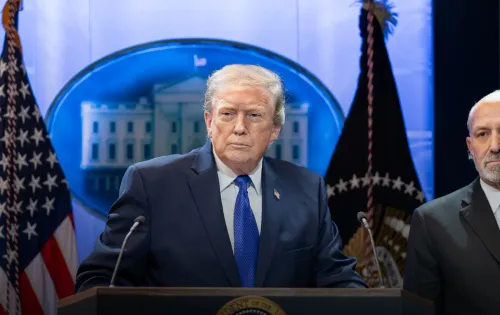
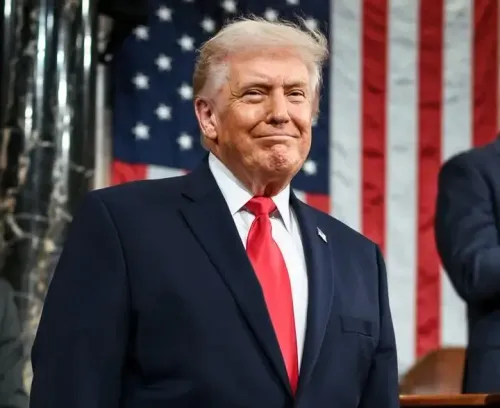
President Donald Trump cryptically urged a White House audience on 1 October 2026 to 'watch' what Secretary of State Marco Rubio does with Cuba, stopping short of announcing any new US policy towards the island. The remarks came during a National Hispanic Heritage Month celebration, where Trump singled out Rubio as the highest-ranking Hispanic American in US history.
What Trump Said
'Watch what he does with Cuba. Watch what he does with Cuba,' Trump told the gathering on Wednesday. The President offered no elaboration, issued no new directive, and made no policy announcement regarding Havana during his remarks. He then broadened his praise, calling Rubio 'a master' in handling foreign affairs worldwide — 'Hispanic American or no matter who he deals with, anybody all over the world,' Trump said.
Trump described Rubio as 'very special' and someone the country had 'fallen in love with,' while formally introducing him to the audience before inviting him to speak.
Rubio's Remarks on Hispanic Identity
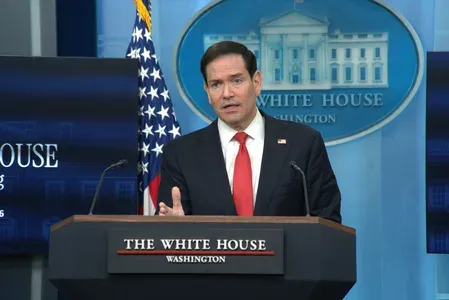
Rubio used his brief address to speak about the bond between Hispanic Americans and the United States. 'All I would say is Hispanic Americans, we are Americans. We love this country,' he told the audience, adding that many in the community understood the value of American freedoms through the firsthand experiences of immigrant parents and grandparents.
'We know how special this country is. It's the place that gave us freedom; it's the place that gave us opportunity,' Rubio said. He concluded his remarks by declaring: 'We are proud to be Americans, and I'm proud to be here and to serve under you, Mr President.'
Rubio's Background and Cuba Connection
Rubio is the son of Cuban immigrants and, before joining the Trump administration, represented Florida in the US Senate, where he was a prominent voice on Cuba, Venezuela, and broader Western Hemisphere policy. His appointment as Secretary of State was widely read as a signal of a tougher US posture towards Havana and Caracas.
Relations between Washington and Havana have shifted substantially across administrations — from the Obama-era diplomatic opening, to the Trump first-term rollback, to Biden-era partial engagement. Cuba remains a defining foreign-policy issue in Florida, home to a large Cuban-American community, with disputes over sanctions, political freedoms, migration, and diplomatic recognition at the core.
Broader Context at the Event
Trump's Cuba comment was not an isolated moment — Latin America featured throughout his speech, with the President also touching on Venezuela, immigration, and his administration's relationship with Hispanic Americans. Notably, the remark generated immediate attention precisely because it was vague: a presidential teaser on one of the most politically charged bilateral relationships in the Western Hemisphere, with no policy detail attached.
Whether the comment foreshadows a new diplomatic or sanctions move remains to be seen. All eyes will now be on Rubio's next steps regarding Cuba policy.
Point of View
To Cuban-American voters in Florida, and to the foreign-policy establishment watching Rubio's tenure. A sitting president does not tell a national audience to 'watch' his Secretary of State on a specific country without intent. The absence of detail may be tactical: ambiguity preserves maximum pressure without committing to a course. Yet the pattern bears scrutiny — Trump's first term on Cuba produced a cascade of executive orders that tightened sanctions but did not produce regime change or meaningful political opening. If Rubio is being positioned for a Cuba move, the question is whether this administration has a strategy beyond symbolic confrontation.
NationPress
1 Oct 2026
Frequently Asked Questions
What did Trump say about Rubio and Cuba at the White House event?
President Trump twice told a White House audience to 'watch what he does with Cuba,' referring to Secretary of State Marco Rubio, during a National Hispanic Heritage Month celebration on 1 October. He did not announce any specific new US policy toward Cuba.
Who is Marco Rubio and why is Cuba significant to him?
Marco Rubio is the US Secretary of State and the son of Cuban immigrants. Before joining the Trump administration, he served as a Florida senator and was one of the most prominent congressional voices on Cuba and Venezuela policy.
Did Trump announce a new Cuba policy at the event?
No. Trump did not elaborate on his remark or announce any new directive regarding Cuba during his speech at the White House. The comment was seen as a signal rather than a formal policy statement.
What did Rubio say at the Hispanic Heritage Month celebration?
Rubio spoke about Hispanic Americans' attachment to the United States, drawing on the experiences of immigrant families. He said: 'We are proud to be Americans, and I'm proud to be here and to serve under you, Mr President.'
What is the current state of US-Cuba relations?
US-Cuba relations have shifted significantly across administrations, from the Obama-era diplomatic opening to tighter sanctions under Trump's first term and partial re-engagement under Biden. Disputes over sanctions, political freedoms, migration, and diplomatic recognition remain unresolved.