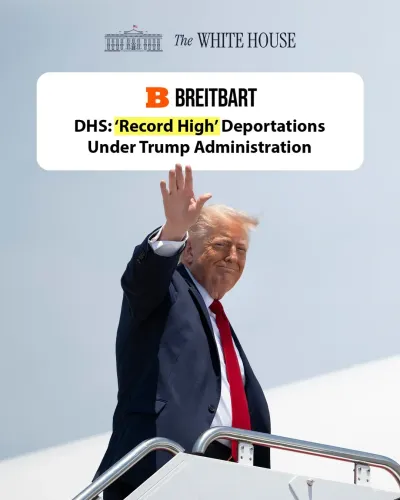
White House Backs ICE Removals of Criminal Noncitizens

Synopsis
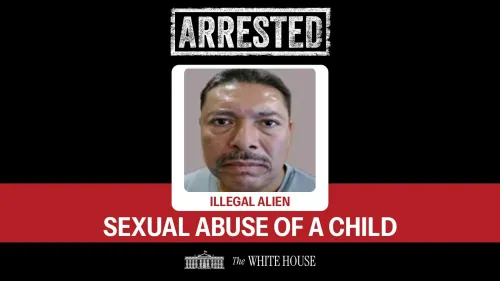
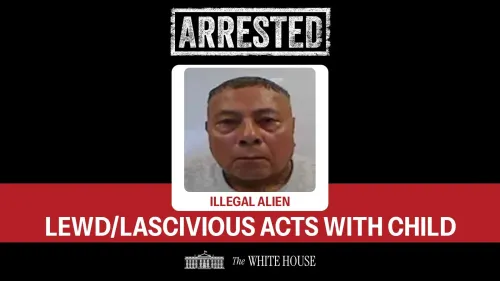
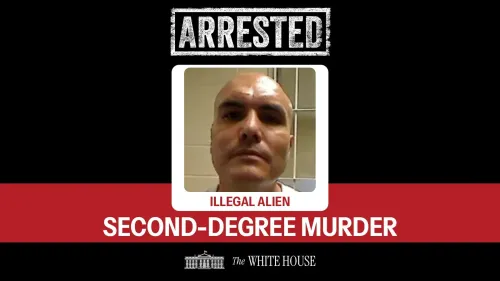
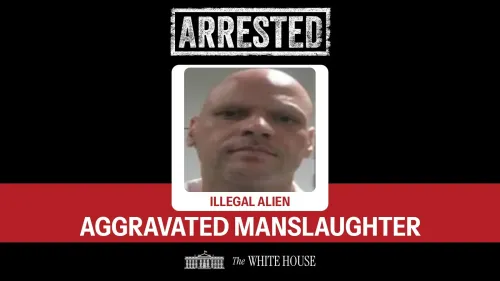
The White House posted on X on 17 July 2026 endorsing ICE removal operations targeting noncitizens with criminal records, using the phrase 'worst of the worst' — language rooted in enforcement priorities established by executive orders and the Immigration and Nationality Act.
Key Takeaways
The White House posted on X on 17 July 2026 backing ICE deportation operations with the phrase 'Removing the worst of the worst.' ICE , the federal agency under DHS , is responsible for identifying and removing noncitizens who pose public-safety threats.
The 'worst of the worst' framing aligns with enforcement priorities set by Trump administration executive orders in 2017 and the Immigration and Nationality Act .
No specific operation, statistics, or individuals were named in the White House post.
DHS quarterly enforcement reports are the key official source for removal data and criminal-alien statistics.
The White House, the official communications account of the Executive Office of the President of the United States, posted on X on 17 July 2026 in support of immigration enforcement operations, describing the targets of removal as 'the worst of the worst' — language that signals a continued focus on noncitizens with serious criminal records.
Context
The post, a reply on the White House's official X account, carries the phrase 'Removing the worst of the worst' — a formulation long associated with the administration's interior enforcement posture. The phrase refers to noncitizens identified by Immigration and Customs Enforcement (ICE) as priorities for removal on account of criminal convictions or serious public-safety threats.
ICE is the federal agency under the Department of Homeland Security (DHS) responsible for identifying, detaining, and deporting noncitizens who are in violation of United States immigration law. Its interior enforcement arm, Enforcement and Removal Operations (ERO), carries out the bulk of criminal alien removals.
Policy Backdrop
The 'worst of the worst' framing has roots in enforcement priorities that date to the Trump administration's 2017 executive orders, which directed ICE to treat noncitizens convicted of serious crimes as the highest-priority targets for removal. Those orders drew on longstanding statutory language in the Immigration and Nationality Act (INA), which ranks threats to public safety above other removal categories.
Successive administrations have used public messaging around criminal alien removals to signal a law-and-order stance on immigration. The White House amplifying such enforcement activity on social media is consistent with this broader pattern of using official channels to highlight deportation operations as a deterrent and a political signal.
Stakeholders and Impact
The primary targets of this enforcement posture are noncitizens with criminal records — including those convicted of violent offences, drug trafficking, and other serious crimes — who are subject to mandatory or discretionary removal under federal law. ICE officers conducting these operations have consistently cited public-safety justifications for prioritising such cases.
Advocacy groups and immigration attorneys have historically raised concerns about due-process standards and the breadth of who gets classified under enforcement priority categories. However, the White House post does not reference any specific operation, statistics, or individuals, making the immediate scope of this particular message unclear.
What's Next
DHS quarterly enforcement reports are the primary official channel through which removal numbers and criminal-alien statistics are made public. Any new guidance from DHS on criminal alien removal priorities would further clarify the operational scope of the enforcement push signalled by this post.
The administration's continued use of social media to amplify ICE activity suggests that interior enforcement will remain a prominent feature of its public communications in the weeks ahead. Observers will watch for accompanying policy announcements or updated enforcement directives that give this messaging concrete operational weight.
Point of View
Designed to reassure the administration's base that interior immigration enforcement remains aggressive. The phrase has a precise policy genealogy, traceable to 2017 executive orders, giving it legal and rhetorical weight beyond a casual social-media post. By amplifying this message through the official White House account, the administration is signalling that criminal alien removal is not merely an operational priority but a political identity. For observers tracking US immigration policy, the post is a data point in a consistent pattern of using public communications to normalise and celebrate deportation activity.
NationPress
17 Jul 2026
Frequently Asked Questions
What does 'worst of the worst' mean in US immigration enforcement?
'Worst of the worst' refers to noncitizens with serious criminal records — such as convictions for violent crimes or drug trafficking — whom ICE prioritises for removal under the Immigration and Nationality Act and executive enforcement directives.
What is ICE and what does it do?
Immigration and Customs Enforcement (ICE) is a federal agency under the Department of Homeland Security responsible for identifying, detaining, and deporting noncitizens who violate US immigration law, with a particular focus on those who pose public-safety threats.
Why is the White House posting about ICE deportations on X?
The White House uses its official X account to amplify enforcement actions as part of the administration's broader communications strategy, signalling a tough-on-immigration stance to its political base and the general public.
What are DHS enforcement reports and where can I find them?
DHS publishes quarterly enforcement reports that detail ICE removal statistics, including the criminal records of those deported. These are the primary official source for tracking the scale and scope of interior immigration enforcement.
How does the Trump administration's 2017 executive order relate to current ICE removals?
The 2017 executive orders directed ICE to prioritise removal of noncitizens convicted of serious crimes, establishing the enforcement framework and the 'worst of the worst' language that the current administration continues to invoke.