White House Backs 'Made in America' Trade Push
Synopsis
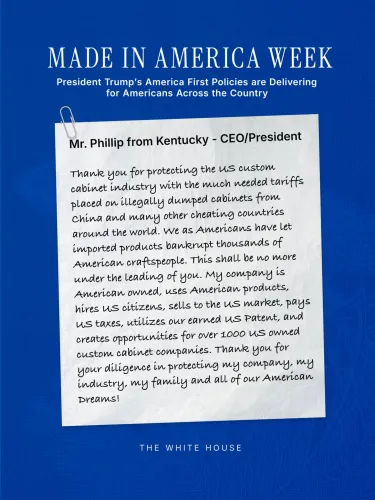
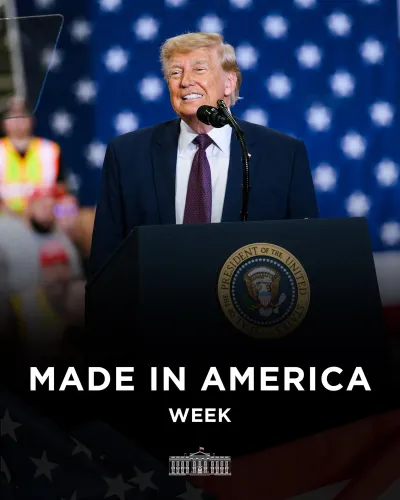
The White House on 25 July 2026 amplified a message praising the administration's 'Made in America' agenda and its commitment to American workers and fair trade, reinforcing a core pillar of US economic and trade policy.
Key Takeaways
The White House posted on 25 July 2026 backing the 'Made in America' and 'Make America Great Again' trade agenda.
The message praised the administration's 'steadfast commitment to American workers, American businesses, and the principle of fair trade.' The Buy American, Hire American executive order underpins the policy framework directing federal agencies to prioritise US goods and workers.
US trade enforcement has intensified since 2018 , targeting strategic sectors such as steel, semiconductors, and automobiles .
Both major US political parties have converged on domestic content requirements and stricter trade enforcement as structural policy positions.
Upcoming Congressional action on manufacturing tax credits and tariff rules will determine the next phase of the 'Made in America' drive.
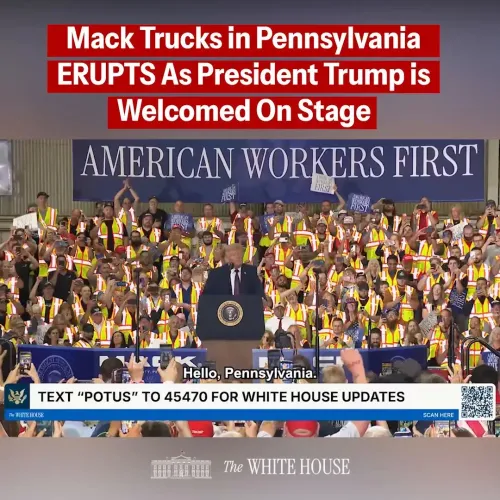
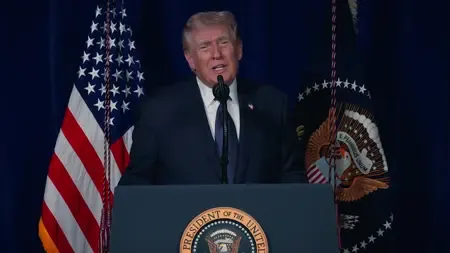
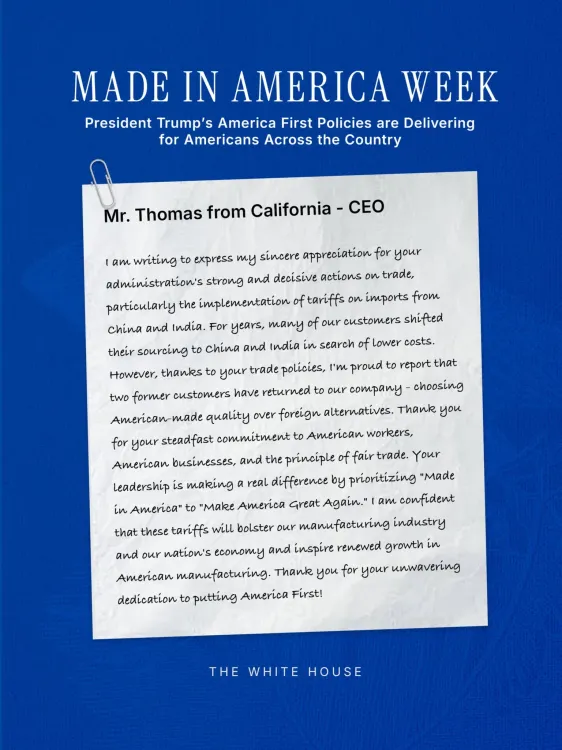
The White House, the official communications account of the Executive Office of the President of the United States, on Saturday, 25 July 2026, shared a message praising American trade leadership and the administration's commitment to domestic workers and businesses under the 'Make America Great Again' agenda.
Context
The post amplifies a message that reads: 'Thank you for your steadfast commitment to American workers, American businesses, and the principle of fair trade. Your leadership is making a real difference by prioritizing Made in America to Make America Great Again.' The statement underscores the administration's continued focus on domestic manufacturing and fair trade enforcement as central policy priorities.
The phrase 'Made in America' has been a recurring theme across US administrations, but it gained particular intensity under trade-first policy frameworks that emphasised reshoring manufacturing jobs and reducing dependence on foreign supply chains.
Policy Backdrop
The 'Made in America' initiative encompasses government procurement preferences that direct federal agencies to prioritise US-made goods and domestically sourced materials. It draws its legal backbone from executive orders — most notably the Buy American, Hire American order — which directed agencies to maximise the use of American products and prioritise American workers in federal contracts and immigration decisions.
US trade policy since 2018 has intensified focus on strategic sectors including steel, semiconductors, and automobiles, with tariffs deployed as tools to address perceived unfair trade practices. The renegotiation of major trade agreements such as the USMCA reflected a broader bipartisan push to rebalance trade terms in favour of American producers.
Both major US political parties have, in recent years, converged on the principle of domestic content requirements and stricter trade enforcement, signalling a structural shift in American economic policy away from unconstrained free trade toward managed, rules-based commerce with strong domestic-preference provisions.
Stakeholders and Impact
American manufacturing workers and US businesses — particularly in sectors such as autos, steel, and semiconductors — are the stated primary beneficiaries of this policy direction. Procurement preferences and tariff shields are designed to make domestic production more competitive against lower-cost imports.
For countries that export goods to the United States, including major trade partners in Asia and Europe, such policies translate into higher tariff barriers and greater scrutiny of supply chain origins. Indian exporters in sectors like textiles, pharmaceuticals, and engineering goods have historically monitored shifts in US trade posture closely, given the significance of the American market.
What's Next
Observers will watch for Congressional action on manufacturing tax credits and new trade enforcement legislation in upcoming budget cycles. Any revisions to existing tariff regimes or updates to federal procurement rules will signal how aggressively the administration intends to advance the 'Made in America' framework in the months ahead.
The continued public amplification of this message by the White House suggests the trade-and-manufacturing narrative will remain a central pillar of the administration's domestic political communication strategy heading into the next legislative cycle.
Point of View
Not merely a policy footnote. By tying procurement preferences and trade enforcement to the 'Make America Great Again' brand, the administration is reinforcing an economic nationalism framework that has proven durable across political cycles. For US trading partners — including India — this posture is a reminder that American market access will increasingly come with domestic-content conditions attached. The broader arc points toward a US economic policy that is structurally protectionist, with bipartisan roots that make a reversal unlikely regardless of which party holds the White House.
NationPress
25 Jul 2026
Frequently Asked Questions
What is the 'Made in America' initiative?
'Made in America' is a US government policy framework that prioritises American-made goods in federal procurement and supports domestic manufacturing through tariffs, supply chain requirements, and executive orders such as Buy American, Hire American.
What did the White House post on 25 July 2026?
The White House shared a message praising the administration's commitment to American workers, businesses, and fair trade, specifically referencing the 'Made in America' and 'Make America Great Again' agendas.
How does the US 'Made in America' policy affect India?
Indian exporters in sectors such as textiles, pharmaceuticals, and engineering goods are directly affected, as stricter US domestic-content requirements and tariff barriers can limit market access for foreign-made products.
What is the Buy American, Hire American executive order?
It is a US executive order that directs federal agencies to maximise the use of American-made products and prioritise American workers in government contracts and immigration policy, forming a legal pillar of the 'Made in America' framework.
What sectors are at the centre of US trade enforcement?
Since 2018, US trade enforcement has focused heavily on strategic sectors including steel, semiconductors, and automobiles, using tariffs and procurement rules to boost domestic production in these industries.