White House Roots for Strong May Private Sector Jobs Print
Synopsis
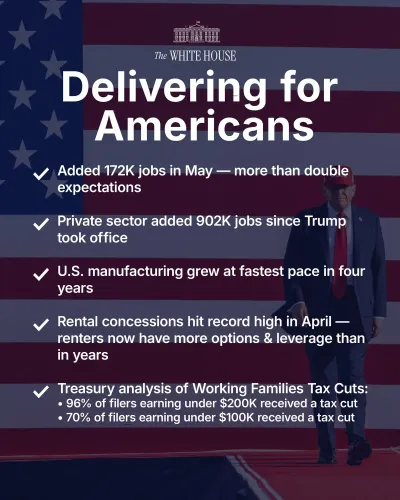
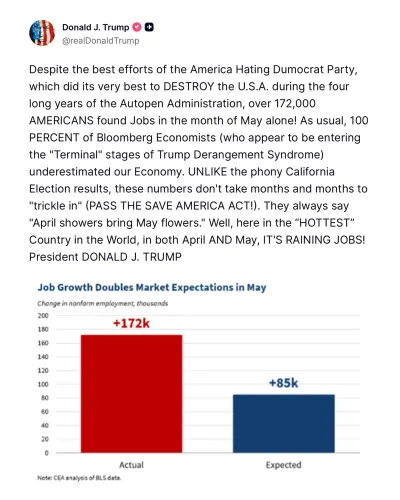
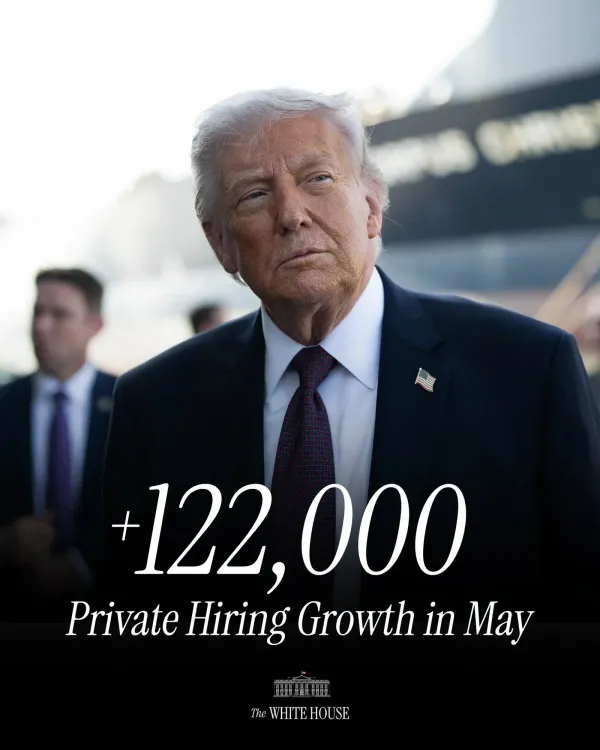
The White House on 3 June 2026 publicly previewed May private sector job growth, claiming it beat economists' expectations. The message, posted on X with a chart graphic, sets the stage for the Bureau of Labor Statistics release and could shape Federal Reserve rate expectations, dollar moves and sentiment in emerging markets including India.
Key Takeaways
The White House on 3 June 2026 said May private sector job growth beat economists' expectations.
The post precedes the official Bureau of Labor Statistics Employment Situation release.
The ADP National Employment Report typically provides the first private-sector estimate each month.
The Federal Reserve uses such data under its employment mandate to shape interest-rate decisions.
A strong United States payrolls print usually supports the dollar and can pressure the Indian rupee.
Markets will watch revisions and the next monthly release for confirmation of the trend.
The White House, the official communications arm of the Executive Office of the President of the United States, on Wednesday, 3 June 2026 publicly cheered the upcoming May private sector payroll release, signalling that the administration is bracing for — and hoping to highlight — a stronger-than-forecast jobs print.
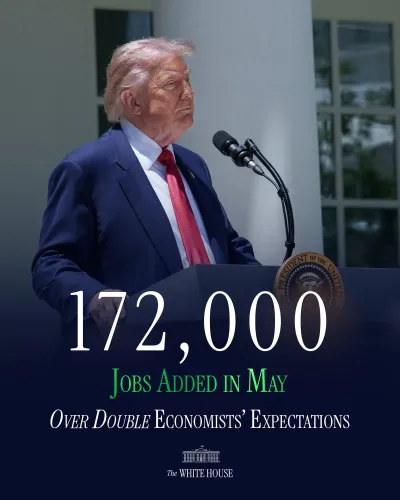
In a brief post on X accompanied by an image, the account wrote, 'May private sector job growth BEAT economists' expectations,' punctuating the message with a chart and United States flag emoji. The phrasing pre-empts the data drop and frames it as a political talking point ahead of the formal release.
Context
Private sector payroll figures land in two waves each month. The ADP National Employment Report, produced by the payroll-processing firm ADP, typically comes first and offers an early private-sector estimate that traders and policymakers parse for direction.
The official benchmark follows in the Employment Situation report from the Bureau of Labor Statistics (BLS), the federal agency that has tracked nonfarm payrolls since the early 1950s. The BLS separates private-sector hiring from government employment, a distinction the White House post leans on to spotlight business-led job creation.
Policy backdrop
Successive United States administrations have used monthly jobs prints as a real-time scorecard of economic performance. After the sharp 2020-2021 pandemic recession, the White House communications playbook increasingly amplified favourable private-payroll numbers as evidence that growth was broad-based rather than government-driven.
The Federal Reserve, the country's central bank, weighs these same data points under its dual mandate covering employment and price stability. A hotter-than-expected private payrolls reading can complicate the Fed's interest-rate calculus, while a softer one tends to revive bets on policy easing.
Stakeholders and impact
For private sector workers, the headline number is a proxy for hiring momentum, wage bargaining power and job security across industries from manufacturing to services. For financial markets, the release is one of the most closely watched data events of the month, capable of moving the dollar, Treasury yields and equity benchmarks within minutes.
For Indian investors and exporters, United States labour-market strength matters because it feeds into expectations for the dollar, Federal Reserve policy and demand for India's information technology and goods exports. A robust print typically supports the dollar and can pressure emerging-market currencies, including the rupee.
What's next
Attention now turns to the next BLS Employment Situation release and the accompanying ADP private-sector estimate, along with any revisions to prior months. Market participants will watch how the Fed's rate-setting committee characterises the data in its subsequent commentary.
If the May numbers do clear the consensus bar as the White House post anticipates, expect the administration to lean harder on the private-sector framing in coming weeks. A miss, conversely, would shift the political conversation back to questions about the durability of the United States expansion — and reverberate quickly through global markets, including India's.
Point of View
The more consequential subplot is what a hot United States labour market does to Federal Reserve rate expectations, the dollar index and capital flows into Indian equities and bonds. The release, not the tweet, will ultimately set the tone.
NationPress
20 Sept 2026
Frequently Asked Questions
What did the White House say about May private sector jobs?
The White House on 3 June 2026 posted that May private sector job growth beat economists' expectations, framing the upcoming United States payrolls data as a positive economic signal.
What is the difference between ADP and BLS jobs reports?
The ADP National Employment Report is a private estimate of private-sector payrolls released earlier in the month, while the Bureau of Labor Statistics Employment Situation is the official federal report covering both private and government jobs.
How do US jobs numbers affect the Indian rupee?
Stronger-than-expected United States jobs data typically boosts the dollar and pushes up Treasury yields, which can weaken the rupee and trigger outflows from Indian equities and bonds.
Why does the Federal Reserve watch private sector job growth?
The Federal Reserve operates under a dual mandate covering maximum employment and price stability, so private payroll trends directly inform its interest-rate decisions.
When is the next US jobs report released?
The Bureau of Labor Statistics issues the Employment Situation report monthly, with the ADP private-sector estimate typically released a couple of days earlier in the same week.