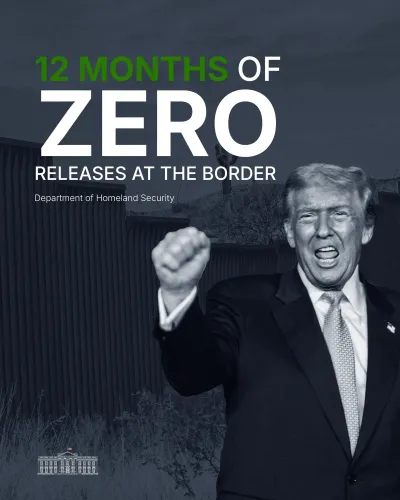
White House Claims First-Ever Fiscal Year With Zero Border Releases
Synopsis
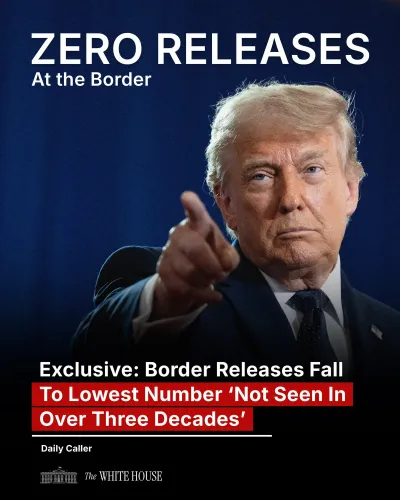
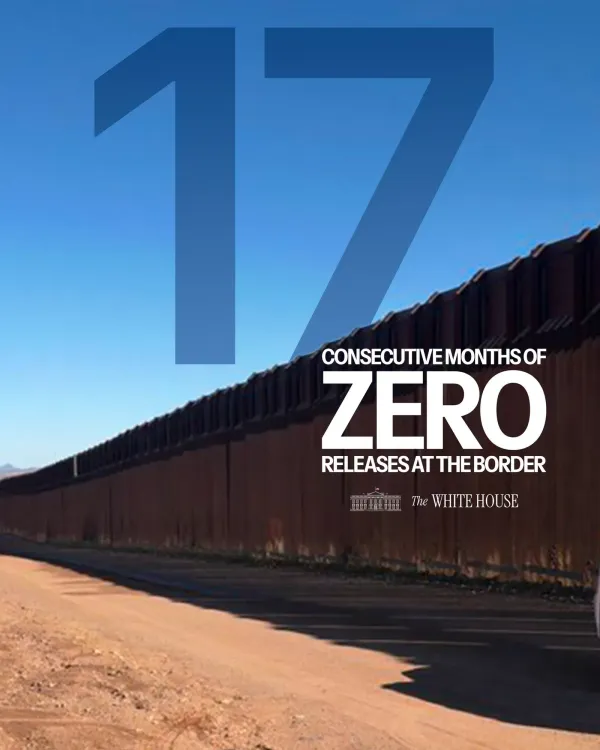
The White House declared fiscal year 2026 the first in US history with zero Border Patrol releases at the southern border, citing the milestone as proof of its immigration enforcement promise. Official CBP year-end data will serve as the independent verification.
Key Takeaways
The White House announced on 16 October 2026 that the just-completed fiscal year recorded zero Border Patrol releases at the southern border — a claimed first in US history.
A 'release' occurs when Border Patrol processes a migrant encounter but lacks space or authority to detain or immediately remove the individual, allowing entry into the US pending proceedings.
The enforcement framework underpinning this claim traces back to the Migrant Protection Protocols (Remain in Mexico) introduced in 2019 , expanded over subsequent years.
The White House framed the milestone with the phrase 'Promises Made, Promises Kept,' tying it directly to the administration's core immigration campaign commitments.
Official US Customs and Border Protection year-end statistical reports will be the authoritative source for verifying the zero-releases figure independently.
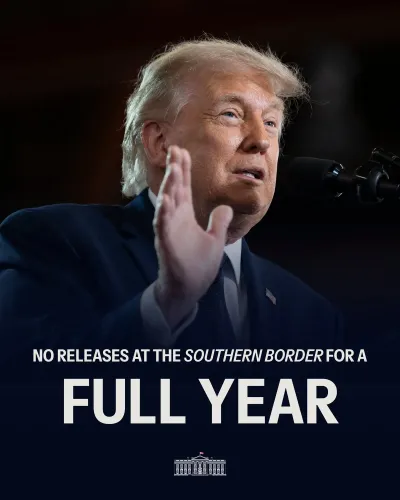
For the first time in recorded American immigration history, the United States closed out a full fiscal year without a single migrant being released into the country by Border Patrol — a milestone the White House is now claiming as a signature achievement of the current administration's immigration agenda.
What 'Zero Releases' actually means
A Border Patrol 'release' occurs when agents encounter a migrant at the southern border but lack either the detention space or the legal authority to immediately remove or hold them — so the person is processed and allowed to enter the United States pending immigration proceedings. For decades, this mechanism has been a consistent feature of US border operations, especially during high-encounter periods when detention facilities overflow.
The White House post, shared on Friday, 16 October 2026, declares the just-completed fiscal year — which runs from 1 October to 30 September — as the 'FIRST-EVER' to record zero such releases, framing it under the campaign-era formulation: 'Promises Made, Promises Kept.'
The enforcement architecture behind the number
The policy machinery that made a zero-release outcome theoretically achievable has been in construction since 2019, when the first Trump administration introduced the Migrant Protection Protocols — widely known as 'Remain in Mexico.' Under that framework, many asylum claimants were required to wait on Mexican soil for their US immigration hearings, dramatically cutting the pool of people eligible for domestic release.
Subsequent years layered on expanded expedited-removal authority, increased detention capacity, and bilateral agreements with sending and transit countries. The cumulative effect, the White House now argues, is an enforcement posture capable of ensuring every border encounter ends in detention or removal — not in a release into the interior.
What independent data will need to confirm
US Customs and Border Protection publishes year-end statistical reports covering total encounters, expulsions, removals, and releases. Those official figures — when released — will be the authoritative test of the administration's claim. The White House announcement does not cite a specific CBP encounter total for fiscal year 2026, and independent verification of the zero-releases figure remains pending the official report.
For context, US border enforcement has historically cycled between strict enforcement postures and capacity-driven releases depending on migrant flow volumes, court orders, and available detention beds. A fiscal year with zero releases would represent a structural break from that pattern — one that immigration lawyers and advocacy groups on both sides of the debate are certain to scrutinise closely.
The political weight of the milestone
The framing — 'Promises Made, Promises Kept' — is a deliberate echo of the administration's core political brand on immigration. Border security was central to the electoral mandate, and this announcement positions the zero-releases figure as proof of delivery rather than mere rhetoric. Whether Congress, the courts, or incoming demographic data challenge or reinforce that narrative in the months ahead will determine how durable the milestone looks in retrospect.
The official CBP year-end data report is the next number that will either cement or complicate this claim.
Point of View
If confirmed by official CBP data, would mark a genuine structural break from decades of US border management practice — not just a policy shift but an operational outcome. The administration is deliberately staging this as a capstone immigration achievement, banking on the 'Promises Made, Promises Kept' framing to consolidate its political base heading into whatever legislative or electoral cycle follows. The real stress-test lies ahead: courts, advocacy litigation, and a Democratic opposition will all challenge both the legality of the enforcement mechanisms that produced the number and the completeness of the statistic itself. How the independent data lands will determine whether this becomes a legacy anchor or a liability.
NationPress
17 Oct 2026
Frequently Asked Questions
What does 'zero Border Patrol releases' mean?
It means no migrant encountered by US Border Patrol at the southern border was released into the United States during the fiscal year — every encounter ended in detention, removal, or return rather than domestic release pending immigration proceedings.
Has the US ever had zero border releases before?
The White House claims fiscal year 2026 is the first ever with zero releases. Historically, releases occurred whenever detention capacity or legal processing requirements exceeded immediate removal options, making zero a rare claimed threshold.
What is the Migrant Protection Protocols or 'Remain in Mexico' policy?
Introduced in 2019, the Migrant Protection Protocols required many asylum claimants to wait in Mexico for US immigration hearings rather than being released into the United States, reducing the pool of individuals eligible for domestic release.
Where can I find official US border data to verify this claim?
US Customs and Border Protection publishes annual statistical reports covering encounters, removals, expulsions, and releases. The fiscal year 2026 year-end report will be the authoritative source for verifying the zero-releases figure.
What does the US fiscal year cover?
The US federal fiscal year runs from 1 October to 30 September, meaning fiscal year 2026 covered the period from 1 October 2025 through 30 September 2026.