White House Touts Rising Incomes, Falling Poverty as 'Trump Effect'

Synopsis
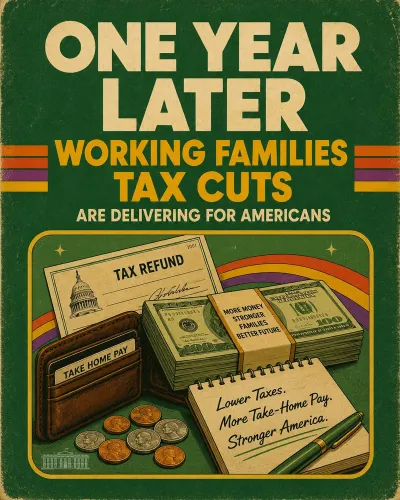
The White House on September 26, 2026 posted a three-line declaration crediting President Trump for rising household income and a falling poverty rate, branding the results 'The Trump Effect' ahead of the annual Census Bureau economic data cycle.
Key Takeaways
The White House posted on September 26, 2026 claiming household income is up and the poverty rate is down under President Trump.
The post brands the economic improvement 'The Trump Effect,' a deliberate personal attribution strategy common in presidential communications.
The US Census Bureau annual income and poverty report, typically released in September, is the primary federal data source for such claims.
During Trump's first term, the 2019 Census release showed the poverty rate hit 10.5 percent — a then-record low — before COVID-19 reversed gains.
Economists note that median income and poverty trends reflect multi-year forces; the Census Bureau itself makes no causal policy claims in its releases.
Congressional hearings on Census methodology and independent distributional analyses will shape how the numbers are ultimately judged.
The official White House account posted a stark, three-line economic declaration on Saturday, September 26, 2026, framing improving household income and a declining poverty rate as direct proof of presidential policy — branding the results 'The Trump Effect.'
The Numbers Being Claimed
The post does not specify the exact figures it references, but the framing follows a well-established White House communications playbook: cite US Census Bureau annual income and poverty data as a headline scorecard for the sitting administration's economic stewardship. The Census Bureau's annual report — typically released in September — is the single most-watched federal snapshot of how American households are faring, tracking median household income and the official poverty rate for the prior calendar year.
During Donald Trump's first term, the administration pointed repeatedly to a 2019 Census release showing median household income hitting a then-record high and the poverty rate falling to 10.5 percent — the lowest level since comparable tracking began — before the COVID-19 pandemic reversed those gains sharply in 2020.
Why 'The Trump Effect' Framing Matters Politically
Branding an economic outcome with the president's name is a deliberate rhetorical move: it collapses complex, multi-year macroeconomic forces — tax policy, labour-market cycles, Federal Reserve decisions, global commodity prices — into a single personal attribution. Presidential administrations across party lines have done this when indicators move in their favour, and attacked the same framing when used by opponents.
The sharper political question is always causality. Economists widely note that median income and poverty figures reflect conditions that build across multiple administrations, and that the Census Bureau itself makes no causal claims about policy when it publishes the data. Still, a sitting White House controlling the communications megaphone sets the interpretive frame well before any academic debate catches up.
What Comes Next in the Data Cycle
The next significant checkpoint will be congressional hearings on Census Bureau income and poverty methodology, where opposition lawmakers typically contest both the numbers and the White House's reading of them. Independent economists and think-tanks will parse the microdata for wage distribution, racial income gaps, and whether poverty-rate improvements are driven by employment growth, transfer payments, or both — details that rarely make it into a three-line social-media post, but that will define the actual policy legacy.
A clean headline number can move fast. The fuller story of who gained, by how much, and why, almost always moves slower — but it tends to last longer.
Point of View
This strategy delivers short-term narrative control but invites sustained scrutiny of distribution — who gained, and from what baseline. The post's brevity is itself a choice: the fewer the specifics, the harder the fact-check, and the wider the claim travels before context arrives. For the opposition, the counter-move is always the same: demand the disaggregated data, because aggregate income gains can coexist with widening inequality.
NationPress
26 Sept 2026
Frequently Asked Questions
What is 'The Trump Effect' the White House is referring to?
'The Trump Effect' is the term the White House used on September 26, 2026 to attribute rising household incomes and a declining US poverty rate to President Trump's economic policies.
Where does US household income and poverty rate data come from?
The official source is the US Census Bureau , which publishes its annual income and poverty report typically each September, covering the prior calendar year.
What was the US poverty rate under Trump's first term?
During Trump's first term, the Census Bureau's 2019 release showed the official poverty rate fell to 10.5 percent , a record low at the time, before rising sharply due to the COVID-19 pandemic in 2020.
Can a president directly cause changes in household income and poverty rates?
Economists generally view median household income and poverty trends as the result of multi-year macroeconomic forces — including tax policy, labour markets, Federal Reserve decisions, and global conditions — spanning multiple administrations. The Census Bureau itself does not attribute changes to any specific policy.
What will happen next after the White House's economic claim?
The next key moments will be congressional hearings on Census Bureau data methodology and independent economic analyses examining whether income gains are broadly distributed or concentrated, which typically follow within weeks of the annual report's release.