White House: DOJ Charges 12 Over Illegal Alien Voting
Synopsis
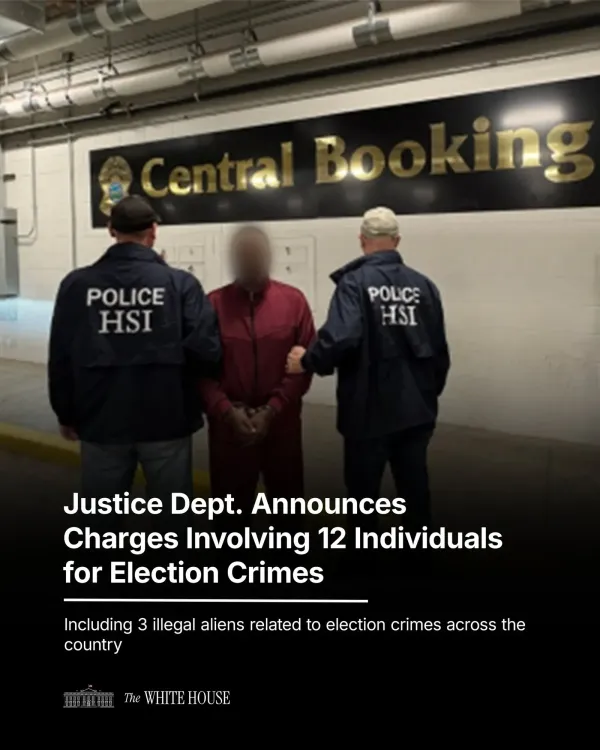
The White House announced that the U.S. Department of Justice has charged 12 people — including 3 illegal aliens — for voting in federal elections without citizenship, falsely claiming citizenship to register, and making false statements on citizenship applications, framing the action as a core election-integrity effort.
Key Takeaways
12 individuals face federal charges or have entered guilty pleas in the DOJ's election-integrity action.
3 of the 12 are identified as illegal aliens present in the United States without lawful status.
Offences include illegal alien voting in federal elections , false citizenship claims to register or vote, and false statements on citizenship applications.
The legal authority for prosecution stems from the Illegal Immigration Reform and Immigrant Responsibility Act of 1996 .
The White House publicly framed the enforcement action as 'protecting election integrity,' signalling it as a visible executive priority.
Similar DOJ enforcement actions on non-citizen voting have occurred under multiple administrations as routine application of federal law.
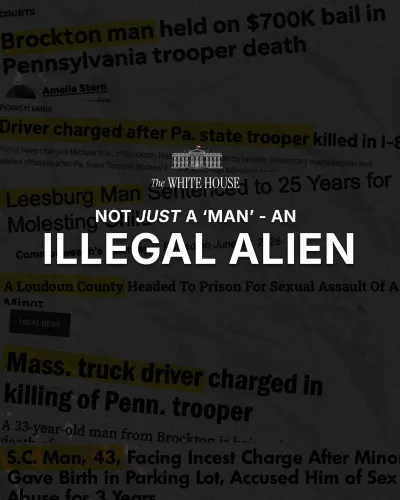
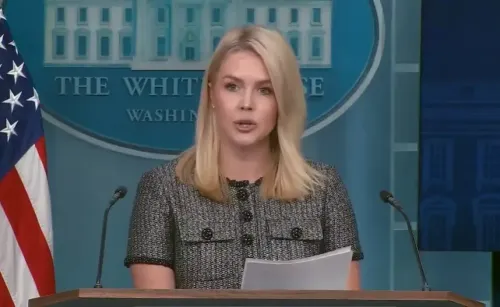
Twelve people now face federal charges — or have already pleaded guilty — for crimes that strike at the foundation of American democracy: casting ballots they had no legal right to cast. The White House announced on Tuesday, September 29, 2026, that the U.S. Department of Justice has brought charges and secured guilty pleas in cases involving illegal alien voting in federal elections, false citizenship claims made to register or vote, and false statements on citizenship applications.
What the DOJ cases actually cover
Of the 12 individuals charged or pleading guilty, 3 are identified as illegal aliens — meaning they are in the United States without lawful status. The offences span three distinct categories: voting in a federal election as a non-citizen, falsely claiming U.S. citizenship on voter registration forms, and making false statements on citizenship-related applications. Each of these is a federal crime under statutes that have been on the books for decades.
The legal backbone here is the Illegal Immigration Reform and Immigrant Responsibility Act of 1996, which established explicit criminal penalties for non-citizens who vote in federal elections or make false claims of citizenship to register. Federal law has long reserved the franchise exclusively for U.S. citizens, and the DOJ's mandate to prosecute violations of that boundary is not new — enforcement actions of this kind have occurred across multiple administrations.
A pattern of periodic federal enforcement
What makes this announcement notable is its scale and its public framing by the White House itself, signalling that election-integrity enforcement is a visible executive priority. Historically, DOJ prosecutions for non-citizen voting have been relatively rare — not because violations are assumed not to exist, but because proving intent and establishing that a vote was actually cast requires substantial investigative work by federal agents.
Election officials and immigration enforcement agencies are the key stakeholders in these cases. For election administrators, the prosecutions validate the safeguards built into the registration and verification process. For non-citizen residents — the vast majority of whom never attempt to vote — the cases serve as a stark reminder of the criminal exposure that comes with any false claim on a federal form.
What comes next on voter eligibility enforcement
The DOJ announcement is unlikely to be a standalone action. Observers will be watching for additional prosecutions tied to the same investigation, as well as any movement in Congress on legislation to tighten citizenship verification requirements at the point of voter registration. The White House's decision to amplify this enforcement action — framing it explicitly as 'protecting election integrity' — suggests it will feature prominently in the broader political conversation around immigration and voting rights heading into the next election cycle.
Twelve cases may seem like a small number against the backdrop of hundreds of millions of registered voters. But in the politics of election integrity, each prosecution carries outsized symbolic weight — and the administration is making sure the signal is heard loud and clear.
Point of View
Placing election-integrity enforcement at the centre of the administration's immigration and governance narrative. The 1996 law invoked here has bipartisan origins, but its aggressive public deployment fits a pattern of using immigration enforcement as a wedge issue ahead of electoral cycles. For the DOJ, the cases reinforce institutional credibility on election law; for the White House, they serve a dual purpose: demonstrating enforcement muscle while keeping the 'non-citizen voting' debate alive in public discourse. The relatively small number of prosecutions, set against the scale of U.S. elections, will fuel competing interpretations — a deterrent success for supporters, a manufactured crisis for critics.
NationPress
29 Sept 2026
Frequently Asked Questions
Can non-citizens vote in U.S. federal elections?
No. Federal law restricts voting in U.S. federal elections exclusively to American citizens. Non-citizens — including lawful permanent residents — are prohibited from casting ballots in federal races, and doing so is a criminal offence.
What charges did the DOJ bring in these election-integrity cases?
The Department of Justice announced charges and guilty pleas covering three categories: voting in a federal election as a non-citizen, falsely claiming U.S. citizenship on voter registration forms, and making false statements on citizenship applications.
What law makes non-citizen voting a federal crime?
The Illegal Immigration Reform and Immigrant Responsibility Act of 1996 established explicit criminal penalties for non-citizens who vote in federal elections or falsely claim U.S. citizenship to register to vote.
How many people were charged or pleaded guilty in this DOJ action?
Twelve people in total — including 3 identified as illegal aliens — were either charged or entered guilty pleas in connection with the DOJ's election-integrity enforcement action announced on September 29, 2026.
Is non-citizen voting prosecution new under U.S. law?
No. The Department of Justice has conducted prosecutions for non-citizen voting and false citizenship claims across multiple administrations. These cases represent the routine application of long-standing federal immigration and election statutes.