White House flags CMS chief Dr Oz press briefing
Synopsis
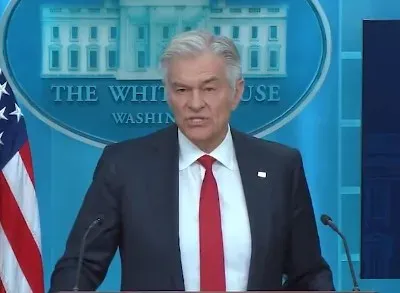
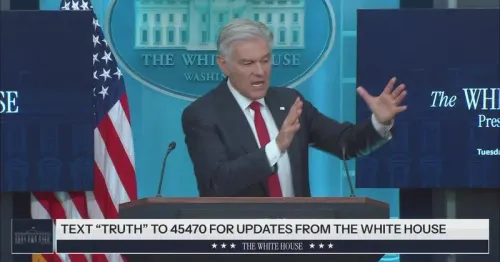
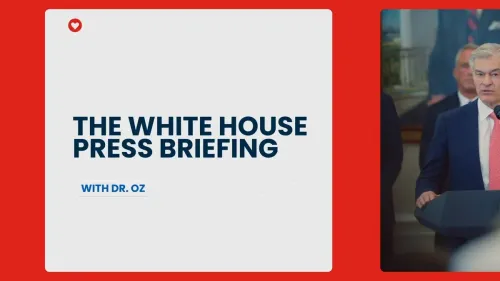
The White House advised reporters and viewers that the head of the Centers for Medicare and Medicaid Services, identified on X as @DrOzCMS, would shortly take the podium for a press briefing in Washington DC, signalling a fresh executive communication on federal health programmes.
Key Takeaways
The White House flagged an imminent press briefing by the CMS administrator using the handle @DrOzCMS.
The post was issued from the official communications account of the Executive Office of the President.
CMS oversees Medicare, Medicaid and CHIP, programmes covering over a hundred million Americans.
The agency traces its origins to the Social Security Amendments of 1965.
Observers will watch the briefing for cues on payment rates, drug coverage and Medicaid waivers.
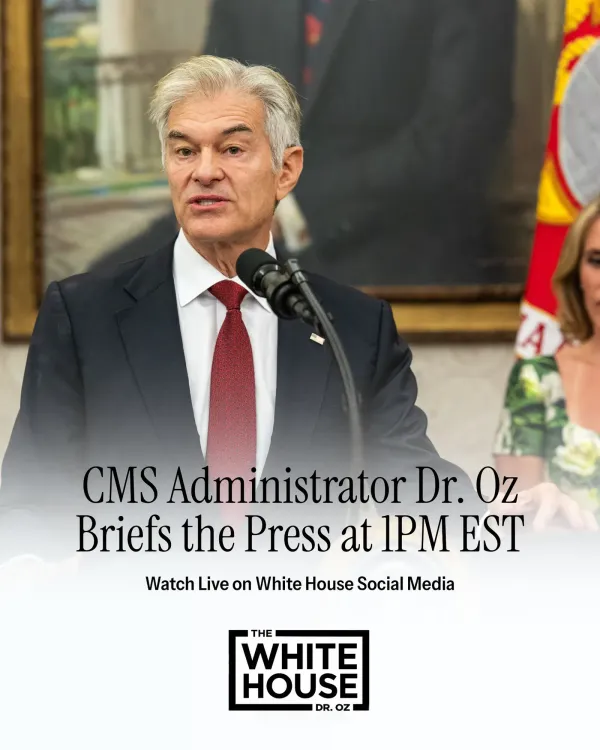
The White House on Tuesday alerted reporters and viewers that the head of the Centers for Medicare & Medicaid Services (CMS), referenced on X as @DrOzCMS, would shortly take the podium for a press briefing from the executive complex in Washington DC. The brief advisory, posted from the official communications handle of the Executive Office of the President, urged audiences not to miss the appearance.
'SOON: @DrOzCMS takes the podium to brief the press. Don't miss it,' the post read, accompanied by a United States flag emoji and a single image. The note did not specify the agenda of the briefing or the duration of the engagement.
Context
The handle @DrOzCMS signals the official role of Dr Mehmet Oz, the cardiothoracic surgeon and former television host long associated with The Dr. Oz Show (2009-2022) and a 2022 Republican Senate run in Pennsylvania. The White House advisory presents him in his capacity as a federal agency principal rather than as a media or political figure.
Curtain-raiser tweets of this kind are a standard tool used by the Executive Office of the President to direct attention to agency-led announcements, and they often precede regulatory updates, programme data releases, or responses to ongoing policy debates.
Policy backdrop
The Centers for Medicare & Medicaid Services is the federal agency within the Department of Health and Human Services that administers Medicare, Medicaid, the Children's Health Insurance Program (CHIP), and a range of quality, payment and regulatory programmes that together touch the healthcare of more than a hundred million Americans.
The agency traces its institutional lineage to the Social Security Amendments of 1965, which established Medicare and Medicaid and created the administrative predecessor to CMS. Successive administrators have used podium briefings to roll out payment rules, enrolment figures, drug coverage decisions and Medicaid waiver guidance.
Stakeholders and impact
The most immediate audience for any CMS briefing is the constituency the agency directly serves: Medicare beneficiaries, Medicaid recipients, hospital systems, physician groups, insurers participating in federal programmes, and pharmaceutical manufacturers whose products fall within the agency's coverage and pricing remit.
State health departments, which jointly administer Medicaid with the federal government, also follow CMS guidance closely because shifts in waiver policy or matching-fund rules can reshape state budgets. For Indian readers, the agency's drug-pricing positions are watched by India's generic and biosimilar exporters, several of whom supply medicines reimbursed through Medicare Part D and Medicaid formularies.
What's next
Observers will be watching the briefing for any preview of forthcoming CMS regulatory actions or legislative proposals on Medicare payment rates, prescription drug coverage, or Medicaid waivers. Such announcements typically move through subsequent rule-making notices in the Federal Register before taking effect.
For the White House, surfacing the CMS administrator at the podium serves the dual purpose of communicating executive priorities on federal health entitlements and signalling that the administration intends to remain visibly engaged on healthcare delivery. The substance of the remarks, once delivered, will determine whether the appearance marks a routine update or a more consequential policy turn.
Point of View
Drug pricing and entitlement spending remain politically live wires heading into the back half of the term. For India's pharmaceutical exporters and global health watchers, even procedural CMS briefings can carry material signals on reimbursement and formulary policy. The substantive test lies in whether the remarks preview concrete rule-making or remain a messaging exercise.
NationPress
16 Oct 2026
Frequently Asked Questions
What is CMS in the United States?
CMS, or the Centers for Medicare and Medicaid Services, is the federal agency that administers Medicare, Medicaid and the Children's Health Insurance Program under the US Department of Health and Human Services.
Who is Dr Mehmet Oz?
Dr Mehmet Oz is a cardiothoracic surgeon and former television host of 'The Dr. Oz Show' who later ran as the Republican Senate nominee in Pennsylvania in 2022.
What does a CMS administrator do?
The CMS administrator leads the agency that sets payment rules, coverage policies and regulatory standards for Medicare, Medicaid and related federal health programmes covering more than a hundred million Americans.
Why does a CMS briefing matter for India?
CMS decisions on drug pricing and formulary coverage directly affect Indian generic and biosimilar manufacturers that supply medicines reimbursed through Medicare and Medicaid.
Where was the White House press briefing held?
The press briefing was flagged from the executive complex in Washington DC, the standard venue for White House and administration podium events.