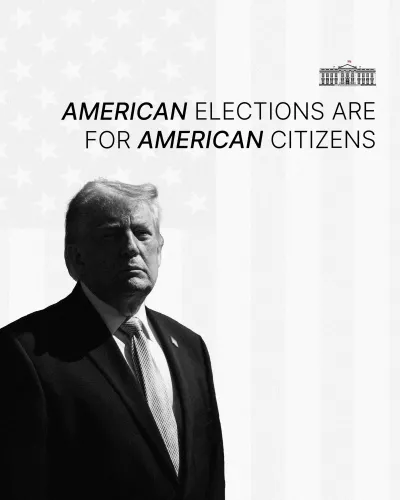
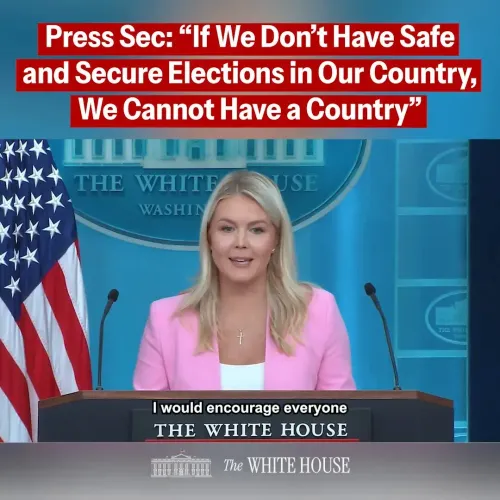
White House Flags Election Integrity Page in July 2026 Post
Synopsis
The White House flagged its election integrity web portal on 18 July 2026, continuing a long-standing pattern of executive-branch focus on voting security. The post carries no new legislative proposal but directs public attention to federal election administration resources ahead of future election cycles.
Key Takeaways
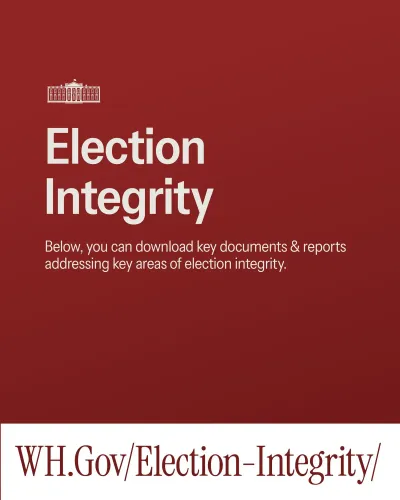
The White House posted a link to whitehouse.gov/election-integrity/ on 18 July 2026 .
The post contained no accompanying text, only an alert emoji and the URL, signalling urgency without specifying new policy.
Federal election integrity efforts trace back to the Help America Vote Act of 2002 , which created the U.S.
Election Assistance Commission .
A Presidential Advisory Commission on Election Integrity was formed in 2017 and disbanded in 2018 without a final report.
Primary authority over election administration rests with individual US states; federal communications are supplementary in nature.
No new executive order or legislative proposal has been confirmed in connection with this post.
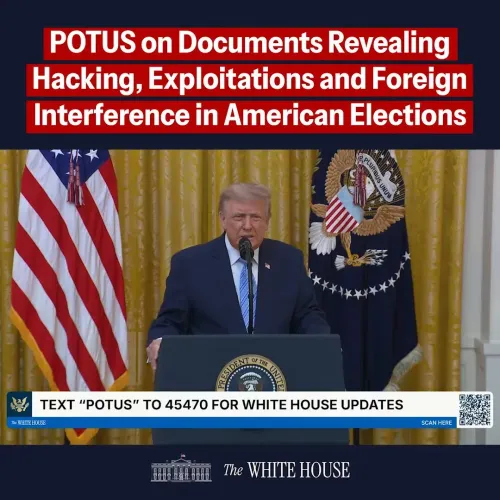
The White House, the official communications account of the Executive Office of the President of the United States, shared a link to its dedicated election integrity portal on Friday, 18 July 2026, drawing renewed attention to the federal government's public-facing resources on voting security and election administration.
Context
The post directed followers to whitehouse.gov/election-integrity/, a federal web resource focused on election administration and voting security. While the post contained no accompanying text beyond the URL, the deliberate use of an alert emoji signals the White House's intent to underscore urgency around the subject. The link points to an official government portal rather than a legislative proposal or executive order.
Election integrity has been a recurring theme of executive-branch communications since the early 2000s, with federal attention to the issue intensifying following the disputed 2000 presidential election.
Policy Backdrop
Federal engagement with election administration has a defined legislative history. In 2002, Congress enacted the Help America Vote Act (HAVA), establishing federal standards for voting equipment and creating the U.S. Election Assistance Commission (EAC) to support states in running secure elections. The law was a direct response to the controversies of the 2000 election cycle.
In 2017, a Presidential Advisory Commission on Election Integrity was convened to examine vulnerabilities in voter registration and voting processes. The commission was disbanded the following year without producing a final report, but the broader policy conversation it sparked has continued across successive administrations.
White House posts of this nature typically point to informational resources rather than signalling imminent statutory changes. They often coincide with periods of technological upgrades to voting infrastructure or heightened legislative debate over the balance between ballot access and security safeguards.
Stakeholders and Impact
American voters and state election officials are the primary stakeholders in any federal communication around election integrity. States retain primary authority over the administration of elections under the U.S. Constitution, making federal guidance and resources supplementary rather than directive.
Advocacy groups on both sides of the debate watch such communications closely. Proponents of stricter voting safeguards view federal attention to election integrity as a necessary check against fraud, while civil liberties organisations caution that some 'integrity' measures can restrict legitimate voter participation, particularly among minority and low-income communities.
What's Next
Congressional consideration of any new election reform legislation remains a key variable. With future federal election cycles on the horizon, state legislatures are also actively revising voting procedures, making the federal government's public posture on election administration a closely watched signal.
Whether the White House portal links to new executive initiatives or consolidates existing resources will determine the practical significance of this post. Observers will watch for any follow-up statements, executive orders, or legislative endorsements that give the link concrete policy weight.
Point of View
Designed to direct public attention without committing to a specific policy position. This fits a broader pattern in which executive-branch accounts use social media to signal issue salience ahead of legislative or regulatory action. For Indian observers tracking US democratic institutions, the post underscores how deeply election administration has become a live political fault line in Washington, one that successive administrations have felt compelled to address publicly. The absence of accompanying text leaves maximum interpretive room, suggesting the administration may be building toward a more substantive announcement.
NationPress
17 Jul 2026
Frequently Asked Questions
What is the White House election integrity portal?
The White House election integrity portal at whitehouse.gov/election-integrity/ is a federal government web resource providing information on US voting security, election administration standards, and related executive-branch initiatives.
What is election integrity in the United States?
Election integrity in the US refers to federal and state policies aimed at preventing voter fraud, securing voting systems, and ensuring accurate election outcomes. It has been a major policy focus since the disputed 2000 presidential election.
What is the Help America Vote Act?
The Help America Vote Act, enacted by Congress in 2002, established federal standards for voting equipment and created the US Election Assistance Commission to support states in running secure and accurate elections.
Does the US federal government control elections?
No. Under the US Constitution, individual states retain primary authority over the administration of elections. The federal government sets minimum standards and provides resources, but states run their own elections.
Why is election integrity a controversial topic in the US?
Election integrity is contested because measures promoted as safeguards against fraud — such as voter ID laws or voter roll purges — are argued by civil liberties groups to disproportionately restrict access for minority and low-income voters, creating a persistent policy tension between security and access.