White House Marks Made in America Week, Backs Trump Manufacturing Push
Synopsis
The White House marked Made in America Week on 25 July 2026, celebrating domestic manufacturing and crediting President Trump with reviving American industrial production. Business owners across the US were highlighted as supporters of the administration's reshoring push, in a thread-format post on X.
Key Takeaways
The White House posted on 25 July 2026 to mark Made in America Week , celebrating domestic manufacturing.
President Donald Trump was credited with 'tireless efforts' to bring back American manufacturing, according to the official post.
The message featured business owners 'from coast to coast' as supporters of the administration's industrial policy.
Made in America Week is an annual observance used by the executive branch to highlight domestically produced goods and signal trade priorities.
The administration's manufacturing push has policy roots in 2017 measures including tariffs, tax reform, and executive orders on domestic content.
Congressional action on trade and tax legislation remains a key factor in whether executive manufacturing priorities become lasting law.
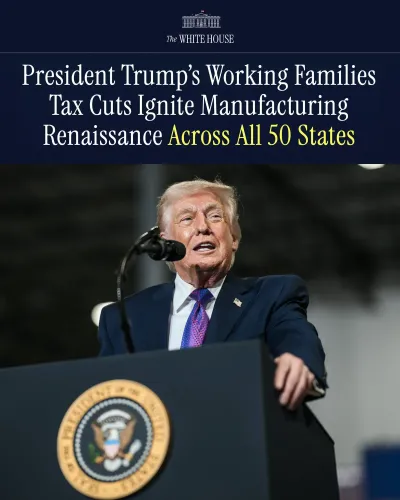
The White House on Saturday, 25 July 2026, marked Made in America Week with a message celebrating domestic manufacturing and crediting President Donald Trump for efforts to revive American industrial production. The official post, shared on X, highlighted support from business owners across the country who praised the administration's push to reshore manufacturing.
Context
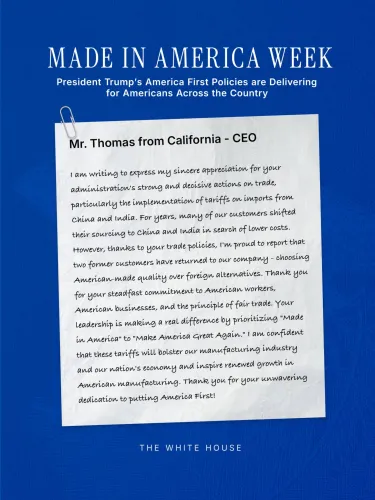
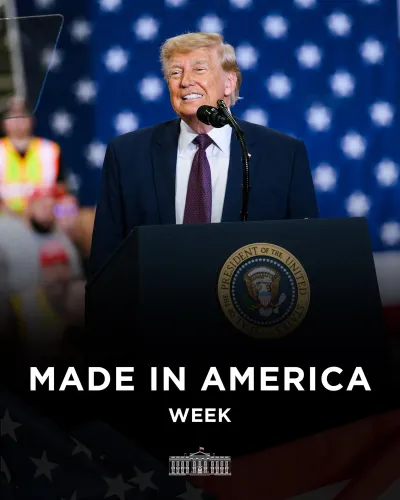
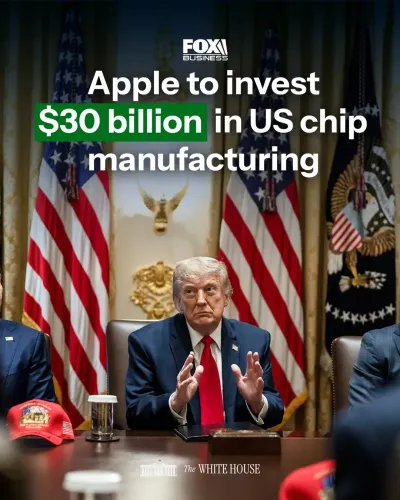
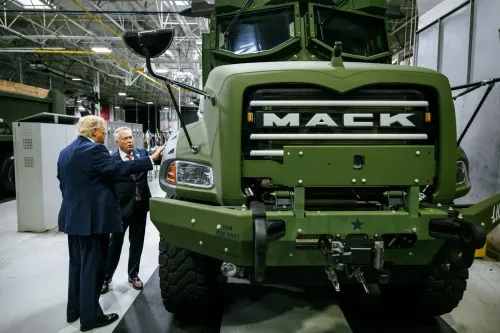
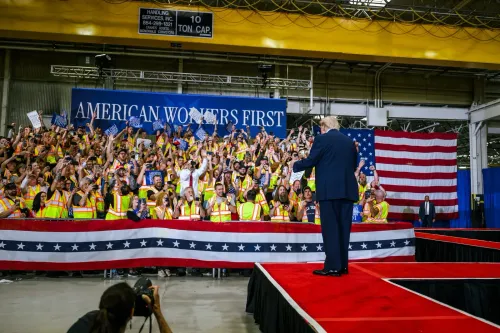
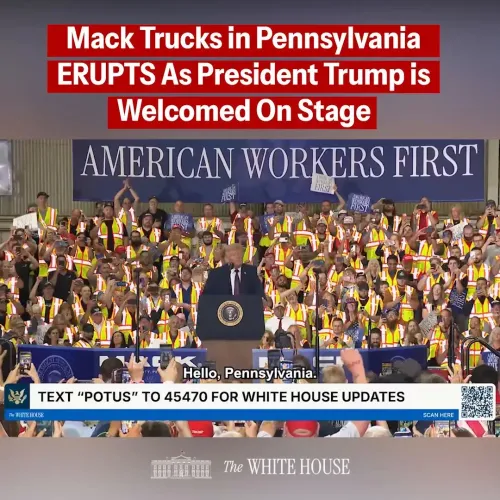
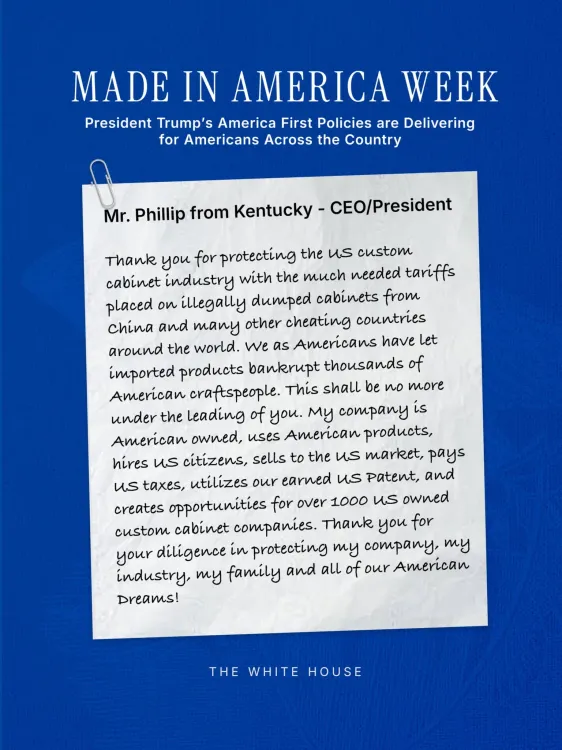
The White House post declared: 'During Made in America Week, we proudly celebrate the power of American manufacturing. Business owners from coast to coast are thanking President Trump for his tireless efforts to bring back Made in America.' The message was accompanied by an image and introduced a thread highlighting testimonials from domestic business owners.
Made in America Week is an annual observance that spotlights goods produced within the United States and draws attention to the domestic manufacturing sector. The observance has been used by the executive branch as a platform to signal industrial and trade policy priorities.
Policy Backdrop
The Trump administration's focus on domestic manufacturing has roots in policies first advanced during 2017, when the White House promoted reshoring through a combination of tariffs, corporate tax reform, and executive orders targeting domestic content requirements. The broader goal was to reduce American reliance on foreign imports and retain jobs in traditional manufacturing sectors.
This messaging fits a sustained pattern of economic nationalism from the executive branch, framing trade and industrial policy around job retention and domestic production capacity. Congressional action on related tax and trade legislation has remained a key variable in how far such priorities can be implemented in law.
Stakeholders and Impact
US manufacturers and small business owners are the primary audience for this messaging. By featuring testimonials from business owners 'from coast to coast,' the White House sought to ground the policy narrative in on-the-ground economic experience rather than abstract statistics.
Domestic manufacturers in sectors such as steel, textiles, electronics, and consumer goods stand to benefit most directly from policies that favour local production. Workers in these industries, particularly in the Midwest and Rust Belt regions, have historically been central to the political and economic argument for reshoring.
What's Next
Observers will watch for any new executive orders on domestic content requirements or fresh trade measures that may accompany the week's messaging. Congressional movement on legislation tied to manufacturing incentives or tariff frameworks will also be a key indicator of how far the administration's stated priorities translate into durable policy.
The thread format of the post suggests additional content — likely further business owner testimonials — was released as part of a coordinated communications push throughout Made in America Week, signalling that the White House intends to sustain this narrative over several days.
Point of View
Not a one-off statement, suggesting the administration is investing in sustained public messaging around reshoring ahead of potential legislative or executive action. For Indian observers, the relevance is direct: a sustained US push to reshore manufacturing from global supply chains has downstream implications for Indian exporters, particularly in sectors like textiles, pharmaceuticals, and electronics components. The framing of Trump as the singular driver of manufacturing revival also reinforces a personalised political brand that has proven durable across multiple election cycles.
NationPress
25 Jul 2026
Frequently Asked Questions
What is Made in America Week?
Made in America Week is an annual observance in the United States that highlights goods produced domestically and is used by the executive branch to promote industrial and trade policy priorities favouring American manufacturers.
What did the White House post about Made in America Week in 2026?
The White House posted on 25 July 2026 celebrating domestic manufacturing and crediting President Trump with efforts to reshore American production, featuring support from business owners across the country.
What is Trump's Made in America manufacturing policy?
President Trump's manufacturing policy centres on reducing US reliance on foreign imports through tariffs, corporate tax incentives, and executive orders requiring domestic content, with the goal of retaining and creating jobs in traditional industrial sectors.
How does the US Made in America push affect India?
A sustained US effort to reshore manufacturing can affect Indian exporters in sectors such as textiles, pharmaceuticals, and electronics, as American companies may shift sourcing away from global supply chains, including those involving India .
What happens after Made in America Week?
Observers watch for new executive orders on domestic content requirements and Congressional movement on trade or tax legislation that would give the administration's manufacturing priorities a durable legal foundation beyond messaging campaigns.