White House Reaffirms U.S. as World's Top Financial Hub
Synopsis
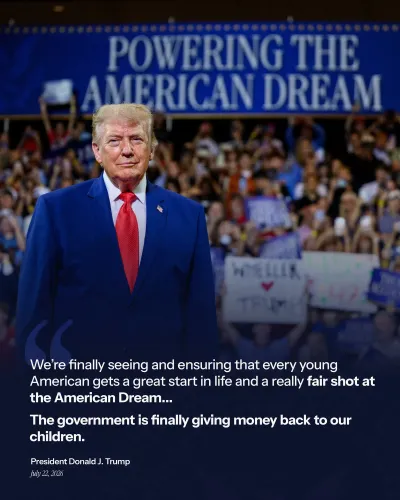
The White House quoted President Trump on the American dream and declared the U.S. will remain the world's dominant financial center, reinforcing the administration's signature pro-market economic messaging.
Key Takeaways
The White House posted on August 20, 2026 quoting President Donald J.
Trump on the American dream.
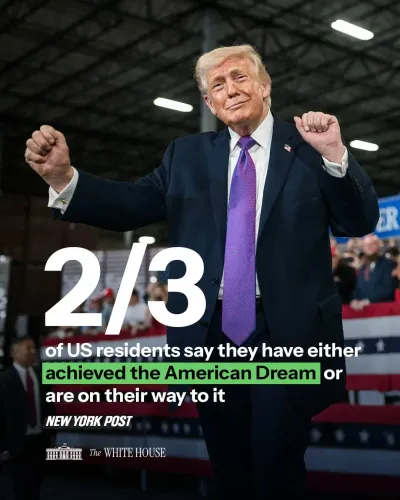
Trump stated 'every single citizen has a chance to achieve the American dream,' framing opportunity as a national economic pillar.
The post declared the United States will remain 'the dominant financial center of the world' under Trump's leadership.
The messaging aligns with the administration's longstanding pro-market, deregulatory economic doctrine rooted in the Tax Cuts and Jobs Act of 2017 .
The assertion of U.S. financial supremacy comes amid ongoing competition from London , Singapore , and emerging Asian financial hubs .
The promise at the heart of American economic identity — that every citizen can rise — is back at the centre of White House messaging, and this time it comes paired with a bold assertion of global financial supremacy.
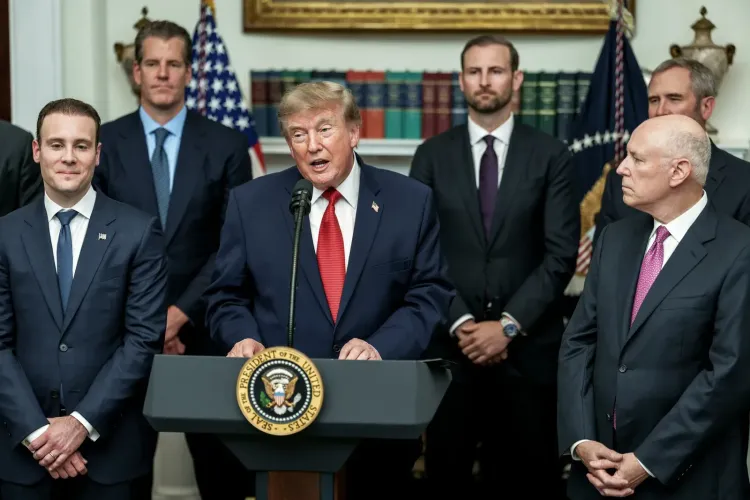
The White House posted on X on August 20, 2026, quoting President Donald J. Trump: 'Every single citizen has a chance to achieve, what we now hear a lot about, the American dream.' The post went further, declaring that as long as Trump is in charge, the United States of America will remain 'the dominant financial center of the world.'
The American Dream as Economic Doctrine
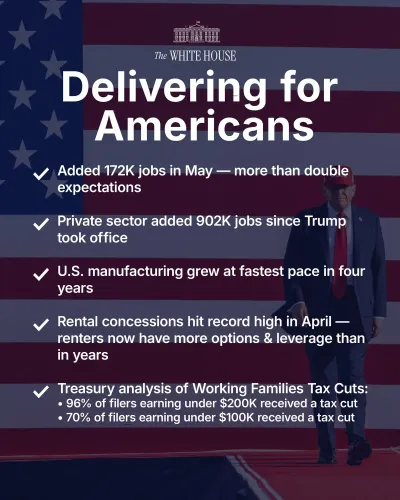
The pairing of individual opportunity with national financial dominance is deliberate. The Trump administration has consistently framed access to the American dream not as a social promise alone, but as a direct product of pro-market, deregulatory economic policy. The argument runs in a straight line: a strong financial system lifts individual prospects, and individual ambition in turn powers the system. This messaging traces its roots to the Tax Cuts and Jobs Act of 2017, the landmark legislation that slashed corporate tax rates and was sold to the public as a vehicle for higher wages, greater investment, and broader opportunity. That policy logic — cut friction, unleash markets, let prosperity trickle outward — remains the ideological spine of the administration's economic communications.New York vs. London vs. Asia: The Contest for Financial Capital
The claim of U.S. financial dominance is not made in a vacuum. New York City, home to the New York Stock Exchange and the world's largest concentration of banking capital, has faced sustained competition from London, Singapore, Hong Kong, and other emerging Asian financial hubs over the past decade. Each has courted global capital with lighter regulation, lower taxes, or strategic geographic advantages. The White House post is, in effect, a signal to those markets: Washington is not ceding ground. Such statements have historically preceded or accompanied pushes for deregulatory action, Federal Reserve policy positioning, or trade postures designed to keep capital anchored in American institutions. For India — the world's fifth-largest economy and a rising force in global finance — the assertion carries weight. Indian capital markets, the rupee's internationalisation ambitions, and the growing footprint of Indian banks abroad all exist in a world where U.S. financial rules and dollar dominance set the baseline. When Washington doubles down on that dominance, it shapes the room every other economy operates in.Point of View
Not just proclamation. For rival financial centres and emerging economies alike, the subtext is clear: the rules of global finance will continue to be written in Washington. Watch for any follow-up moves on financial deregulation or Federal Reserve positioning that give this messaging concrete legislative teeth.
NationPress
21 Aug 2026
Frequently Asked Questions
What did the White House say about the American dream?
The White House quoted President Trump saying 'every single citizen has a chance to achieve the American dream,' linking individual opportunity to U.S. economic strength.
Is the United States still the world's top financial center?
The U.S., anchored by New York City's financial institutions, remains the world's largest economy and a primary global financial hub, though it faces competition from London, Singapore, and Hong Kong.
What is Trump's economic policy on financial dominance?
The Trump administration has consistently pushed deregulation and pro-business tax policy — most notably the Tax Cuts and Jobs Act of 2017 — to maintain U.S. leadership in global finance.
How does U.S. financial dominance affect India?
U.S. dollar dominance and American financial regulations set global baselines that directly influence Indian capital markets, the rupee's international standing, and the operations of Indian banks abroad.
What is the Tax Cuts and Jobs Act of 2017?
The Tax Cuts and Jobs Act of 2017 was a major U.S. tax reform that reduced corporate tax rates, aiming to boost investment and wages as part of the Trump administration's effort to strengthen the American economy.