White House Signals ICE Focus on Criminal Deportations
Synopsis
The White House posted on X on 17 July 2026 framing ongoing ICE deportation operations as targeting the most dangerous criminal noncitizens. The message aligns with a long-standing executive strategy of anchoring interior immigration enforcement around public safety and criminal conviction records.
Key Takeaways
The White House posted on X on 17 July 2026 describing deportation targets as 'the worst of the worst.' ICE is the federal agency responsible for identifying, detaining, and removing noncitizens with criminal convictions.
Executive orders dating to 2017 formally expanded removal priorities to focus on criminally convicted noncitizens.
Multiple U.S. administrations have used similar public-safety framing to signal interior immigration enforcement priorities.
Congressional appropriations and federal court rulings will determine the operational reach of current removal efforts.
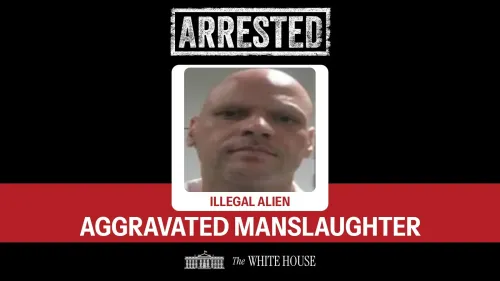
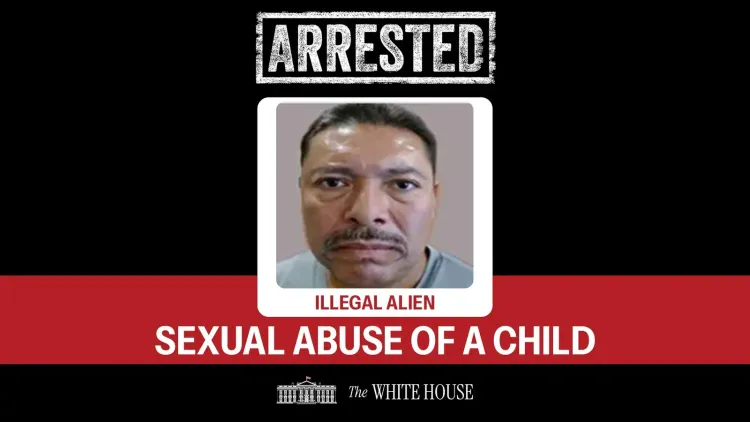
The White House, the official communications account of the Executive Office of the President of the United States, posted on X on 17 July 2026 signalling a sharp enforcement message around immigration removals, describing the targets of deportation operations as 'removing the worst of the worst.'
Context
The post, a reply on the White House's official X account, used the phrase 'Removing the worst of the worst' — language that frames ongoing deportation operations as focused squarely on individuals with serious criminal records. The statement is consistent with messaging that U.S. Immigration and Customs Enforcement (ICE) and the executive branch have used to distinguish targeted removals from broader immigration enforcement.
ICE is the federal agency tasked with identifying, detaining, and removing noncitizens with criminal convictions. Its interior enforcement operations have long been framed by successive administrations around public safety rationale, prioritising those with violent or serious criminal histories.
Policy Backdrop
The rhetorical emphasis on removing 'criminal noncitizens' has deep roots in U.S. immigration policy. As far back as 2017, executive orders formally expanded removal priorities to concentrate on noncitizens convicted of crimes, shifting resources and political messaging toward what officials described as public safety threats rather than immigration status alone.
Across multiple presidential administrations, public messaging around deportation has repeatedly leaned on the framing of removing dangerous individuals — a strategy that simultaneously signals toughness to domestic audiences and provides legal grounding for enforcement actions in federal courts. The White House post fits squarely within this established pattern of executive communication on interior enforcement.
Stakeholders and Impact
The primary stakeholders in this enforcement posture are ICE and other federal law-enforcement agencies whose operational priorities are shaped by signals from the executive office. Criminal noncitizens facing removal proceedings are the direct subjects of such operations.
Immigrant advocacy groups and civil liberties organisations have historically scrutinised how 'criminal' is defined in removal contexts, noting that the category can range from serious violent offences to minor infractions depending on enforcement guidance. Congressional appropriators also play a central role, as detention and removal operations require sustained federal funding that must be renewed each fiscal cycle.
Federal courts have at various points issued rulings affecting enforcement priorities, and any legal challenges to the current administration's removal operations could reshape how broadly or narrowly ICE applies such directives in practice.
What's Next
Observers will watch for formal policy directives or updated enforcement guidance from ICE that may follow or accompany this public messaging. Congressional debates over appropriations for detention beds and deportation flights will be a key indicator of whether the rhetoric translates into expanded operational capacity.
Federal court rulings on enforcement priorities remain a critical variable. Any injunctions or appellate decisions limiting the scope of criminal-noncitizen removals could constrain the administration's ability to deliver on the enforcement signal the White House has sent. The post underscores that immigration and public safety will remain tightly intertwined themes in executive communications in the months ahead.
Point of View
Designed to frame deportation operations in public-safety terms rather than immigration-status terms, a distinction that carries both legal and political weight. By anchoring enforcement messaging around criminal convictions, the administration positions ICE operations as broadly palatable, making it harder for critics to oppose removals without appearing to defend convicted offenders. This approach mirrors a pattern seen across administrations since at least 2017, suggesting it is less a partisan tactic than an institutionalised communications strategy for interior enforcement. The real test will come in courtrooms and appropriations committees, where the gap between rhetoric and operational capacity is most clearly exposed.
NationPress
17 Jul 2026
Frequently Asked Questions
What did the White House post about immigration on 17 July 2026?
The White House posted on X saying it is 'removing the worst of the worst,' signalling that ongoing ICE deportation operations are focused on noncitizens with serious criminal records.
What is ICE and what does it do?
ICE stands for U.S. Immigration and Customs Enforcement. It is the federal agency responsible for identifying, detaining, and deporting noncitizens, with a particular focus on those who have criminal convictions.
Who does the US government target for deportation?
Under enforcement priorities that have been in place since at least 2017, the U.S. government prioritises the removal of noncitizens convicted of crimes, particularly those with serious or violent criminal histories.
Can US courts stop ICE deportations?
Yes. Federal courts have previously issued injunctions and rulings that limit or reshape ICE enforcement priorities. Any new legal challenges to current removal operations could affect how broadly the agency can act.
Why does the White House use social media to talk about deportations?
Executive social media posts serve as public signals of enforcement priorities, communicate policy direction to agencies like ICE, and shape the political narrative around immigration by emphasising public-safety rationale.