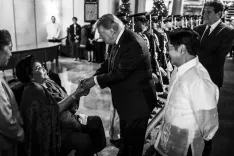
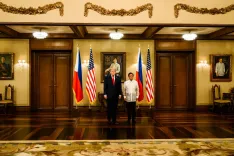
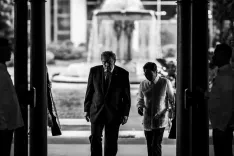
White House Signals US-Philippines Engagement
Synopsis
The White House posted paired US-Philippines flag emojis on 18 November 2026, spotlighting the two countries' deepening alliance anchored by the 1951 Mutual Defense Treaty and the 2023 expansion of the Enhanced Defense Cooperation Agreement amid South China Sea tensions.
Key Takeaways
The White House posted a US-Philippines flag handshake signal on 18 November 2026 .
The US-Philippines Mutual Defense Treaty dates to 1951 and underpins formal alliance obligations.
In 2023 , the Enhanced Defense Cooperation Agreement (EDCA) was expanded to include additional Philippine bases for US forces.
The Philippines provides strategically critical geography near the South China Sea and the Taiwan Strait.
Upcoming joint military exercises and bilateral meetings are the immediate items on the alliance agenda.
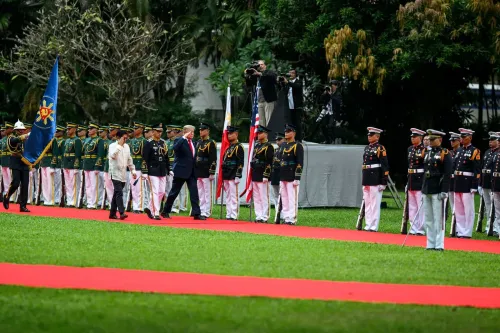
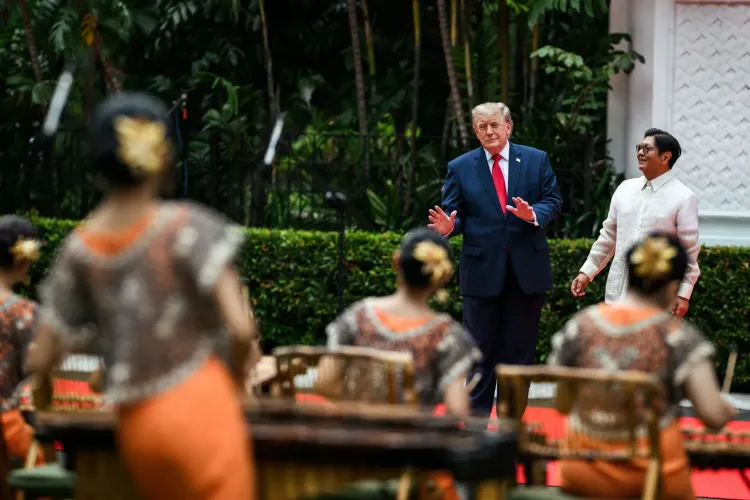
A flag handshake — no words needed. The White House posted the US and Philippine flags joined by a handshake emoji on Wednesday, 18 November 2026, a terse but pointed signal of bilateral engagement between Washington and Manila at a moment of heightened Indo-Pacific attention.
A treaty alliance that keeps deepening
The United States and the Philippines share one of Asia's oldest formal defence compacts — the Mutual Defense Treaty of 1951 — but the relationship has been anything but static. In 2023, Washington and Manila expanded the Enhanced Defense Cooperation Agreement (EDCA) to unlock additional Philippine military bases for US forces, a move widely read as a direct response to rising pressure in the South China Sea. That expansion gave American forces rotational access to sites in northern Luzon — a geography that places them closer to Taiwan than any prior basing arrangement — turning the Philippines into a linchpin of Washington's Indo-Pacific posture.Why a flag-and-handshake post carries strategic weight
In the grammar of official White House social media, a paired-flag post from the Executive Office almost always accompanies a head-of-state visit, a joint communiqué, or a significant bilateral meeting. The post's brevity — two flag emojis and a handshake — is itself a diplomatic signal: visible, public, and deliberately open to the moment it marks. The Philippines sits at the intersection of two of the region's sharpest fault lines: South China Sea territorial disputes with Beijing and the broader US-China strategic competition. For Manila, the alliance offers security guarantees; for Washington, Philippine geography is irreplaceable to any credible deterrence architecture in the western Pacific.What Manila and Washington are watching next
Defence planners on both sides have flagged joint military exercises and upcoming bilateral consultations as the near-term agenda. The EDCA bases, once fully operationalised, are expected to host rotational US assets ranging from logistics hubs to, potentially, medium-range missile systems — each step calibrated to signal resolve without provoking an irreversible escalation. For Indian strategic observers, the arc is familiar: a US ally in a contested maritime zone receiving deeper defence integration, recalibrating the regional balance one base and one bilateral post at a time.Point of View
High-visibility reaffirmation of an alliance Washington has been quietly turbocharging since 2023. The EDCA expansion — giving US forces access to northern Philippine bases — is the most consequential shift in American basing posture in the Pacific in a generation, and each bilateral signal reinforces deterrence messaging directed at Beijing. For India, watching a fellow Indo-Pacific partner deepen its US defence integration offers both a template and a strategic mirror: the architecture of collective deterrence in Asia is being assembled base by base, agreement by agreement, and even emoji by emoji.
NationPress
18 Nov 2026
Frequently Asked Questions
What is the US-Philippines Mutual Defense Treaty?
The US-Philippines Mutual Defense Treaty, signed in 1951 , commits both countries to mutual assistance if either is attacked by an external party, forming the legal backbone of their security alliance.
What is the Enhanced Defense Cooperation Agreement (EDCA)?
The EDCA is a defence pact that allows the US to rotate forces through designated Philippine military bases. It was expanded in 2023 to include additional sites, particularly in northern Luzon close to the South China Sea.
Why is the Philippines important to US Indo-Pacific strategy?
The Philippines occupies a critical geographic position flanking the South China Sea and lying close to Taiwan. US access to Philippine bases is central to any credible deterrence posture against potential Chinese military action in the western Pacific.
What is happening between the US and Philippines in 2026?
While the specific event referenced in the November 2026 White House post has not been independently detailed, the broader context points to continued alliance deepening, joint exercises, and bilateral consultations under the EDCA framework.
How does the South China Sea dispute affect US-Philippines relations?
Persistent tensions between the Philippines and China over South China Sea territorial claims — particularly around contested reefs and shoals — have accelerated Manila's defence cooperation with Washington, making the alliance more operationally active than at any point in decades.