White House: Trump Took On Iran With Force No Prior President Dared
Synopsis
The White House declared on November 11, 2026 that President Trump confronted Iran 'with full force,' invoking 47 years of Iranian-linked killings and terrorism. The post credits Trump with courage no prior president showed, signalling an aggressive posture in his second term.
Key Takeaways
The White House posted on November 11, 2026 that President Trump took on the Iranian threat 'with full force.' The statement accuses Iran of killing innocent people, protesters, and Americans over 47 years and waging war through jihadist terrorism.
Trump's first term saw the US withdrawal from the JCPOA in May 2018 and the drone strike killing General Qasem Soleimani in January 2020 .
The language — 'He didn't kick the can.
He kicked their teeth in.' — signals a policy of direct confrontation over diplomatic engagement.
The post implicitly frames all prior administrations as having failed to match the threat with sufficient resolve.
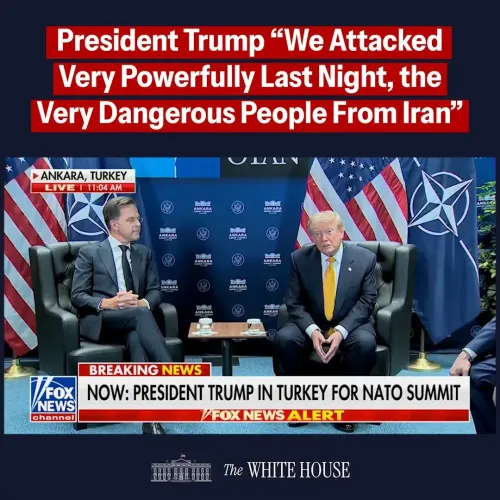
Forty-seven years of grievances, proxy wars, and American blood — and the White House says President Donald Trump is the first commander-in-chief to answer them without flinching. In a pointed post on Wednesday, November 11, 2026, the official White House account declared that Trump had confronted the Iranian threat 'with full force,' using language that left little ambiguity about the administration's posture toward Tehran.
The Charge Sheet Against Tehran: 47 Years in One Sentence
The White House's post reads like a prosecutorial brief compressed into three sentences. It accuses Iran of killing 'innocent people, protesters, Americans,' and of waging war on the West through 'jihadist terrorism' — a sweeping indictment spanning nearly five decades, from the 1979 Islamic Revolution and the subsequent US Embassy hostage crisis to the sprawling network of Iranian-backed proxy groups that have operated across Iraq, Lebanon, Syria, and Yemen. The framing is deliberate: by anchoring Trump's actions in a 47-year arc, the White House casts every predecessor as complicit in inaction.
The phrasing — 'He didn't kick the can. He kicked their teeth in.' — is striking in its bluntness, even by the standards of combative executive communications. It signals an administration determined to define this moment as a decisive rupture from decades of what it characterises as managed deterrence and diplomatic hedging.
From JCPOA Withdrawal to Soleimani: The Policy Lineage Behind the Rhetoric
Trump's first term established a template of 'maximum pressure': in May 2018, his administration withdrew the United States from the Joint Comprehensive Plan of Action (JCPOA) — the multilateral nuclear agreement negotiated under the Obama administration — and reimposed sweeping sanctions on Iran's oil and banking sectors. Then, in January 2020, a US drone strike at Baghdad International Airport killed Islamic Revolutionary Guard Corps Quds Force commander General Qasem Soleimani, a move that sent shockwaves through the region and marked the most direct military blow the US had struck against Iranian leadership in the post-revolutionary era.
That strike was itself a watershed. No previous administration had moved so directly against a figure of Soleimani's rank. The White House post, arriving in November 2026 during Trump's second term, suggests the pressure has not relented — and may have escalated. Specific developments in this latest phase cannot be fully detailed from available records, but the tone of the official statement points to actions beyond the rhetorical.
Why the 'Courage' Framing Is Itself a Policy Argument
The word 'courage' is doing heavy lifting here. By attributing courage to Trump and implying its absence in predecessors — including administrations of both parties — the White House is making a structural argument: that restraint and multilateral diplomacy with Iran were not prudent statecraft but a failure of nerve. It's a framing designed to pre-empt critics who favour negotiation, casting the alternative not as wisdom but as timidity.
US-Iran tensions have cycled through sanctions, proxy confrontations, and occasional back-channel diplomacy since 1979. The Trump administration's posture, both in its first and second iterations, bets that sustained, unapologetic pressure — military, economic, and rhetorical — produces better outcomes than the incremental compromises embedded in frameworks like the JCPOA. Whether that bet pays off in a durable regional settlement or a sharper escalation remains the defining question for Washington's Middle East strategy.
The world is watching what comes next — and so are Iran's proxies from Beirut to Baghdad.
Point of View
It builds a retrospective case that positions Trump's approach as the logical culmination of decades of American frustration. The 'courage' framing is a direct rebuke of multilateral diplomacy, particularly the JCPOA architecture, and signals that the second Trump term will double down on maximum pressure rather than revisit negotiated frameworks. For US allies in the Gulf and adversaries in Tehran alike, the message is unambiguous: the administration sees de-escalation on Iran as capitulation, not strategy. How Tehran calibrates its response — through proxies, nuclear moves, or back-channel signals — will determine whether this posture hardens into a new regional order or tips into open conflict.
NationPress
11 Nov 2026
Frequently Asked Questions
What did the White House say about Trump and Iran in November 2026?
The White House posted on November 11, 2026 that President Trump confronted the Iranian threat 'with full force,' crediting him with courage no prior president had shown and accusing Iran of 47 years of killing innocent people, Americans, and waging war through jihadist terrorism.
What is Trump's Iran policy in his second term?
Based on the White House's November 2026 statement, Trump's second-term Iran policy continues the 'maximum pressure' posture — prioritising direct confrontation over multilateral diplomacy, building on first-term actions like JCPOA withdrawal and the Soleimani strike.
What was the JCPOA and why did Trump withdraw from it?
The JCPOA (Joint Comprehensive Plan of Action) was a multilateral nuclear agreement with Iran. Trump withdrew the US from it in May 2018, arguing it was insufficient to curb Iranian nuclear ambitions and broader regional aggression, and reimposed sweeping sanctions.
Who was Qasem Soleimani and how did Trump respond to Iran?
General Qasem Soleimani was the commander of Iran's Quds Force. In January 2020, a US drone strike ordered by President Trump killed him at Baghdad International Airport — the most direct military blow the US had struck against senior Iranian leadership since the 1979 revolution.
How long have the US and Iran been in conflict?
US-Iran tensions date to the 1979 Islamic Revolution and the subsequent hostage crisis, spanning 47 years of sanctions, proxy confrontations, and occasional diplomacy across multiple American administrations of both parties.