White House Pledges Full US Law Enforcement for World Cup Safety
Synopsis
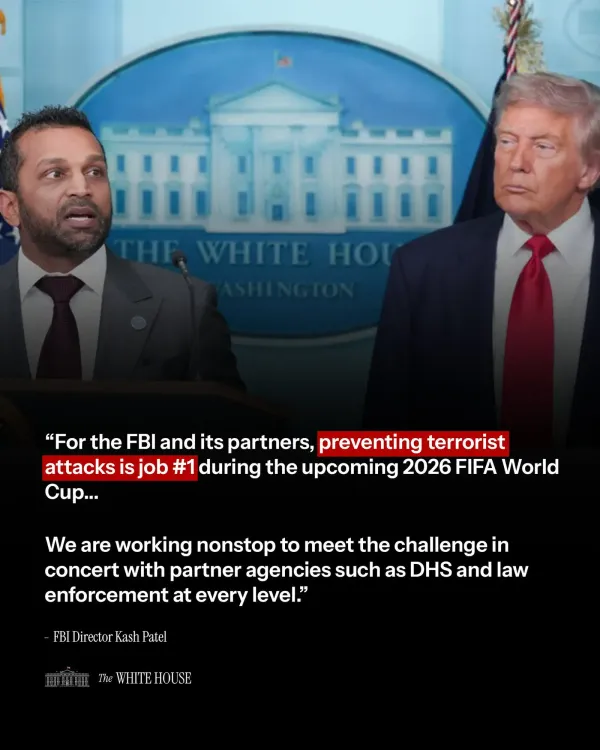
The White House on 11 June 2026 declared that the full breadth of American law enforcement is dedicated to securing FIFA World Cup 2026 matches, directly tagging FBI Director Kash Patel in a public commitment to tournament safety across US host cities.
Key Takeaways
The White House issued a formal public pledge on 11 June 2026 committing all of American law enforcement to FIFA World Cup 2026 security.
FBI Director Kash Patel was directly tagged, placing the FBI at the centre of the federal security framework for the tournament.
The 2026 World Cup features an expanded 48-team format co-hosted by the United States , Canada , and Mexico , raising the complexity of security operations.
The US interagency security model for major sporting events dates to the 1994 FIFA World Cup and has been updated for subsequent global events.
Follow-up coordination statements from DHS and the FBI are expected as matches proceed through summer 2026 .
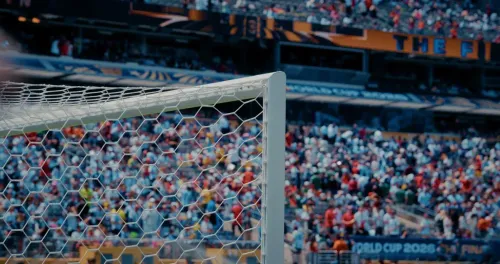
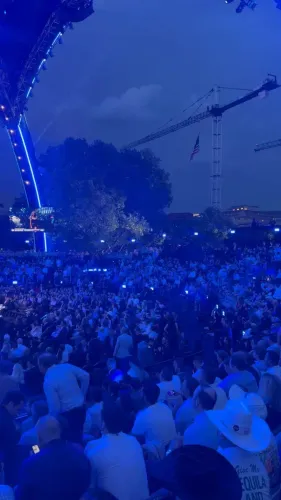
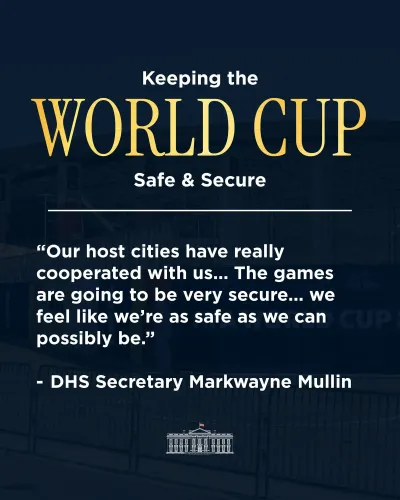
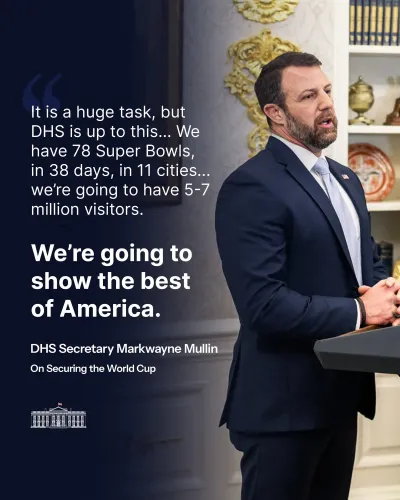
The White House on Thursday, 11 June 2026 declared that the full breadth of American law enforcement is committed to keeping FIFA World Cup 2026 matches safe and secure, tagging FBI Director Kash Patel in the announcement. The statement signals a high-level federal commitment to security as the expanded 48-team tournament unfolds across co-host nations the United States, Canada, and Mexico.
Context
The post, shared from the official White House account, reads: 'The full breadth of American law enforcement is dedicated to keeping the World Cup matches safe and secure.' The direct mention of @FBIDirectorKash — a reference to Kash Patel, the Trump administration appointee heading the Federal Bureau of Investigation — underscores that the FBI is positioned at the centre of the federal security architecture for the tournament. The FBI is the lead U.S. agency for domestic counter-terrorism, intelligence gathering, and major-event security coordination.
Policy Backdrop
The United States has a long-standing interagency model for securing large international sporting events, one that was first formalised after the country hosted the 1994 FIFA World Cup. That framework has since been refined and applied to subsequent events including the Olympics and multiple Super Bowls. The 2026 World Cup represents the most ambitious iteration yet, with matches spread across multiple host cities in three countries and an expanded field of 48 teams — up from the traditional 32 — generating significantly higher volumes of spectators, logistics, and security variables. U.S. administrations across party lines have consistently treated such events as national security priorities requiring coordinated federal, state, and local resources.
Stakeholders and Impact
The primary beneficiaries of this commitment are the hundreds of thousands of domestic and international spectators expected to attend matches at venues across the United States. Host-city police departments and local law enforcement agencies will operate under a coordinated federal umbrella, with the FBI providing intelligence support, counter-terrorism resources, and inter-agency liaison. The trilateral co-hosting arrangement also means that security coordination extends to counterpart agencies in Canada and Mexico, making this one of the most complex multi-jurisdictional security operations in World Cup history. International visitors, including a significant number of fans travelling from India and other South Asian nations, will be directly affected by the security environment at American venues.
What's Next
Observers will watch for follow-up operational statements from the Department of Homeland Security and the FBI detailing specific venue-security protocols and any trilateral coordination announcements with Canadian and Mexican counterparts as the tournament progresses through summer 2026. The White House statement is likely the opening salvo in a series of public-facing communications designed to reassure both domestic audiences and international visitors of the country's readiness to host a safe and incident-free World Cup.
Point of View
A tournament that carries outsized reputational stakes for the United States as a co-host. By tagging FBI Director Kash Patel by name, the administration is signalling clear executive ownership of the security mandate and elevating the FBI's visible role above other agencies. This mirrors a pattern seen in past administrations — using high-profile sporting events to project governmental competence and inter-agency unity. The trilateral hosting arrangement with Canada and Mexico adds diplomatic dimensions to what is otherwise a domestic law-enforcement posture, and the coming weeks will reveal how seamlessly that cross-border coordination actually functions.
NationPress
26 Oct 2026
Frequently Asked Questions
Is the FIFA World Cup 2026 being held in the United States?
Yes. The 2026 FIFA World Cup is co-hosted by the United States , Canada , and Mexico , with matches spread across multiple cities in all three countries. It features an expanded 48-team format, the largest in World Cup history.
Who is Kash Patel and what is his role in World Cup security?
Kash Patel is a Trump administration appointee who heads the Federal Bureau of Investigation (FBI) . The White House tagged him directly in its security pledge, indicating the FBI is the lead federal agency for securing World Cup matches on US soil.
What US agencies are responsible for World Cup 2026 security?
The FBI is the primary federal agency for domestic counter-terrorism and major-event security, working alongside the Department of Homeland Security and host-city local law enforcement. The White House has pledged 'the full breadth of American law enforcement' to the effort.
Has the US hosted the FIFA World Cup before?
Yes. The United States previously hosted the 1994 FIFA World Cup , after which it established a formal interagency security model for large-scale sporting events that has been refined over the decades for events including the Olympics and Super Bowls.
Is it safe to travel to the United States for the 2026 World Cup?
The White House has publicly committed the full force of American law enforcement to match security, and the US has a well-established federal framework for securing major international sporting events. Travellers should monitor official advisories from their home governments as the tournament progresses.