White House: DHS Ready to Secure 2026 FIFA World Cup
Synopsis
The White House declared on 10 June 2026 that the Department of Homeland Security is ready to secure the 2026 FIFA World Cup across US host cities. The tri-national tournament, co-hosted with Canada and Mexico, features an expanded 48-team format and requires unprecedented cross-border federal coordination.
Key Takeaways
The White House publicly confirmed DHS readiness to secure the 2026 FIFA World Cup on 10 June 2026 .
The tournament is co-hosted by the United States , Canada , and Mexico — the first tri-national World Cup — featuring an expanded 48-team format.
FIFA awarded the 2026 World Cup to the three nations in June 2018 , giving agencies nearly eight years to prepare security frameworks.
DHS components including TSA , CBP , Secret Service , and FEMA are involved in the layered federal security plan.
Cross-border coordination with Canadian and Mexican authorities is a key operational requirement given the tri-national hosting arrangement.
Venue-specific security assessments and joint operational exercises are anticipated ahead of the opening match.
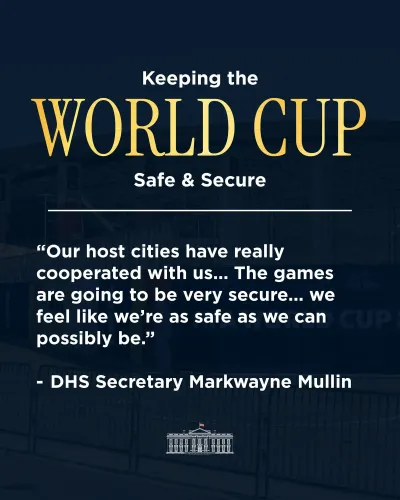
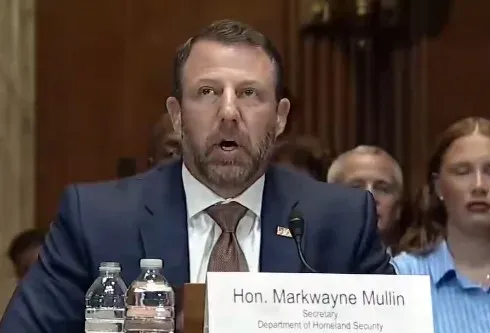
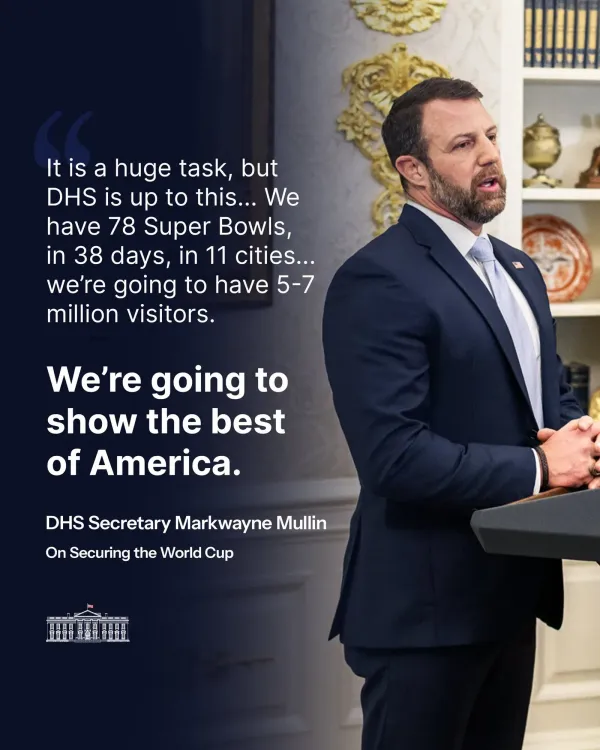
The White House announced on Wednesday, 10 June 2026 that the US Department of Homeland Security (DHS) is fully prepared to deliver nationwide security operations as the 2026 FIFA World Cup gets underway on American soil, tagging DHS Secretary @SecMullinDHS in the post.
Context
The official White House account posted: 'DHS is ready to show the BEST of America by keeping everyone safe across the country as the World Cup hits American soil.' The statement positions federal security readiness as a matter of national pride ahead of one of the largest sporting events ever staged in the United States.
The 2026 FIFA World Cup is co-hosted by the United States, Canada, and Mexico — the first tri-national edition of the tournament. It features an expanded 48-team format, with matches spread across multiple US cities including New York, Los Angeles, Dallas, Miami, Seattle, and others.
Policy Backdrop
FIFA awarded the 2026 World Cup to the United States, Canada, and Mexico in June 2018, giving federal agencies nearly eight years to develop layered security frameworks. DHS, as the lead federal department for domestic public safety and border protection, coordinates with local law enforcement, intelligence agencies, and international partners for events of this scale.
The United States has prior experience hosting major tournaments: the 1994 FIFA World Cup required multi-agency security operations across nine host cities. The 2026 edition is significantly larger in scope and introduces a cross-border coordination requirement with Canadian and Mexican authorities, given that matches will be held in all three nations simultaneously during group stages.
Stakeholders and Impact
The security umbrella covers millions of domestic and international visitors expected to travel to US host cities over the course of the tournament. Local law enforcement agencies, transportation authorities, and stadium operators will operate under a federal framework led by DHS components including the Secret Service, TSA, CBP, and FEMA.
For Indian fans and the broader international travelling public, the White House statement signals that federal security planning is at an advanced stage. India did not qualify for the 2026 World Cup, but a significant number of Indian-origin residents and visitors in the United States are expected to attend matches.
What's Next
Security analysts and host-city officials are awaiting the release of venue-specific security assessments and the results of joint US-Canada-Mexico operational exercises ahead of the opening match. Cross-border protocols — particularly at land ports of entry between the three host nations — remain a key operational focus for DHS.
The White House's public endorsement of DHS readiness ahead of the tournament's commencement suggests the administration intends to closely associate federal security performance with its broader national image during the event.
Point of View
Linking federal competence to national prestige on a global stage. For an administration hosting the world's most-watched sporting event, any security lapse would carry outsized political consequences. The tri-national format adds genuine operational complexity — cross-border coordination with Canada and Mexico is without precedent at this scale for a US-hosted tournament. The statement also subtly signals to international visitors and governments that the US federal apparatus is unified and prepared, a message with diplomatic as well as domestic resonance.
NationPress
27 Oct 2026
Frequently Asked Questions
Which cities in the US are hosting 2026 FIFA World Cup matches?
The 2026 FIFA World Cup will be held across multiple US cities including New York , Los Angeles , Dallas , Miami , and Seattle , among others, alongside venues in Canada and Mexico .
What is DHS's role in securing the 2026 World Cup?
DHS is the lead federal agency coordinating nationwide security for the 2026 FIFA World Cup , working with components such as TSA , CBP , the Secret Service , and FEMA , as well as local law enforcement across host cities.
When was the 2026 FIFA World Cup awarded to the United States, Canada and Mexico?
FIFA awarded the 2026 World Cup to the United States , Canada , and Mexico in June 2018 .
Is India playing in the 2026 FIFA World Cup?
India did not qualify for the 2026 FIFA World Cup , though Indian-origin residents and visitors in the United States are expected to attend matches during the tournament.
Why does the 2026 World Cup require extra security coordination?
The 2026 World Cup is the first tri-national edition, co-hosted by the United States , Canada , and Mexico , requiring cross-border security coordination at land ports of entry and joint operational planning between all three nations' federal agencies.