All-Han Politburo under Xi Jinping signals deepening ethnic exclusion: Report
Synopsis
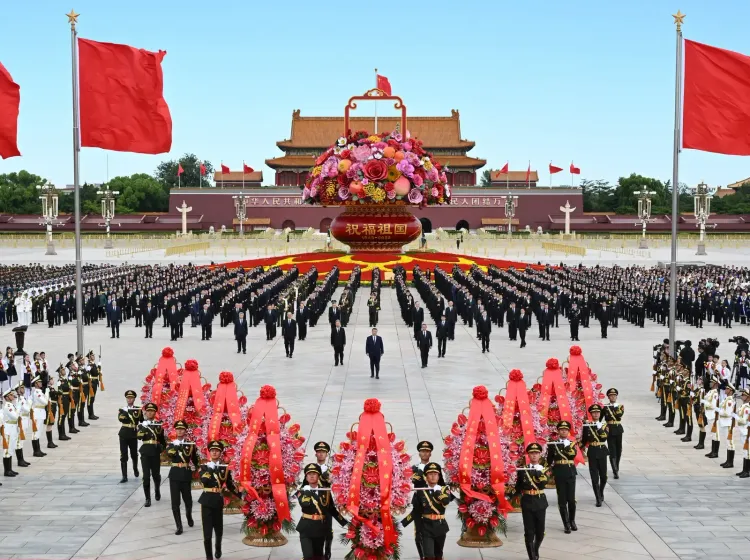
China's Politburo has never had an ethnic minority member on its Standing Committee, and for the first time in 25 years its wider body is also all-Han — now just 21 members after three expulsions in quick succession. A report by The Irrawaddy argues this is less an accident than a structural feature of Xi Jinping's centralisation drive, where diversity is tolerated at lower tiers but absent where real power is exercised.
Key Takeaways
China's Politburo , appointed in October 2022 , has been all- Han Chinese — the first time in 25 years with no women and no ethnic minority member.
Three expulsions — He Weidong ( October 2025 ), Ma Xingrui ( July 2026 ), and Zhang Youxia — have reduced the active Politburo to 21 members .
Ethnic minorities reportedly account for 10–11% of Central Committee members but are concentrated in the less powerful alternate tier.
No ethnic minority official has ever served on the Politburo Standing Committee , according to the report.
Under Xi Jinping , ethnic policy has shifted toward 'forging a strong sense of community,' tying official standards to loyalty to centralised party leadership.
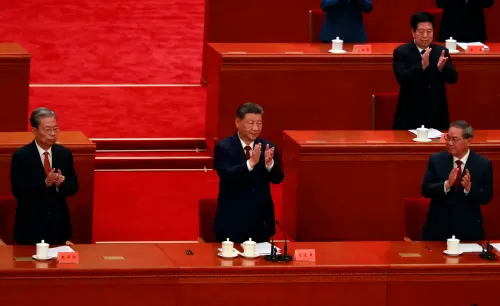
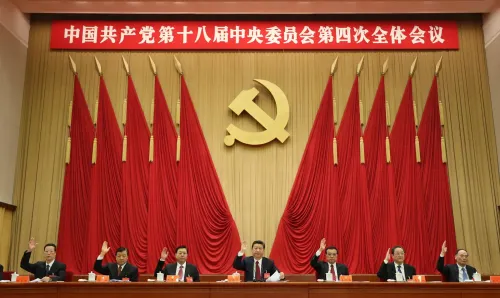
China's 24-member Politburo, appointed in October 2022, comprises exclusively Han Chinese men — and, following three high-profile expulsions, has since shrunk to 21 members with no greater ethnic diversity, according to a report by Myanmar-based outlet The Irrawaddy. The development marks the first time in 25 years that the body has included no women and no representative from any of China's 55 officially recognised ethnic minority groups.
The Gap Between Law and Practice
Under China's ethnic autonomy law, the head-of-government post in autonomous regions is formally reserved for a member of the local ethnic minority. However, the report notes that the more consequential party secretary position has historically been held by a Han Chinese official — a structural arrangement that concentrates real authority outside minority hands.
Ethnic minorities have reportedly accounted for roughly 10 to 11 per cent of full and alternate Central Committee members for decades, yet the majority of those representatives have remained in the less influential alternate tier, according to the report.
A Barrier That Is Unwritten but Real
The report acknowledges that the exclusion is not codified. 'No ethnic minority official has ever joined the Politburo Standing Committee. A handful reached the wider Politburo: Zhuang General Wei Guoqing and Mongolian leader Ulanhu served there during the Mao and early reform years; Hui Liangyu later served in the body and became a Vice Premier. Those cases show the barrier isn't formal, but they also highlight how rarely it has been crossed,' the outlet noted.
The report argues that while precedent exists, it is the exception rather than the norm — and that recent trends suggest the exception is becoming rarer still.
Xi Jinping's Ethnic Policy Shift
According to the report, ethnic policy under Chinese President Xi Jinping has increasingly centred on 'forging a strong sense of community for the Chinese nation.' At the 2021 Central Ethnic Work Conference, Xi reportedly linked the standards for officials to their firm backing of centralised party leadership and commitment to his national community agenda.
Critics argue this approach prioritises political cohesion, a shared national identity, and security considerations over the representation of distinct ethnic communities — a significant departure from the pluralist rhetoric that characterised earlier decades.
Three Expulsions Narrow the Body Further
The Politburo's composition has grown more concentrated since October 2022. In October 2025, the party expelled Central Military Commission Vice Chairman He Weidong. Former Xinjiang Party Secretary Ma Xingrui followed in July 2026, and top general Zhang Youxia was removed the following month. Official notices accused all three of serious violations; the notice on Zhang additionally alleged disloyalty, 'faction-building', and a 'remarkably large number of bribes,' according to the report.
Their removal leaves an active Politburo of 21 members — all Han Chinese — further narrowing an already exclusive body.
What This Signals About Power Under Xi
The Irrawaddy report concludes that diversity within China's political system exists primarily at lower levels, often enforced through quotas and administrative rules, but 'disappears where the most consequential decisions are made.' It notes that public records do not reveal the internal vetting or bargaining behind elite appointments, making it difficult to draw a direct causal line between ethnic policy and Politburo composition — though the report argues the two are consistent.
As Xi Jinping consolidates authority heading into the next party cycle, the trajectory of minority representation at the apex of Chinese politics remains a closely watched indicator of how the party balances administrative diversity with centralised control.
Point of View
Reinforcing the concentration of power rather than diluting it. The report correctly notes that public records cannot prove intent, but the structural logic is hard to dismiss: quotas and autonomy laws govern the visible, lower tiers of representation, while the apex — where economic, military, and foreign policy decisions are made — remains insulated from those same rules. For India and other neighbours managing complex relationships with Beijing, this matters: a more ethnically and factionally uniform leadership may be more ideologically coherent but also less predictable in how it processes dissent or minority-region unrest.
NationPress
31 Oct 2026
Frequently Asked Questions
Why is China's Politburo described as all-Han Chinese?
China's 24-member Politburo, appointed in October 2022, included no member from any of the country's 55 officially recognised ethnic minority groups — the first such instance in 25 years. Following three expulsions in 2025 and 2026, the active body has shrunk to 21 members, all Han Chinese, according to a report by The Irrawaddy.
Has any ethnic minority official ever served on China's Politburo?
Yes, but rarely. Zhuang General Wei Guoqing and Mongolian leader Ulanhu served on the wider Politburo during the Mao and early reform eras, and Hui official Liangyu later served and became a Vice Premier. However, no ethnic minority official has ever joined the more powerful Politburo Standing Committee, according to the report.
Who were the three officials expelled from the Politburo?
Central Military Commission Vice Chairman He Weidong was expelled in October 2025, followed by former Xinjiang Party Secretary Ma Xingrui in July 2026, and top general Zhang Youxia the following month. Official notices accused all three of serious violations; Zhang's notice also alleged disloyalty, faction-building, and large-scale bribery.
How does Xi Jinping's ethnic policy relate to Politburo composition?
Under Xi Jinping, ethnic policy has increasingly emphasised 'forging a strong sense of community for the Chinese nation,' tying official standards to loyalty to centralised party leadership. Critics argue this prioritises political cohesion over ethnic representation, though the report notes public records do not directly reveal the vetting behind elite appointments.
What share of the Central Committee are ethnic minorities?
Ethnic minorities have reportedly accounted for roughly 10 to 11 per cent of full and alternate Central Committee members for decades. However, the majority of minority representatives have remained in the less influential alternate tier rather than full membership, according to the report.