Has the Yunus Government Failed to Protect Women's Political Participation in Bangladesh?
Synopsis
A recent report reveals that under Muhammad Yunus's interim government, women's political representation in Bangladesh is alarmingly low, with less than 5% of candidates being female. This critical situation prompts urgent discussions about the need for reform to ensure better representation.
Key Takeaways
Women's political representation in Bangladesh is critically low.
The interim government has not taken effective measures to increase women's participation.
Many political parties failed to comply with recommendations for nominating female candidates.
Online harassment significantly impacts women's political engagement.
Addressing structural barriers is essential for improving women's representation in governance.
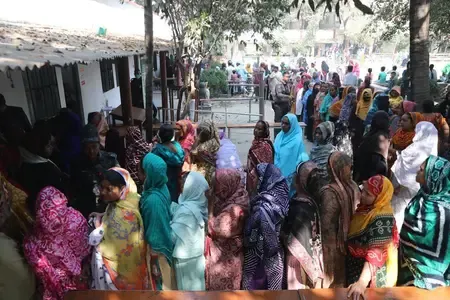
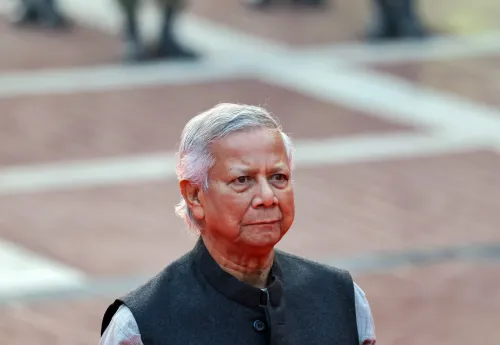
Dhaka, Jan 29 (NationPress) Under the interim government of Mohammad Yunus, celebrated globally for his role in revolutionizing microfinance and enhancing women's empowerment, the institutional protection of women's political representation in Bangladesh has been alarmingly insufficient, as highlighted in a recent report.
The report suggests that despite the interim government's reformist objectives, there has been a lack of decisive action to reinforce or increase women's representation in political decision-making. Such inaction is likely to push women's political participation further into decline, especially as political party structures are actively restricting access.
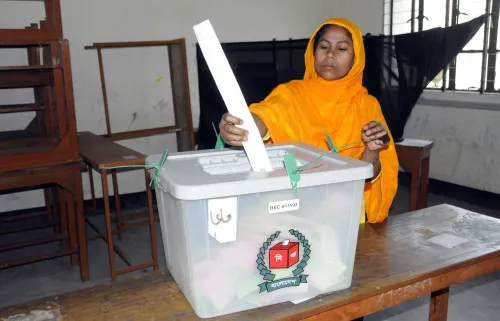
According to a report from The Daily Star, a leading Bangladeshi newspaper, after the nomination withdrawal deadline for the upcoming election on February 12, women constituted just over 4% of candidates for general seats, with 30 political parties not nominating any female candidates.
“This isn't merely an issue of a pipeline but a significant structural problem: while women are becoming more involved in governance and service delivery, they are systematically excluded from competitive political power. This discrepancy reveals a crucial truth: in Bangladesh, women are being professionalized for growth but not politicized for governance,” the report stated.
Referring to a report by Prothom Alo, it noted that despite a proposal from the Bangladesh National Consensus Commission mandating political parties to field women candidates in 5% of general seats, many parties fell short. The Bangladesh Nationalist Party (BNP) nominated only 3.5% of women candidates, while Jamaat-e-Islami nominated none.
“Some smaller parties initially put forth a few women candidates but later withdrew them. Former women’s affairs reform commissioners and activists condemned the parties for not fulfilling their commitments and for limiting women's political participation. This demonstrates a wider trend of underrepresentation of women in Bangladeshi elections despite previous agreements and advocacy efforts,” the report stated.
The report indicated that women's exclusion from electoral politics is often defended using cultural norms, conservatism, or perceived lack of “electability.” However, the current trend suggests a political backlash.
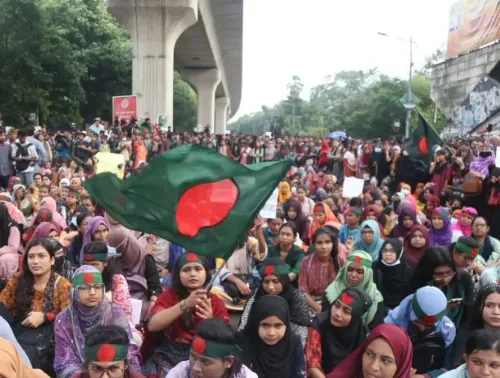
“As women's social and economic roles expanded through education, income, public authority, and visibility, their potential political presence became increasingly significant. Rather than adapting to this change, party structures have retreated. Women are often relegated to reserved seats, while competitive constituencies are viewed as 'too risky.' This backlash is ideological, procedural, and strategic,” it highlighted.
The report further emphasized that the digital landscape in Bangladesh perpetuates this exclusion, noting, “Women who engage politically often face heightened online harassment, moral policing, and character attacks. Political parties interpret this hostility as an electoral liability, which justifies their hesitance to nominate women. Consequently, this creates a self-reinforcing cycle: women are excluded due to the hostile political environment, and the environment remains hostile because of the exclusion of women.”
Point of View
The persistent underrepresentation of women in political roles underlines a significant societal issue. Despite progress in various areas, the systemic barriers that hinder women's participation in politics must be addressed. It is essential for the nation to cultivate an inclusive political environment that empowers women and reflects the diversity of its population.
NationPress
24 Sept 2026
Frequently Asked Questions
What is the current representation of women in Bangladeshi politics?
As reported, women account for just over 4% of candidates contesting general seats in the upcoming election, indicating a severe lack of representation.
Why are women underrepresented in political parties?
Several political parties have failed to nominate women candidates, citing various reasons including cultural norms and perceived electability issues.
What steps have been proposed to improve women's political representation?
The Bangladesh National Consensus Commission proposed that political parties nominate women for 5% of general seats, but compliance has been lacking.
How does online harassment affect women's political participation?
Women who engage in political discourse online often face harassment and character attacks, which parties perceive as electoral liabilities, further discouraging nominations.
What can be done to increase women's participation in politics?
There needs to be a concerted effort to challenge existing party structures, promote women's candidacies, and create a supportive environment that encourages female political engagement.