12,500 Ayush dispensaries upgraded to Ayushman Arogya Mandir: MoS Jadhav

Synopsis
India has quietly crossed a significant milestone in traditional medicine delivery: 12,500 Ayush dispensaries and sub-health centres are now operational as Ayushman Arogya Mandir, offering Yoga therapy, Ayurveda consultations, and Prakriti Parikshan alongside standard OPD services. With Karnataka alone hosting over 7,900 facilities and footfall rising post-upgradation, the National Ayush Mission is reshaping how primary healthcare looks at the grassroots level.
Key Takeaways
12,500 Ayush dispensaries and sub-health centres have been upgraded to Ayushman Arogya Mandir (Ayush) under the National Ayush Mission .
A total of 40,269 dispensaries and 3,648 hospitals currently offer Ayush OPD services across India.
Karnataka has the highest number of facilities — 7,641 dispensaries and 274 hospitals .
Upgrade funding is fixed at ₹16.22 lakh per dispensary and ₹15.744 lakh per sub-centre .
Centres provide Yoga therapy , Ayurveda consultations , Naturopathy , and Prakriti Parikshan in addition to OPD services.
Quality oversight includes NABH assessments , third-party reviews, and Central government monitoring visits.
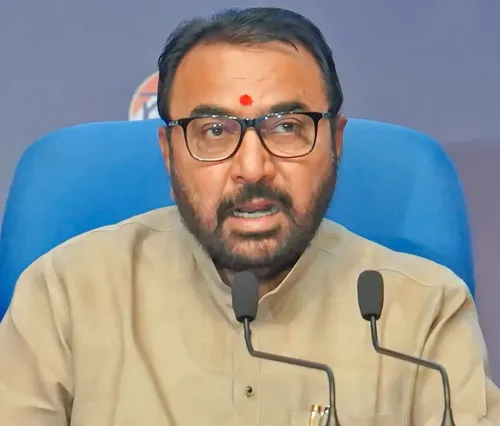
A total of 12,500 existing Ayush dispensaries and sub-health centres have been upgraded and operationalised as Ayushman Arogya Mandir (Ayush) — formerly known as Ayush Health and Wellness Centres — under the National Ayush Mission (NAM), Minister of State for Ayush Prataprao Jadhav informed the Rajya Sabha on Tuesday, 4 August. The disclosure came through a written reply, offering the most comprehensive public accounting of the scheme's reach to date.
Scale of Ayush Infrastructure Nationwide
According to MoS Jadhav, as many as 40,269 dispensaries and 3,648 hospitals are currently providing Ayush OPD services across India. Karnataka leads all states with the highest concentration of such facilities — 7,641 dispensaries and 274 hospitals — making it the single largest hub of Ayush healthcare delivery in the country.
How the Funding Works
Under the Centrally-Sponsored Scheme, consolidated funds are released to State and Union Territory governments against proposals submitted through State Annual Action Plans (SAAPs), in accordance with NAM guidelines. Financial assistance is pegged at a unit cost of ₹16.22 lakh per Ayush dispensary and ₹15.744 lakh per sub-centre for upgradation into AAM (Ayush).
What Services AAM (Ayush) Centres Offer
The operational guidelines mandate that each Ayushman Arogya Mandir establish a holistic wellness model grounded in Ayush principles — encompassing Yoga therapy, Ayurveda consultations, and Naturopathy treatments. The focus spans preventive, promotive, curative, and rehabilitative healthcare. Jadhav noted that footfall at these centres has risen following upgradation, as facilities now offer services beyond standard OPD — including Prakriti Parikshan (individual constitution assessment) and structured Yoga-related activities.
Quality Assurance and Monitoring
To ensure standards, the centres are subject to NABH assessments, third-party reviews, and periodic visits by Central government teams across states and Union Territories. These mechanisms cover quality accreditation, training of deployed Ayush practitioners, and monitoring of implementation progress. State and UT governments have additionally been directed to strengthen referral linkages with other public health facilities and to actively involve field-level workers — particularly ASHAs — to improve health outcomes at the grassroots level.
Broader Significance
This comes amid a wider government push to mainstream traditional medicine within India's public health architecture. The renaming of these centres as Ayushman Arogya Mandir aligns with the broader Ayushman Bharat branding, signalling an intent to integrate Ayush services with the country's primary healthcare network. With states now reporting increased beneficiary footfall, the scheme's expansion trajectory will be closely watched in upcoming budget cycles.
Point of View
500-centre milestone is notable, but the more telling figure is 40,269 — the total number of Ayush dispensaries already operating across India. That the government is upgrading fewer than a third of them into full-service wellness hubs raises a question about pace and prioritisation. The per-unit funding — ₹16.22 lakh per dispensary — is modest for a facility expected to deliver Yoga therapy, Naturopathy, and Prakriti Parikshan alongside OPD care; whether that envelope is sufficient for meaningful infrastructure will depend heavily on state-level execution. Karnataka's dominance (nearly half of all upgraded facilities, if its 7,641 dispensaries are factored in) also points to uneven geographic distribution — a pattern that has historically disadvantaged Ayush uptake in the Hindi heartland and the Northeast. The ASHA integration directive is the right instinct, but field-level workers are already overburdened; without dedicated incentives, that linkage risks remaining on paper.
NationPress
19 Sept 2026
Frequently Asked Questions
What is Ayushman Arogya Mandir (Ayush)?
Ayushman Arogya Mandir (Ayush) is the renamed version of Ayush Health and Wellness Centres, upgraded from existing Ayush dispensaries and sub-health centres under the National Ayush Mission. These centres offer holistic services including Yoga therapy, Ayurveda consultations, Naturopathy treatments, and Prakriti Parikshan, alongside standard OPD care.
How many Ayush dispensaries have been upgraded so far?
A total of 12,500 Ayush dispensaries and sub-health centres have been upgraded and operationalised as Ayushman Arogya Mandir (Ayush) under the National Ayush Mission, as informed to the Rajya Sabha on 4 August.
Which state has the most Ayush facilities in India?
Karnataka has the highest number of Ayush facilities in the country, with 7,641 dispensaries and 274 hospitals currently offering Ayush services.
How much funding does the government provide per Ayush centre upgrade?
Under the National Ayush Mission's Centrally-Sponsored Scheme, financial assistance is provided at ₹16.22 lakh per Ayush dispensary and ₹15.744 lakh per sub-centre for upgradation into Ayushman Arogya Mandir. Funds are released to State and UT governments against proposals submitted through State Annual Action Plans.
How is the quality of these Ayush centres monitored?
Quality oversight at Ayushman Arogya Mandir centres includes NABH assessments, third-party reviews, and visits by Central government teams across states and Union Territories. These cover accreditation, practitioner training, and monitoring of services being delivered at each operational centre.