J&K govt approves ₹91.997 crore AYUSH plan, eyes wellness tourism push
Synopsis
J&K has proposed a ₹91.997 crore AYUSH plan — nearly ₹33 crore above the Centre's indicated envelope — and is explicitly benchmarking its wellness tourism ambitions against Kerala and Maharashtra. With 523 Ayushman Arogya Mandirs in the frame and SHGs being roped in for herbal medicine value chains, this is as much an economic development play as a healthcare one.
Key Takeaways
The J&K government approved the SAAP 2026-27 under the National AYUSH Mission on 2 June 2025 .
The proposed outlay is ₹91.997 crore , exceeding the Ministry's tentative envelope of ₹58.539 crore .
The plan covers strengthening 523 Ayushman Arogya Mandirs and expanding AYUSH units in public health institutions.
Chief Secretary Atal Dulloo directed the department to establish herbal gardens and involve Self-Help Groups in medicinal herb value addition.
J&K is being positioned as a wellness tourism destination , benchmarked against Kerala , Maharashtra , and Andhra Pradesh .
The Executive Committee of J&K AYUSH Society was reconstituted to strengthen governance and implementation oversight.
The Jammu and Kashmir government, led by Chief Minister Omar Abdullah, on Tuesday, 2 June 2025, approved a comprehensive ₹91.997 crore State Annual Action Plan (SAAP) for 2026-27 under the National AYUSH Mission (NAM), with a strong focus on expanding healthcare infrastructure, outreach programmes, and positioning J&K as a leading wellness tourism destination.
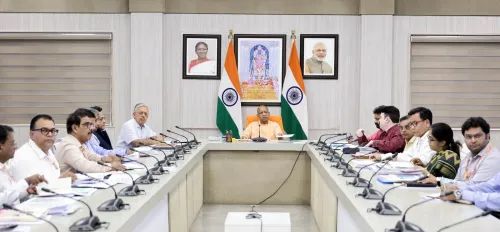
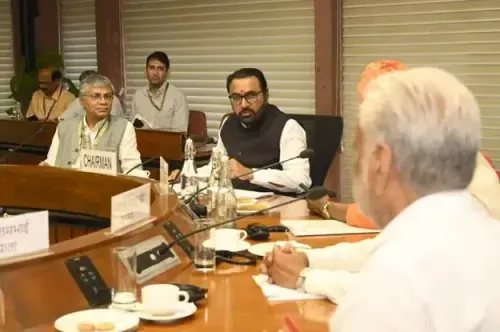
Chief Secretary Atal Dulloo chaired the Governing Body Meeting of the J&K AYUSH Society, where the plan was cleared for submission to the Ministry of AYUSH, Government of India. The proposed outlay of ₹91.997 crore significantly exceeds the Ministry's tentative resource envelope of ₹58.539 crore, reflecting the UT administration's ambition to scale up AYUSH services across the region.
Key Priorities in the Action Plan
Director AYUSH Dr. Ajay Kumar Tikoo informed the Governing Body that the plan envisages strengthening 523 Ayushman Arogya Mandirs, augmenting AYUSH units in public health institutions, ensuring uninterrupted supply of essential medicines, upgrading existing AYUSH hospitals and dispensaries, and accelerating the completion of new healthcare facilities in underserved areas.
The plan also calls for the deployment of AYUSH Mobile Medical Units and expanded coverage of major public welfare programmes — including the National Programme for Prevention and Management of Osteoarthritis, the National Programme for Prevention and Control of Cancer, Diabetes, Cardiovascular Diseases and Stroke (NPCDCS), AYUSH Maternal and Neo-natal Intervention, AYUSH Geriatric Healthcare Services, and AYUSH Palliative Services.
Wellness Tourism: J&K Looks to Kerala, Maharashtra Model
Chief Secretary Dulloo underscored the immense potential of wellness tourism for J&K, drawing comparisons with states such as Kerala, Maharashtra, and Andhra Pradesh, which have successfully branded themselves as wellness and healthcare destinations. He called for the formulation of a robust wellness policy in collaboration with private stakeholders, arguing that J&K's globally acclaimed tourist destinations give it a natural advantage in this space.
This push comes as wellness tourism has emerged as a high-growth segment nationally, with travellers increasingly combining pilgrimage and leisure trips with traditional medicine and therapeutic experiences.
Community Livelihood and Herbal Gardens
The Chief Secretary directed the AYUSH department to establish herbal gardens in government institutions and involve local Self-Help Groups (SHGs) in the processing and value addition of medicinal herbs. The initiative is designed to generate livelihood opportunities while simultaneously promoting indigenous medicinal products — linking public health goals with rural economic development.
Dulloo also stressed expediting faculty recruitment through designated agencies to strengthen AYUSH colleges and improve academic standards across the UT.
Finance Department Flags Consolidation over Expansion
Additional Chief Secretary (Finance) Shailendra Kumar advised the department to focus on augmenting and consolidating existing facilities rather than spreading resources thinly across multiple initiatives. He also advocated integrating AYUSH interventions into rehabilitation efforts for drug abuse victims, urging active participation in the ongoing 'Nasha Mukt Abhiyaan' campaign.
Commissioner Secretary, Health and Medical Education, M. Raju, presented the road map for expanding AYUSH services, noting that the Annual Action Plan was formulated after extensive consultations with district-level AYUSH functionaries and heads of AYUSH medical colleges.
Governance Reforms and What Comes Next
The Governing Body also approved the reconstitution of the Executive Committee of the J&K AYUSH Society, with representation from the Health and Medical Education Department, National Health Mission, Finance, Planning, and other technical stakeholders — a structural reform aimed at tightening implementation oversight.
With the SAAP now cleared for submission to the Centre, the J&K administration's ability to secure the full ₹91.997 crore outlay — against an indicated envelope of ₹58.539 crore — will be the next critical test of this ambitious healthcare and wellness agenda.
Point of View
But the gap between proposal and actual allocation will define delivery. The wellness tourism framing is strategically smart: it links a public health agenda to the UT's core economic asset, tourism. However, Kerala's dominance in Ayurveda wellness was built over decades of private investment and brand-building, not just government policy. The harder question is whether J&K can attract the private stakeholders Dulloo is calling for in a security-sensitive environment where investor confidence remains conditionally held.
NationPress
21 Oct 2026
Frequently Asked Questions
What is the J&K AYUSH Action Plan 2026-27?
It is a comprehensive State Annual Action Plan approved by the J&K AYUSH Society Governing Body on 2 June 2025, proposing ₹91.997 crore in investments under the National AYUSH Mission for 2026-27. The plan covers infrastructure upgrades, manpower development, wellness tourism, and expanded public health outreach across Jammu and Kashmir.
How much funding has J&K proposed for AYUSH, and how does it compare to the Centre's allocation?
J&K has proposed ₹91.997 crore, while the Ministry of AYUSH has indicated a tentative resource envelope of ₹58.539 crore — a gap of over ₹33 crore. The UT administration justified the higher ask citing increasing demand for AYUSH facilities and satisfactory utilisation of funds under previous programmes.
Which AYUSH healthcare programmes will be expanded under the plan?
The plan includes 523 Ayushman Arogya Mandirs, AYUSH Mobile Medical Units, and major public welfare programmes covering osteoarthritis, cancer, diabetes, cardiovascular diseases, stroke, maternal and neo-natal care, geriatric services, palliative care, and healthy lifestyle programmes for schoolchildren.
How does J&K plan to develop wellness tourism?
Chief Secretary Atal Dulloo called for a robust wellness policy developed in collaboration with private stakeholders, benchmarking J&K against Kerala, Maharashtra, and Andhra Pradesh. The strategy aims to leverage J&K's globally recognised tourist destinations to attract visitors seeking traditional medicine and therapeutic experiences.
What role will Self-Help Groups play in the AYUSH plan?
Local Self-Help Groups (SHGs) will be involved in the processing and value addition of medicinal herbs grown in herbal gardens to be established in government institutions. This is intended to generate livelihood opportunities while promoting indigenous medicinal products across J&K.