Nepal floods: 166 Indians rescued, IAF delivers 74 tonnes of aid
Synopsis
India has now evacuated 166 nationals from flood-hit Nepal and airlifted 74 tonnes of relief in five IAF sorties — while 410 Kailash Mansarovar pilgrims exited Tibet on the same day. With 1,114 confirmed dead, nearly 4,000 still missing, and a tunnel rescue inching forward 100 metres at a time, the scale of this glacial-collapse disaster is forcing a reckoning over Himalayan climate risk that no bilateral response alone can resolve.
Key Takeaways
166 Indian nationals have been rescued from Nepal as of 2 September , with three evacuated on Wednesday.
410 Indian pilgrims on the Kailash Mansarovar Yatra departed China on Wednesday, per the MEA .
A fifth IAF flight delivered 5.5 tonnes of medical supplies and an 11-member rescue team ; India's total aid to Nepal now stands at 74 tonnes .
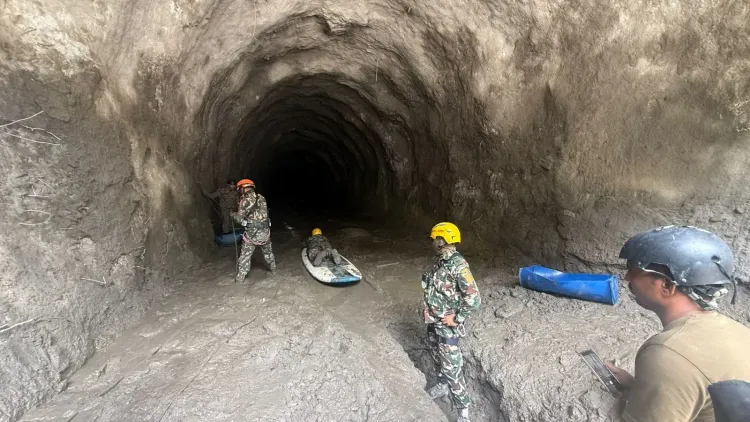
The Indian tunnel rescue team advanced 100 metres inside the Chilime tunnel on Wednesday, working with the Nepali Army .
At least 1,114 people are confirmed dead; 3,916 remain out of contact, according to NDRRMA .
Nepal PM Balendra Shah called for stronger global action on climate risk, linking the disaster to glacial melt in the Himalayas .
A total of 166 Indian nationals have been rescued from flood-ravaged Nepal as of 2 September, with three more evacuated on Wednesday, as New Delhi continues to scale up its humanitarian response to catastrophic flash floods that have killed more than 1,100 people. Separately, 410 Indian nationals who were in the Tibet Autonomous Region for the Kailash Mansarovar Yatra or other activities left China on Wednesday, according to the Ministry of External Affairs (MEA).
India's Relief Operation Intensifies
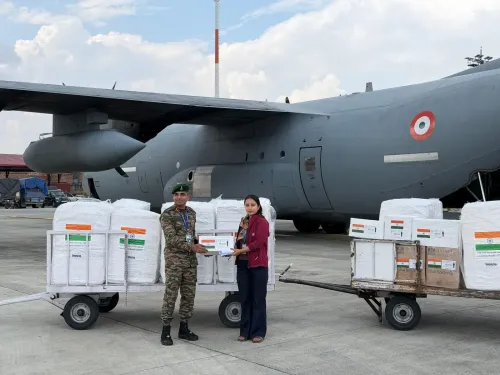
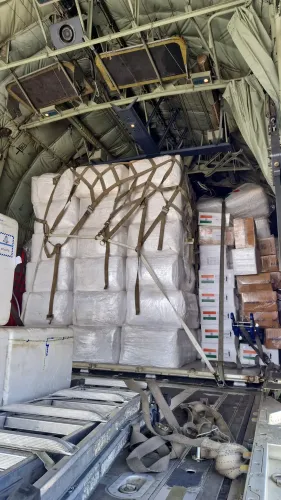
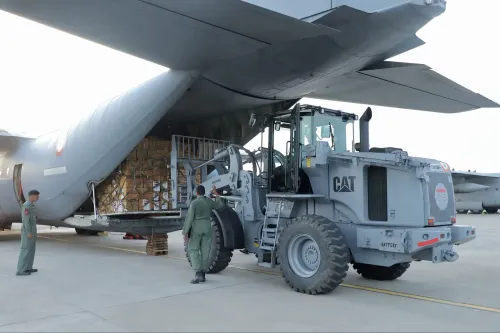
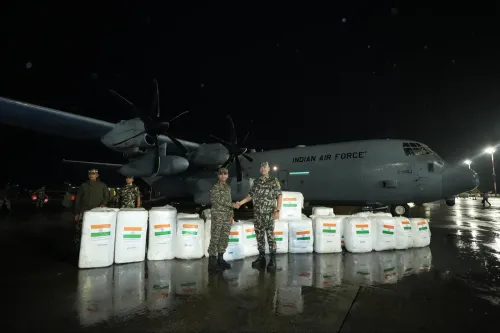
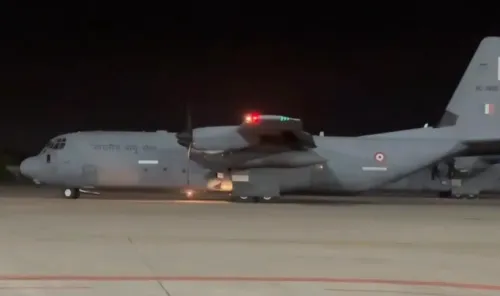
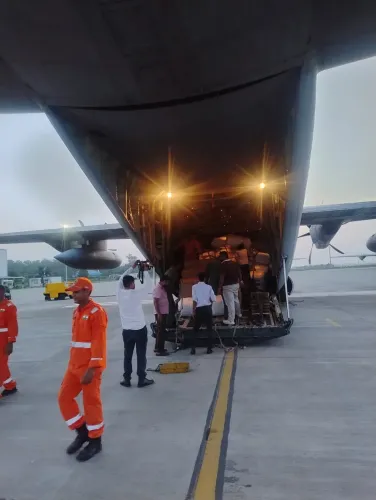
A fifth Indian Air Force (IAF) flight touched down in Kathmandu on Wednesday, carrying approximately 5.5 tonnes of medical supplies — including antibiotics, analgesics, surgical items, and other essential medicines. The aircraft also transported an 11-member specialised rescue team along with more than 6 tonnes of rescue equipment.
With this latest delivery, India has now dispatched a cumulative 74 tonnes of relief assistance to Nepal. The fresh tranche was formally handed over to the local government by Indian Ambassador Naveen Srivastava.
Tunnel Rescue Progress at Chilime
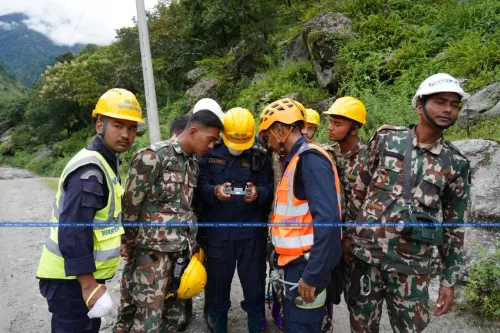
The MEA confirmed that the Indian tunnel rescue team relocated its base from Trishuli to Syabrubesi on Wednesday to cut travel time to Chilime, where active search operations are under way. Working alongside the Nepali Army through deep slush and internal blockages, the team advanced approximately 100 metres inside the tunnel on Wednesday alone.
According to the MEA statement, the team is also exploring an improvised road approach to the tunnel mouth to allow heavier equipment to be deployed. The 11 rescue experts who arrived Wednesday have positioned themselves near Trishuli Bazaar and are expected to begin operations on Thursday in coordination with the Nepali Army.
An Indian forensics team is simultaneously operating across two laboratories in Kathmandu, conducting DNA sample examination and analysis in collaboration with Nepali counterparts — a step that signals the scale of the human toll and the complexity of victim identification.
Scale of the Disaster
At least 1,114 bodies had been recovered by 9 am on Wednesday, according to Nepal's National Disaster Risk Reduction and Management Authority (NDRRMA). Around 3,916 people remain out of contact. The disaster was triggered on 26 August when a glacial collapse in Tibet blocked the Lengde Khola, a tributary of the Bhotekoshi River near the Nepal-China border. The accumulated water breached the natural barrier, unleashing a massive flood that swept downstream into the Trishuli River valley, devastating settlements and critical infrastructure.
Nepal PM Calls for Global Climate Attention
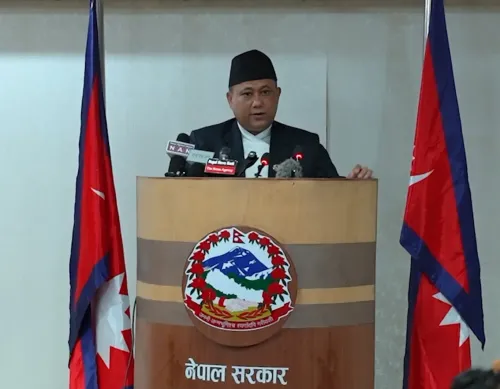
Nepal Prime Minister Balendra Shah addressed the House of Representatives on Wednesday, calling for stronger international attention to climate-related risks in the Himalayan region. Shah said Nepal must more forcefully highlight the disasters it is experiencing as a consequence of climate change.
'The huge disaster, whose impacts of climate change we have suddenly experienced, has kept us working around the clock to manage the damage. At the same time, another profound question has arisen in our minds: How did this disaster come upon us?' Shah said.
Experts have attributed the event to a glacial avalanche that dammed a river tributary before catastrophically failing — a pattern increasingly associated with accelerating glacial melt in the high Himalayas. This is not the first such incident; Nepal has recorded multiple glacial lake outburst floods (GLOFs) in recent decades, but the scale of this event has prompted renewed urgency around early-warning infrastructure and cross-border data sharing with China.
What Comes Next
India's rescue and relief operation is expected to intensify in the coming days as the heavier equipment reaches the Chilime tunnel site. The forensic DNA work in Kathmandu will be critical for families of the nearly 3,916 still unaccounted for. Nepal's government faces mounting pressure both domestically and internationally to accelerate recovery, rebuild damaged infrastructure, and push for binding climate accountability mechanisms in multilateral forums.
Point of View
916 still missing figure is the number that should dominate headlines, not the relief tonnage. Nepal PM Shah's climate appeal to parliament is the right instinct, but it risks becoming a diplomatic talking point unless it translates into binding cross-border early-warning protocols with China — the country whose glacial territory generated this flood. The Kailash Mansarovar evacuation, meanwhile, is a reminder that India's Himalayan pilgrimage routes carry sovereign risk that disaster planners rarely price in.
NationPress
18 Oct 2026
Frequently Asked Questions
How many Indian nationals have been rescued from Nepal floods so far?
A total of 166 Indian nationals have been rescued as of 2 September, including three evacuated on Wednesday. India's Ministry of External Affairs has been coordinating the rescue and relief effort alongside the Indian Air Force and the Nepali Army.
What caused the devastating floods in Nepal?
The floods were triggered on 26 August when a glacial collapse in Tibet blocked the Lengde Khola, a tributary of the Bhotekoshi River near the Nepal-China border. The accumulated water breached the natural dam and swept downstream into the Trishuli River valley, destroying settlements and infrastructure.
What relief has India sent to Nepal?
India has delivered approximately 74 tonnes of relief assistance to Nepal across five Indian Air Force flights. The latest flight carried 5.5 tonnes of medical supplies — including antibiotics, analgesics, and surgical items — and an 11-member specialised rescue team with over 6 tonnes of equipment.
What is the current death toll and missing persons count in Nepal?
At least 1,114 bodies had been recovered by 9 am on Wednesday, according to Nepal's National Disaster Risk Reduction and Management Authority (NDRRMA). Around 3,916 people remain out of contact.
What happened to Indian pilgrims on the Kailash Mansarovar Yatra?
A total of 410 Indian nationals who were in the Tibet Autonomous Region for the Kailash Mansarovar Yatra or other activities departed China on Wednesday, according to the MEA. Their safe exit came as India continued coordinating with Chinese authorities amid the broader regional disaster response.