Is 2026 Starting with Boots Instead of Diplomacy for FairPoint?

Synopsis
As the new year unfolds, the stark contrast between US military actions in Venezuela and India’s historical restraint raises profound questions about global diplomatic norms. With rising tensions in South Asia and the specter of unilateral actions looming, the world is left to ponder the implications for international relations. Will nations prioritize dialogue or military might?
Key Takeaways
The US military operation in Venezuela raises questions about international norms.
India's history of restraint in response to terrorism is contrasted with potential escalation.
Unilateral actions can destabilize global relations.
Regional tensions, particularly involving Pakistan and Bangladesh, continue to pose challenges for India.
The need for a balanced approach to national security is more critical than ever.
New Delhi, Jan 4 (NationPress) As US forces launched a covert night operation in Venezuela, echoes of India's own Operation Sindoor resurfaced in public consciousness.
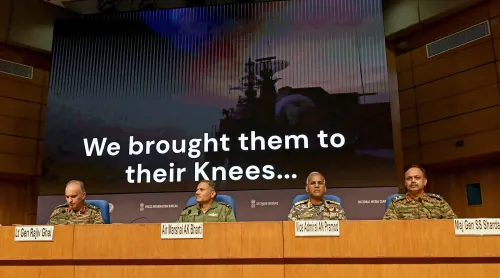
The Indian Armed Forces executed a successful precision operation from May 7-10, 2025, in Pakistan and Pakistan-occupied Kashmir, followed by airstrikes on 11 Pakistani airbases.
One cannot help but ponder: What if India had escalated its response? What if the terror masterminds protected by Pakistan -- Hafiz Saeed, Masood Azhar, Dawood Ibrahim, or even its formidable Army Chief, Field Marshal Asim Munir, had been apprehended in a similar manner?
This is not just a thought exercise for many Indians; it embodies a deep-rooted frustration with a neighbor that has mastered the art of terror exportation while portraying itself as a victim on the global stage.
For a significant part of this period, New Delhi maintained a posture of restraint. However, this changed decisively after 2014, with a policy shift towards punitive yet measured responses. Even this shift was framed within existing international norms to avoid perceptions of unilateral overreach. It is this very restraint that renders the events in Venezuela impossible to overlook.
In this context, the US action in Venezuela shocked the global conscience. When the US President declared that Venezuelan President Nicolas Maduro and his wife had been 'captured' and 'flown out of the country' following a 'successful large-scale strike,' disbelief quickly morphed into unease.
Numerous nations, including Russia and China, voiced their concerns, emphasizing that Venezuelans should be allowed to decide their own fate without destructive military interference from abroad.
The disturbing inquiry that emerged was simple yet profound: How could one nation invade another sovereign state to 'capture' its leader and seize control? It harkened back to ancient times when kings were taken hostage, territories conquered, and power was dictated by brute force rather than international standards. Here we are in 2026, just days into the year, and such actions sketch an unsettling blueprint for the future of global politics.
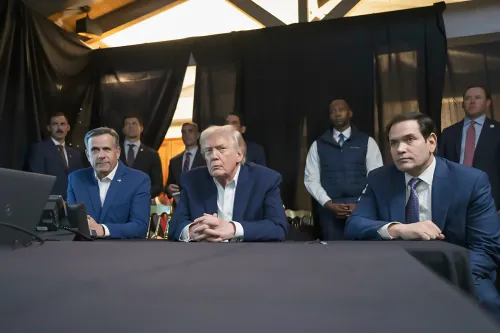
The dissonance between the preceding rhetoric and this event is particularly jarring. On New Year's Eve at his Mar-a-Lago estate in Florida, US President Donald Trump proclaimed 'peace, peace on Earth' as his resolution for the year, standing next to First Lady Melania Trump.
Yet, just four days later, the world witnessed a historic action, which the US is defending with its own narrative. Maduro faces charges of narco-terrorism, cocaine importation conspiracy, firearms offenses, and associated crimes, alleged to have begun around 1999 and persisted through 2025, according to US authorities.
Regardless of the justifications, one cannot overlook the legacy of the Iraq war, where US claims against Saddam Hussein were ultimately revealed to be false years later. In the interim, Iraq was devastated, contributing to the rise of terror groups like ISIS. In Afghanistan, after decades of military engagement, the US ultimately withdrew, allowing the brutal, radical Taliban to regain power.
The trajectory of the US' mission regarding Maduro remains to be seen, but the stark contrast between words and actions is undeniable.
While leaders, institutions, and international organizations frequently espouse peace, the unfolding reality across continents tells a contrasting narrative. Conflict zones continue to simmer without resolution.
The ongoing wars in Russia–Ukraine and Israel–Gaza show no signs of resolution. Tensions in Southeast Asia, including critical flashpoints like Vietnam–Cambodia, threaten to escalate. Instead of de-escalation, more regions appear to be descending into cycles of violence, instability, and strategic brinkmanship.
The year 2026, rather than presenting a clean slate, begins amid rising global anxiety. Power is increasingly asserted unilaterally, norms are being manipulated -- or disregarded -- and military force is regaining its status as the preferred method of influence.
For India, these global upheavals are not mere distant concerns. Challenges are brewing alarmingly close to home. Bangladesh, once celebrated as a development success story, is descending into chaos. The Hindu minority there faces relentless attacks; reports of killings, intimidation, and displacement are on the rise. Radical Islamist factions, emboldened by political instability, are advancing an aggressive anti-India agenda, with reckless threats about targeting India's northeastern states and severing the strategic Siliguri Corridor -- the vital 'chicken's neck.'
To the west lies Pakistan, the eternal adversary. Economically weakened yet ideologically hostile, Islamabad remains eager to manufacture tensions with New Delhi. Its military apparatus continues its antagonism towards India, employing terrorism as a strategic instrument and trafficking narcotics across the international frontier.
In this hostile milieu, India's actions are wholly justified and cannot be dismissed lightly. If the US claims its Venezuela operation was predicated on narco-terrorism, India's accusations against Pakistan are far more severe: harboring and financing terrorism, waging proxy wars, inflicting casualties on thousands of innocent civilians, inciting religious animosity, attempting to destabilize India internally, and facilitating narco-terrorism.
The world has already witnessed compelling evidence of Pakistan's status as a terror nexus -- most notably when US forces eliminated Osama bin Laden on its territory. Since then, a troubling number of terror incidents around the globe have been traced back to Pakistan.
If the US can engage in such actions with Venezuela, why shouldn't India consider similar measures with Pakistan? This question looms large in the minds of millions of Indians directly or indirectly impacted by Pakistan-sponsored terrorism.
The world is currently at a crossroads, steadily veering towards unilateralism, where nations prioritize internal concerns and act independently. The new year has commenced on a disquieting note.
Whether it spirals further into chaos or prompts a collective reevaluation of global conduct will hinge on the choices made now -- by those in power and by those living under its influence.
(Deepika Bhan can be reached at deepika.b@ians.in)
Point of View
I believe that while national security is paramount, it must be pursued within the framework of international norms. The actions of the US in Venezuela challenge the principles of sovereignty and diplomatic dialogue. India must navigate its own challenges with a balanced approach, ensuring that responses are measured and align with global standards.
NationPress
2 Oct 2026
Frequently Asked Questions
What was Operation Sindoor?
Operation Sindoor was a precision military operation conducted by the Indian Armed Forces in May 2025 targeting terrorist camps in Pakistan and Pakistan-occupied Kashmir.
Why did the US intervene in Venezuela?
The US intervention aimed to capture President Nicolas Maduro, who has been charged with various crimes including narco-terrorism.
How does this impact India?
India faces its own security challenges from Pakistan and must consider its responses in the context of global actions that challenge diplomatic norms.
What are the implications of unilateral military actions?
Unilateral actions can undermine international law and lead to increased tensions between nations, setting a dangerous precedent for global relations.
What is the significance of the Siliguri Corridor?
The Siliguri Corridor is a crucial land link for India that connects its northeastern states to the rest of the country, making it strategically important.