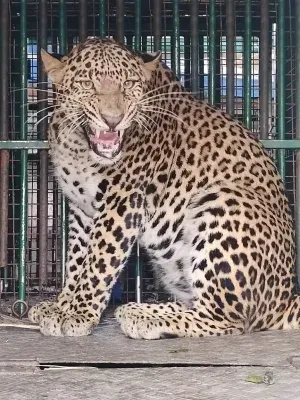
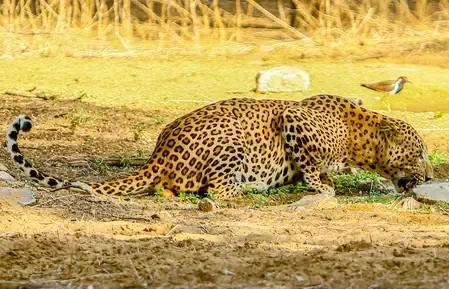
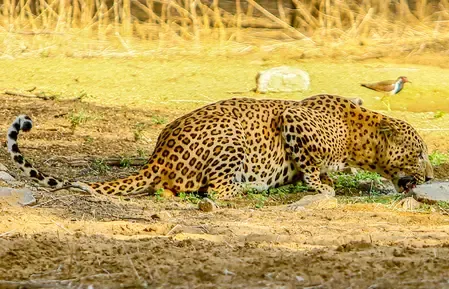
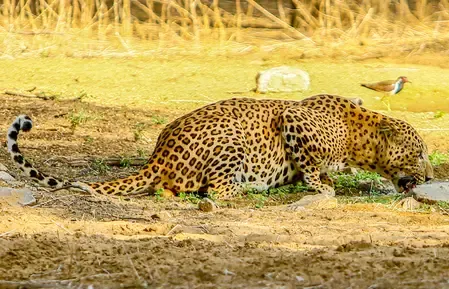
3 leopard cubs found dead in J&K's Tangmarg; poisoning suspected
Synopsis
Three leopard cubs dead in two days, all in the same patch of Tangmarg forest — preliminary post-mortems point to poisoning, though forensic tests are still pending. The deaths sharpen the lens on a human-wildlife conflict crisis in Kashmir that has logged over 761 incidents and at least 71 deaths in five years.
Key Takeaways
Three leopard cubs were found dead within two days in Tangmarg, Baramulla district , Jammu and Kashmir .
Preliminary post-mortem findings indicate poisoning as the cause of death; forensic examination is ongoing.
Investigators are determining whether the cubs ingested contaminated prey or were deliberately poisoned ; no bait was found at the site.
The Department of Wildlife Protection recorded over 761 human-wildlife conflict cases , including at least 71 deaths , across J&K over a five-year period as of early 2026 .
Habitat loss and winter food scarcity have pushed leopards and bears into populated areas of the Kashmir Valley .
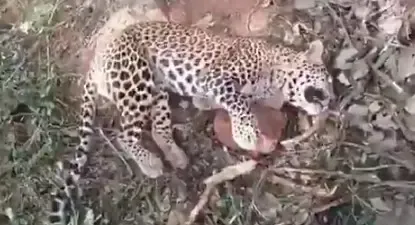
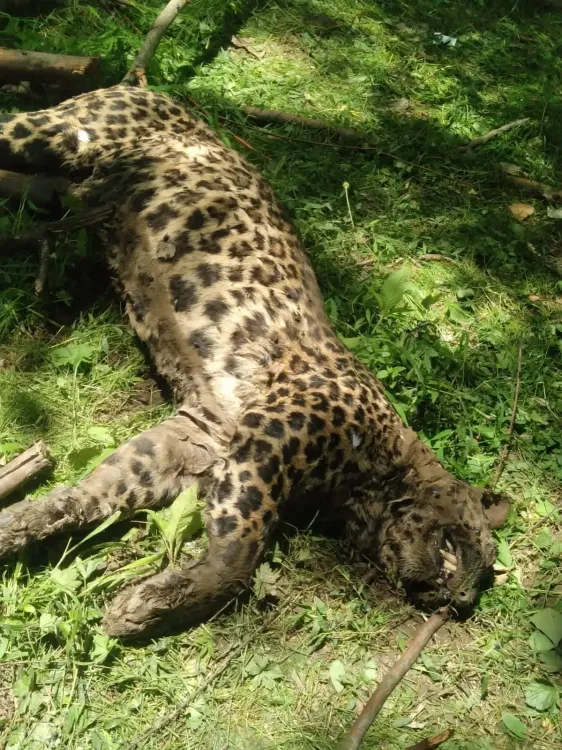
Three leopard cubs were found dead within two days in the Tangmarg area of Baramulla district, Jammu and Kashmir, with preliminary post-mortem findings pointing to poisoning as the likely cause of death, wildlife officials said on 19 November 2026. The deaths have raised fresh alarm over human-wildlife conflict in the region, where habitat loss has pushed leopards increasingly close to inhabited areas.
How the Deaths Were Discovered
According to officials of the local wildlife protection department, two cubs were found dead on Tuesday, while the third was discovered the following day — all within the same stretch of the Tangmarg area. The carcasses were transported to the wildlife control room, where veterinarians conducted post-mortems. Preliminary findings indicated poisoning, with suspicion further heightened by the fact that all three deaths occurred in the same location.
Authorities have clarified that forensic examination is now under way to confirm the initial assessment. Investigators are also working to determine whether the cubs ingested poison through contaminated prey or were deliberately poisoned — a distinction that carries significant legal and conservation consequences.
Search Yields No Poison Bait
Wildlife department teams conducted searches across the entire area to identify any poisonous bait that may have been placed there. No such material was found, officials said, adding complexity to the investigation. The absence of bait does not rule out deliberate poisoning, as it may have been removed, nor does it confirm accidental ingestion — leaving both possibilities open pending lab results.
Backdrop of Rising Human-Wildlife Conflict
The deaths come against a backdrop of escalating human-wildlife conflict across Jammu and Kashmir. According to data shared by the Department of Wildlife Protection in early 2026, more than 761 conflict cases — including at least 71 deaths and hundreds of injuries — were recorded across the union territory over a five-year span. Leopard attacks figure prominently in high-mortality incidents, with the animals frequently drawn toward settlements by stray dogs and open waste dumps.
Experts attribute the worsening trend to human encroachment on natural forest habitats, land-use changes, and seasonal food scarcity for wildlife. With winter now setting in across the Kashmir Valley, leopards and bears have been sighted more frequently in populated areas, including recent incidents reported from Ganderbal and Kupwara. Fields and orchards — particularly during harvesting seasons when maize and fruit attract animals — remain the most common conflict flashpoints.
Conservation Concerns
The loss of three cubs — young animals critical to any local population's long-term viability — is a significant blow to leopard conservation efforts in the region. Wildlife experts note that cub mortality from poisoning, whether accidental or deliberate, compounds the pressures already imposed by shrinking habitats. The Indian leopard (Panthera pardus fusca) is listed as Vulnerable on the IUCN Red List, and sub-adult and juvenile deaths are disproportionately damaging to population recovery.
The wildlife department is expected to share findings from the forensic examination once completed; the outcome will determine the nature and direction of any further action.
Point of View
71 deaths over five years — is alarming on its face, yet prosecution rates for wildlife poisoning remain opaque and rarely publicised. Conservation agencies must move beyond post-mortems to proactive deterrence: securing waste sites, managing stray dog populations that draw leopards toward settlements, and ensuring that forensic timelines are short enough to enable prosecution while evidence is still viable.
NationPress
19 Nov 2026
Frequently Asked Questions
Where were the three leopard cubs found dead in J&K?
The three leopard cubs were found dead in the Tangmarg area of Baramulla district in Jammu and Kashmir. All three deaths occurred within the same general location over two consecutive days.
What do preliminary findings say about the cause of death?
Preliminary post-mortem findings by veterinarians indicate poisoning as the likely cause of death. Forensic examination is now under way to confirm this, and investigators are also determining whether the poisoning was accidental or deliberate.
Was any poison bait found at the site?
No. Wildlife department teams searched the entire area but did not find any poisonous bait. Officials noted that the absence of bait does not conclusively rule out deliberate poisoning, and the investigation is continuing.
How serious is human-wildlife conflict in Jammu and Kashmir?
According to data from the Department of Wildlife Protection released in early 2026, more than 761 conflict cases — including at least 71 deaths and hundreds of injuries — were recorded across J&K over a five-year period. Leopards are frequently implicated in high-mortality attacks and are increasingly spotted near settlements, especially in winter.
Why are leopards appearing more frequently near human settlements in Kashmir?
Experts attribute the trend to shrinking forest habitats due to human encroachment, land-use changes, and seasonal food scarcity. Leopards are also drawn to villages by stray dogs and open waste. With winter setting in, sightings in residential areas have become more frequent across the Kashmir Valley.