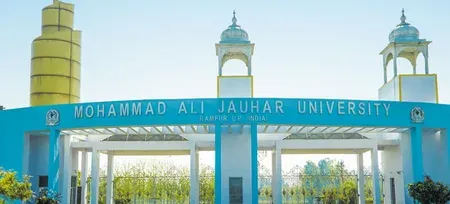
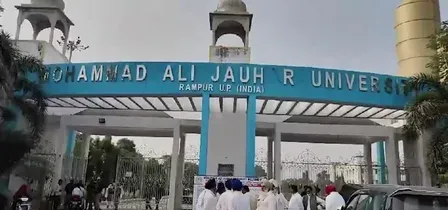
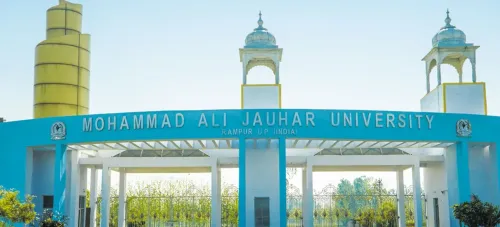
Jauhar University demolition: 38 of 40 buildings declared illegal by RDA in Rampur
Synopsis
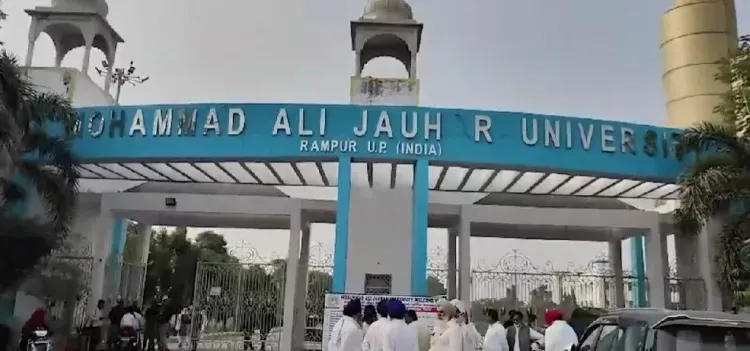
The Rampur Development Authority has ordered the demolition of 38 of 40 buildings at Jauhar University — founded by jailed SP leader Azam Khan — after finding no valid construction approvals for the structures. With the UP government citing rule of law and the SP crying vendetta, the order has reignited the 'bulldozer politics' debate at one of the state's most politically charged campuses.
Key Takeaways
The Rampur Development Authority (RDA) has ordered demolition of 38 of 40 buildings at Mohammad Ali Jauhar University , Rampur, for lacking valid construction approvals.
The university has been given 15 days to remove the unauthorised structures or face administration-initiated demolition.
Only 2 buildings — the medical college and the academic block — had approved plans from the Rampur Zila Panchayat .
The order was passed under Section 27(1) of the UP Urban Planning and Development Act, 1973 after a hearing on 15 July .
UP Deputy CM Brajesh Pathak and Minister Danish Azad Ansari defended the action; SP MLA Ravidas Mehrotra called it political vendetta.
The university was founded in 2006 and was formerly chaired by jailed SP leader Azam Khan , who stepped down from the governing trust earlier this year.
The Rampur Development Authority (RDA) has ordered the demolition of 38 out of 40 buildings at Mohammad Ali Jauhar University in Rampur, Uttar Pradesh, after finding that the structures were erected without valid approvals from the competent authority. The notice, issued on 16 July, gives the university 15 days to remove the unauthorised structures or face demolition proceedings initiated by the administration.
What the RDA Found
The demolition order was passed under Section 27(1) of the Uttar Pradesh Urban Planning and Development Act, 1973, following a detailed examination of records and a personal hearing conducted on 15 July. Official records obtained from the Rampur Zila Panchayat revealed that only two structures — the medical college building and the academic block — had approved building plans. The remaining 38 buildings had no valid construction sanctions.
The RDA noted that the university management was aware of the legal requirement to obtain prior permission, given that it had secured Zila Panchayat approval for the two authorised structures. Despite this, construction of the remaining buildings proceeded without the necessary clearances.
The University's Defence — and Why It Was Rejected
During the 15 July hearing — attended by university officials, legal representatives, and RDA authorities — the university argued that its campus in Singankhera village did not fall within the RDA's jurisdiction before 27 September 2024, and that approvals from the authority were therefore not required at the time of construction. The university contended that the structures could not be retrospectively declared illegal under the present jurisdictional framework.
The RDA rejected this argument, ruling that permission from the competent authority applicable at the time of construction was mandatory regardless of subsequent jurisdictional changes. It also dismissed the university's submissions concerning the master plan, zonal plan, and other provisions of the Act, holding that a structure's legality is determined solely by whether it received approval from the relevant authority under the laws in force when it was built.
Government Defends Action, SP Alleges Vendetta
Uttar Pradesh Deputy Chief Minister Brajesh Pathak defended the move, stating that the administration was committed to ensuring the rule of law without exception. 'Our government is committed to maintaining law and order. We will ensure that the law is upheld in every situation and that no unauthorised construction takes place,' he told reporters.
Minority Welfare Minister Danish Azad Ansari went further, alleging that the university was built by encroaching on public property. 'Jauhar University was not built for the welfare of society, nor was it built to educate poor Muslims. It was built for personal interests. Government land was encroached upon for the construction of the university. Government-built roads worth crores were included on the university campus; some Waqf properties were also included. All this was revealed in an investigation. Following this, necessary action was taken,' he said.
The opposition Samajwadi Party (SP), however, strongly condemned the demolition order as politically motivated. SP MLA Ravidas Mehrotra alleged that the Bharatiya Janata Party (BJP) government was acting out of spite. 'The BJP government is acting out of malice and a spirit of vendetta. They are preparing to bulldoze Jauhar University. The BJP government failed to bulldoze the homes of those who embezzled donations meant for the Ram Mandir, yet they are attempting to demolish a place where students study. The BJP will have to pay a heavy price for this; it has sparked anger among the youth,' he said.
Background: Azam Khan and the Jauhar Trust
Mohammad Ali Jauhar University was established in 2006 through an Act passed by the Uttar Pradesh Legislature and is located approximately 12 kilometres from Rampur Station. It is administered by the Mohammad Ali Jauhar Trust, which was formerly chaired by jailed senior SP leader and ex-minister Azam Khan, who also served as the university's Chancellor and lifetime president of the trust.
Earlier this year, Khan and members of his family formally stepped down from the university's governing trust. The proceedings were initiated after a report by the regional junior engineer flagged alleged unauthorised construction across the campus. The university filed its written reply on 8 July, following which the personal hearing was held on 15 July.
What Happens Next
The university has 15 days from the issuance of the notice to comply with the demolition order. Should it fail to act, the RDA has warned it will initiate its own demolition proceedings. The dispute is likely to escalate legally and politically, given the university's ties to the SP and the broader 'bulldozer politics' narrative that has defined governance debates in Uttar Pradesh in recent years.
Point of View
Issued notice, held a hearing, and rejected the jurisdictional defence on legally defensible grounds. But the political optics are impossible to separate from the substance: this is the university of Azam Khan, the BJP's most prominent Muslim adversary in western Uttar Pradesh, and the order lands while he remains in jail. The SP's vendetta charge will resonate beyond its base, particularly among students facing displacement. The deeper question mainstream coverage is missing is whether the RDA applied the same rigour to comparable private institutions in the state — if not, selective enforcement will be harder for the government to defend in court than the demolition order itself.
NationPress
15 Oct 2026
Frequently Asked Questions
Why has the Rampur Development Authority ordered demolition of Jauhar University buildings?
The RDA ordered demolition of 38 of 40 buildings at Mohammad Ali Jauhar University because the structures were constructed without valid approvals from the competent authority, violating the UP Urban Planning and Development Act, 1973. Official records showed only two buildings — the medical college and the academic block — had sanctioned building plans.
How many buildings at Jauhar University have been declared illegal?
38 out of 40 buildings on the Jauhar University campus in Rampur have been declared unauthorised by the RDA. Only the medical college building and the academic block had approved construction plans from the Rampur Zila Panchayat.
What is the connection between Azam Khan and Jauhar University?
Jauhar University was established in 2006 through a UP Legislature Act and was administered by the Mohammad Ali Jauhar Trust, formerly chaired by senior SP leader and ex-minister Azam Khan, who also served as the university's Chancellor. Khan and his family stepped down from the governing trust earlier this year; he remains in judicial custody.
What did the university argue in its defence?
The university argued that its campus in Singankhera village did not fall under the RDA's jurisdiction before 27 September 2024, and that RDA approval was therefore not required when the buildings were constructed. The RDA rejected this, ruling that permission from the competent authority at the time of construction was mandatory regardless of later jurisdictional changes.
What happens if the university does not comply with the demolition order?
The RDA has given the university 15 days to remove the 38 unauthorised structures. If the institution fails to comply, the authority has warned it will initiate its own demolition proceedings under the UP Urban Planning and Development Act, 1973.