Giriraj Singh Hails Cabinet Nod for Mobile PLI 2.0, Rs 62,500 Cr Package
Synopsis
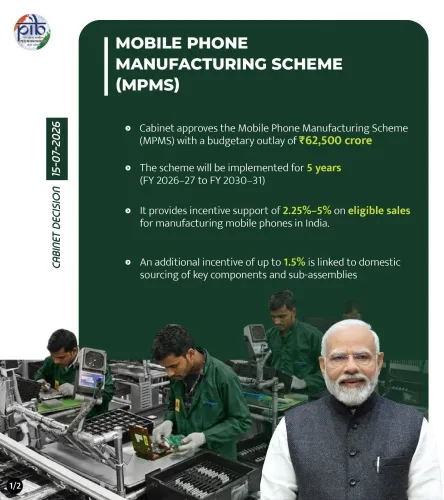
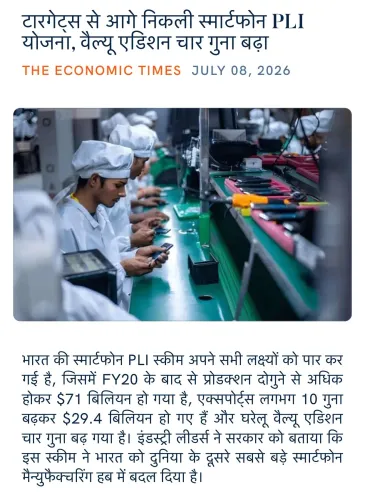
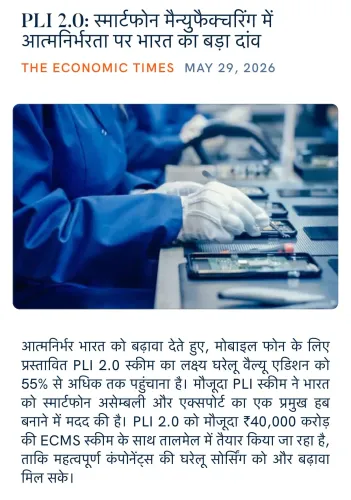
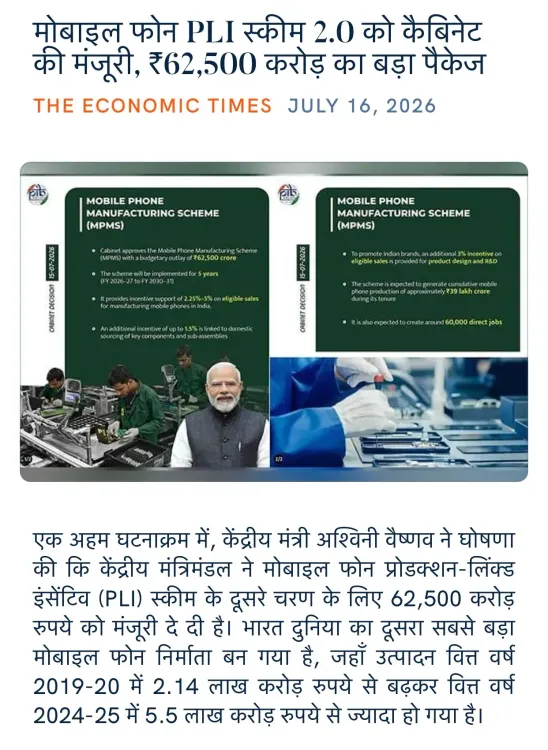
The Union Cabinet has approved Mobile Phone PLI Scheme 2.0 with a Rs 62,500 crore outlay, more than four times the original 2020 scheme. Union Textiles Minister Giriraj Singh shared the announcement, underscoring the government's push to deepen domestic electronics manufacturing under the Atmanirbhar Bharat framework.
Key Takeaways
The Union Cabinet approved the Mobile Phone PLI Scheme 2.0 with a total outlay of Rs 62,500 crore .
The new scheme is more than four times larger than the original 2020 PLI scheme for mobile phones, which had an outlay of Rs 15,000 crore .
Union Textiles Minister Giriraj Singh shared the Cabinet decision on 16 July 2026 via the NaMo App and X.
The scheme falls under the broader Atmanirbhar Bharat and Make in India frameworks aimed at deepening domestic electronics manufacturing.
Primary beneficiaries include electronics manufacturers , component suppliers , and the wider mobile phone production ecosystem in India .
Next steps involve MeitY releasing scheme guidelines, inviting applications, and publishing the list of approved companies.
Union Textiles Minister Giriraj Singh on Thursday, 16 July 2026, shared news of the Union Cabinet's approval of the Mobile Phone Production Linked Incentive (PLI) Scheme 2.0, describing the Rs 62,500 crore package as a landmark step for India's electronics manufacturing sector. The minister shared the development via the NaMo App, amplifying the Cabinet decision to his followers on X.
Context
The post, written in Hindi, announces: 'Mobile phone PLI scheme 2.0 ko Cabinet ki manjuri, Rs 62,500 crore ka bada package' — ('Cabinet approval for Mobile Phone PLI Scheme 2.0, a big package of Rs 62,500 crore'). While Giriraj Singh heads the Ministry of Textiles, senior BJP leaders routinely amplify major Cabinet decisions across portfolios, reflecting the party's coordinated communication strategy on economic milestones.
The Cabinet of India is the apex decision-making body for approving central schemes and financial outlays of this scale. An announcement of this magnitude signals a significant escalation of the government's commitment to domestic mobile phone manufacturing.
Policy Backdrop
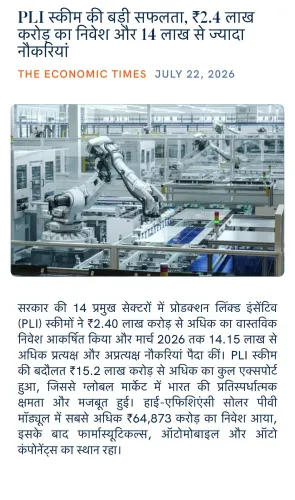
India's PLI framework for electronics was first introduced in 2020 under the Ministry of Electronics and Information Technology (MeitY), with an initial outlay of Rs 15,000 crore targeting large-scale mobile phone manufacturers. The original scheme attracted both global majors and Indian firms, contributing to a measurable rise in domestic handset production and exports.
The PLI architecture sits at the heart of the Atmanirbhar Bharat ('Self-Reliant India') initiative, which has deployed similar incentive structures across more than a dozen sectors — from pharmaceuticals and semiconductors to textiles and food processing. The overarching goal is to raise manufacturing's share in India's GDP and reduce dependence on imports, particularly from China, which has historically dominated global mobile phone supply chains.
PLI 2.0, at Rs 62,500 crore, would represent more than four times the financial commitment of the original scheme, signalling the government's assessment that the first iteration delivered sufficient results to warrant a significantly larger follow-on investment.
Stakeholders and Impact
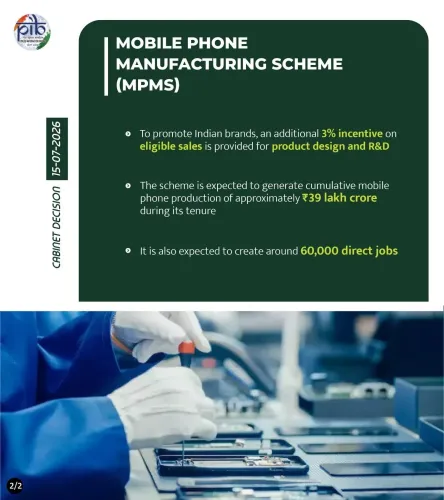
The primary beneficiaries of a PLI 2.0 approval would be electronics manufacturers — both domestic companies and global original equipment manufacturers (OEMs) with production bases in India — as well as the broader ecosystem of component suppliers and ancillary industries. Increased manufacturing incentives are expected to support job creation in assembly and component fabrication, particularly in states that host major electronics production clusters.
For consumers and the broader economy, a successful PLI 2.0 rollout could deepen India's integration into global electronics value chains, boost export revenues, and provide competitive pressure that moderates domestic handset prices over the medium term. The scheme's scale also makes it relevant to India's ambitions to position itself as an alternative global manufacturing hub.
What's Next
Following a Cabinet approval of this nature, the standard process involves MeitY releasing detailed scheme guidelines, opening applications, and publishing a list of approved beneficiary companies. Analysts and industry bodies will watch closely for the disbursement timeline, eligibility criteria, and production-linked milestone thresholds that will define the scheme's real-world impact.
Subsequent investment commitments from manufacturers and early export data will serve as the first concrete indicators of whether PLI 2.0 can replicate and surpass the outcomes of its predecessor — and whether India can consolidate its emerging position as a serious global player in mobile phone manufacturing.
Point of View
500 crore Mobile PLI 2.0 — dwarfing the original Rs 15,000 crore scheme — signals that the government views the first iteration as a validated model worth scaling aggressively. The fact that a senior BJP leader from the Textiles portfolio is amplifying an electronics policy announcement reflects the party's whole-of-government approach to projecting economic momentum ahead of electoral cycles. The scale of the outlay also positions India explicitly as a rival to established Asian manufacturing hubs in the global mobile supply chain. Whether the scheme translates into durable industrial capacity will depend heavily on the speed and transparency of guideline release and company approvals by MeitY.
NationPress
15 Oct 2026
Frequently Asked Questions
What is Mobile Phone PLI Scheme 2.0?
Mobile Phone PLI Scheme 2.0 is the second iteration of India's Production Linked Incentive programme for large-scale mobile phone manufacturing, approved by the Union Cabinet with a financial outlay of Rs 62,500 crore. It builds on the original 2020 scheme that had an outlay of Rs 15,000 crore.
How much money has the Cabinet approved for PLI 2.0?
The Union Cabinet has approved Rs 62,500 crore for the Mobile Phone PLI Scheme 2.0, making it more than four times larger than the original PLI scheme for mobile phones launched in 2020.
Who will benefit from the Mobile PLI Scheme 2.0?
Electronics manufacturers — both Indian companies and global mobile phone OEMs operating in India — as well as component suppliers and ancillary industries are the primary beneficiaries. The scheme is also expected to generate employment in states with major electronics production clusters.
What is the Atmanirbhar Bharat connection to PLI schemes?
PLI schemes are a core pillar of the Atmanirbhar Bharat ('Self-Reliant India') initiative launched in 2020, designed to boost domestic manufacturing, reduce import dependence — particularly in electronics — and raise manufacturing's share of India's GDP.
Why is Giriraj Singh commenting on a mobile phone scheme if he is the Textiles Minister?
Giriraj Singh heads the Ministry of Textiles, but as a senior BJP leader he routinely amplifies major government decisions across portfolios. Senior party leaders commonly share significant Cabinet announcements to build public awareness of the government's economic agenda.