Goyal: 40 Lakh Homes Now Solar-Powered Under PM Surya Ghar
Synopsis
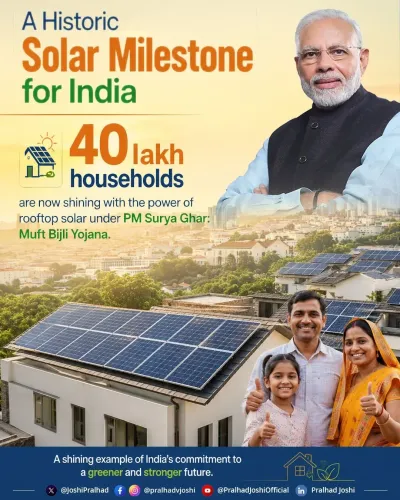
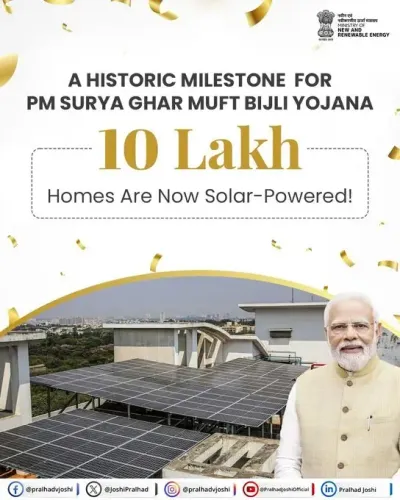
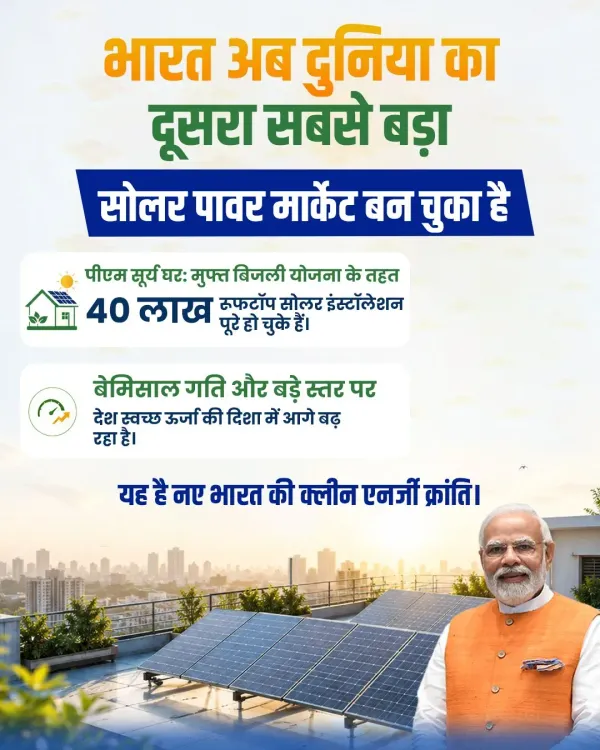
Union Minister Piyush Goyal on 29 May 2026 announced that over 40 lakh households have been connected to solar energy under the PM Surya Ghar Yojana, describing it as a new revolution in India's energy sector under PM Modi's leadership. The scheme, launched in February 2024, targets one crore rooftop solar installations with a ₹75,000 crore outlay.
Key Takeaways
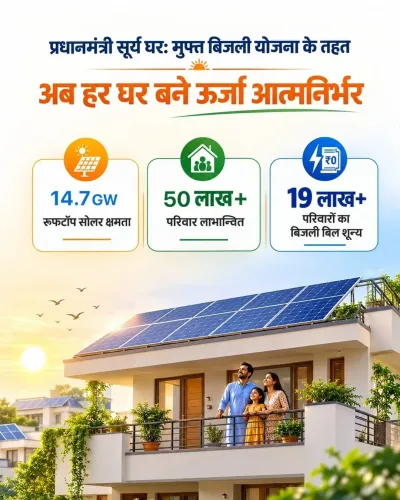
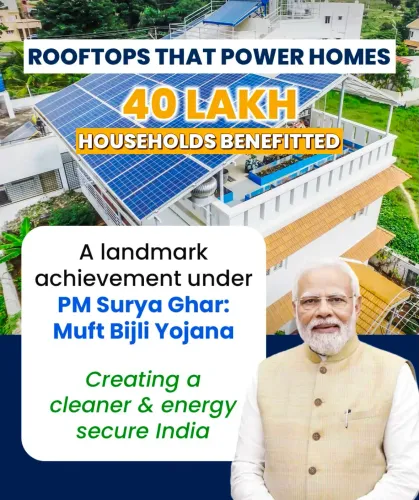
Union Minister Piyush Goyal announced on 29 May 2026 that more than 40 lakh families have been connected to solar energy under the PM Surya Ghar Yojana .
The scheme was launched in February 2024 with a target of one crore rooftop solar installations and a government outlay of ₹75,000 crore .
Eligible beneficiaries receive up to 300 units of free electricity per month under the scheme.
The initiative is part of India's broader goal of achieving 500 GW of non-fossil fuel capacity by 2030 and net-zero emissions by 2070 .
Key stakeholders include residential households, state DISCOMs, and domestic solar manufacturers.
Union Commerce and Industry Minister Piyush Goyal on Friday, 29 May 2026, hailed a major milestone under the PM Surya Ghar Yojana, stating that more than 40 lakh families have been connected to solar energy under the scheme, crediting the initiative to the leadership of Prime Minister Narendra Modi.
In a post on X, Goyal wrote: 'आपकी अपनी छत बन रही ऊर्जा का घर, परिवार हो रहा सशक्त और जीवन बन रहा आत्मनिर्भर!' — ['Your own roof is becoming a home of energy, families are being empowered and life is becoming self-reliant!'] He added that under PM Modi's leadership, 'this new India is not just saving electricity, but also writing a new revolution of change in the energy sector.'
Context
The PM Surya Ghar Muft Bijli Yojana was launched in February 2024 with the aim of installing rooftop solar panels in one crore households across India. The scheme offers eligible beneficiaries up to 300 units of free electricity per month and is backed by a government outlay of ₹75,000 crore. It is designed to reduce household electricity bills while simultaneously boosting India's distributed renewable energy capacity.
Goyal's post, tagged #40LakhsPMSuryaGhar, positions the crossing of the 40-lakh-family mark as a significant step toward the scheme's one-crore target. The minister framed the milestone within the broader Atmanirbhar Bharat narrative, linking rooftop solar adoption to household economic empowerment.
Policy Backdrop
India's push toward rooftop solar is embedded in a longer policy lineage. The National Solar Mission, launched in 2010 under the National Action Plan on Climate Change, first set the ambition for large-scale solar deployment. Successive budgets have expanded incentives for distributed generation, prioritising rooftop installations to reduce transmission losses and ease pressure on state electricity distribution companies (DISCOMs).
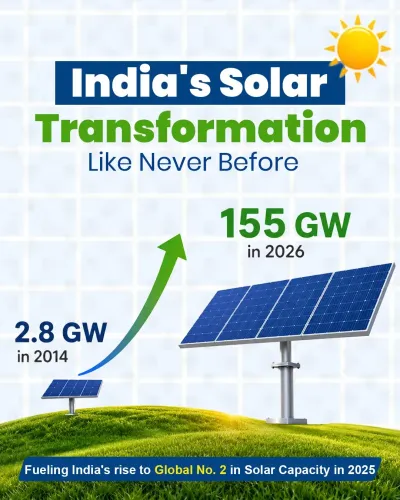
The PM Surya Ghar scheme is central to India's commitment to achieving 500 GW of non-fossil fuel capacity by 2030 and net-zero emissions by 2070. By shifting generation to the household level, the government aims to reduce dependence on centralised thermal power and lower the subsidy burden on state utilities.
Stakeholders and Impact
The primary beneficiaries are residential households, particularly in states with high solar irradiance, who gain access to subsidised clean energy and lower monthly bills. DISCOMs stand to benefit from reduced peak-load demand, though grid integration of distributed solar also requires infrastructure upgrades on their part.
Domestic solar manufacturers are another key stakeholder, as the scheme's scale creates sustained demand for panels, inverters, and balance-of-system components — supporting the government's parallel push to build a domestic solar manufacturing ecosystem under production-linked incentive programmes.
What's Next
Parliamentary and administrative attention will now focus on the pace at which installations move toward the one-crore household target. State-level grid integration reports and DISCOMs' capacity to handle increased rooftop generation are expected to feature in energy ministry updates through the 2025–26 period. If the current trajectory holds, the scheme's full rollout could meaningfully reshape India's residential energy consumption profile and serve as a template for decentralised energy policy in the developing world.
Point of View
Using the 40-lakh figure to sustain political momentum around a flagship scheme that is central to the BJP government's Atmanirbhar Bharat and clean-energy narrative ahead of the scheme's second anniversary. The framing — rooftop as 'home of energy' and families becoming 'self-reliant' — ties household-level solar adoption directly to the broader ideological project of economic sovereignty. With the one-crore target still some distance away, the announcement also serves to manage public expectations by highlighting progress rather than the gap. Analysts will watch whether state-level grid infrastructure and DISCOM cooperation can keep pace with the political ambition embedded in the scheme's rollout timeline.
NationPress
15 Sept 2026
Frequently Asked Questions
What is the PM Surya Ghar Yojana?
The PM Surya Ghar Muft Bijli Yojana is a central government scheme launched in February 2024 to install rooftop solar panels in one crore Indian households, offering up to 300 units of free electricity per month with a total outlay of ₹75,000 crore.
How many families have benefited from PM Surya Ghar Yojana so far?
According to Union Minister Piyush Goyal's post on 29 May 2026, more than 40 lakh families have been connected to solar energy under the PM Surya Ghar Yojana.
What is the target of PM Surya Ghar Muft Bijli Yojana?
The scheme aims to provide rooftop solar installations to one crore households across India, with eligible families receiving up to 300 units of free electricity every month.
How does PM Surya Ghar Yojana support India's clean energy goals?
The scheme contributes to India's target of 500 GW of non-fossil fuel capacity by 2030 and net-zero emissions by 2070 by promoting distributed rooftop solar generation and reducing dependence on centralised thermal power.
Who is eligible for PM Surya Ghar Yojana?
The scheme targets residential households across India, with subsidies and free electricity units provided to beneficiaries who install rooftop solar panels through the government programme.