Harvard alumni counter letter: 44 sign joint statement to defend India's global image
Synopsis
Forty-four Harvard University alumni fired back at a previous open letter by 100 peers, releasing a counter statement on 14 October to push back against what they called attempts to 'distort the global perception about India.' The episode — triggered by Opposition protests demanding the Chief Election Commissioner's resignation — has turned an Indian electoral dispute into a transatlantic alumni battleground, with the Harvard Club of India already having distanced itself from the original letter.
Key Takeaways
44 Harvard University alumni released a joint counter statement on 14 October 2026 defending India's constitutional institutions .
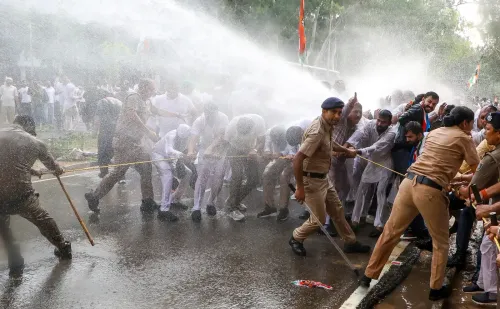
The statement was a direct response to an earlier open letter signed by 100 Harvard alumni criticising the crackdown on protests in New Delhi .
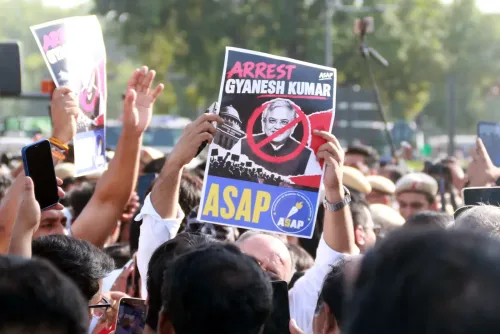
The protests were led by the Opposition demanding the resignation of Chief Election Commissioner Gyanesh Kumar over the SIR controversy .
The Harvard Club of India had previously clarified it did not endorse the original open letter.
BJP spokesperson Surabhi Hodigere was among the signatories, calling the earlier letter's claims unsubstantiated.
Signatories stressed the counter statement is a position of individuals, not an official institutional statement from Harvard.
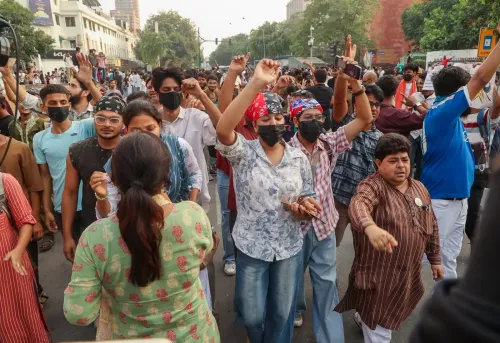
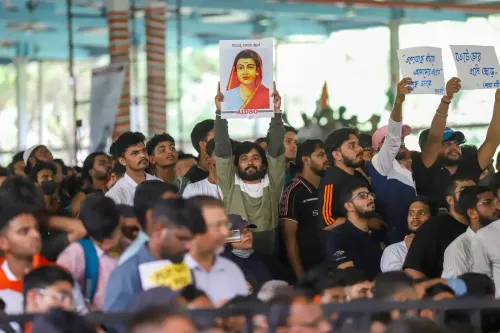
At least 44 signatories drawn from various schools and centres at Harvard University released a joint statement on Wednesday, 14 October 2026, expressing deep concern over what they described as a 'negative public discourse' and a 'concerted campaign' against India's constitutional institutions. The statement came in direct response to an earlier open letter signed by 100 Harvard alumni that had condemned the crackdown on protests in New Delhi, which were led by the Opposition demanding the resignation of Chief Election Commissioner Gyanesh Kumar over the Special Intensive Revision (SIR) controversy.
Why the Counter Statement Was Issued
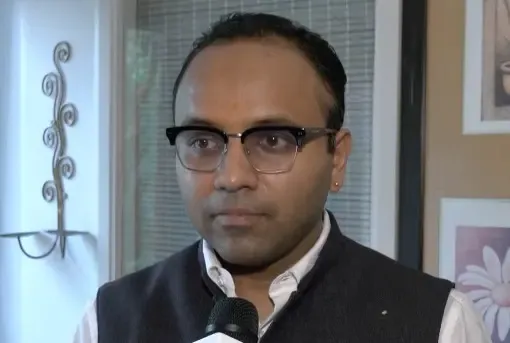
Harvard Kennedy School alumnus Chetan Aggarwal said the statement became necessary because, in his words, 'some people want to distort the global perception about India.' He alleged that certain individuals were 'creating apprehensions about India's vibrant democracy' and using what he characterised as 'abusive language' against constitutional authorities, including the Supreme Court, Parliament, and the Election Commission of India (ECI).
Aggarwal also raised concerns about the unauthorised use of the Harvard name, saying, 'People are attempting to misuse institutions like Harvard for their political agenda.' He acknowledged that professionals like himself do not ordinarily wade into such matters, but called it 'the need of the hour to come together and call out those who are endangering India and our vibrant democracy.'
What the Signatories Argued
Fellow Harvard Kennedy School alumnus Prateek Som clarified that the joint statement represents 'a collective position of individuals belonging to an institution, but not an institutional statement.' He maintained that while the right to protest is fundamental, it 'cannot be a license to undermine or to intimidate the constitutional authorities and disregard the rule of law.'
Som also referenced the INDIA bloc's reported attempt to meet Chief Justice of India Surya Kant, arguing that once a notice is issued in a petition and a matter becomes sub judice, it 'cannot be adjudicated on the administrative side.' He contended that what is being seen 'in the name of protest' amounts to an attempt to intimidate even the Supreme Court.
The Harvard Club of India Clarification
Notably, following the circulation of the original open letter, the Harvard Club of India issued a clarification stating it did not endorse or issue any statement from the university regarding the ongoing protests in Delhi. The counter statement by the 44 signatories is therefore the second institutional distance drawn from the original letter.
BJP Spokesperson Weighs In
Public policy professional and Bharatiya Janata Party (BJP) spokesperson Surabhi Hodigere, one of the signatories, said the earlier open letter had 'suggested that Delhi was almost under siege due to the protests,' adding that the claims were made 'without any evidence or substantiation.' She also argued that the original letter 'gave the impression that alumni held a homogeneous opinion, when that was not the case.'
'Whether at universities in India or abroad, there is a diversity of views. It was important for us to give those views a voice,' Hodigere said, asserting that unproven claims cannot be allowed to go unchallenged.
Context and What Comes Next
This comes amid a broader political flashpoint over the SIR controversy, with the Opposition staging protests in Delhi seeking the removal of Chief Election Commissioner Gyanesh Kumar. The episode reflects a recurring pattern in which Indian political debates spill into international academic and diaspora spaces, prompting competing statements that each claim to represent the authentic voice of a given institution. How the controversy around the ECI and the SIR process develops will determine whether this counter-narrative effort by the 44 Harvard alumni gains further traction.
Point of View
With both sides racing to claim the credibility of a Harvard letterhead. The Harvard Club of India's clarification was the first tell: the original open letter was always a political document dressed in institutional clothes. The counter statement, which includes a named BJP spokesperson among its signatories, is equally political. What this episode exposes is a deeper vacuum: when domestic credibility of constitutional bodies is contested, each side looks abroad for validation — a dynamic that ultimately diminishes both the institutions in question and the universities being invoked.
NationPress
14 Oct 2026
Frequently Asked Questions
What is the Harvard alumni counter statement on India about?
It is a joint statement signed by 44 alumni from various Harvard University schools and centres, released on 14 October 2026, defending India's constitutional institutions against what the signatories describe as attempts to distort the country's global image. The statement was issued in response to an earlier open letter by 100 Harvard alumni that criticised the handling of Opposition protests in New Delhi.
What triggered the protests that prompted this alumni debate?
The protests were organised by the INDIA bloc Opposition, demanding the resignation of Chief Election Commissioner Gyanesh Kumar over the Special Intensive Revision (SIR) controversy. The original open letter by 100 Harvard alumni condemned what it described as a crackdown on these protests in Delhi.
Did Harvard University officially endorse either letter?
No. The Harvard Club of India clarified it did not endorse or issue any statement regarding the Delhi protests. Signatory Prateek Som also stressed that the counter statement is 'a collective position of individuals belonging to an institution, but not an institutional statement.'
Who are some of the notable signatories to the counter statement?
BJP spokesperson and public policy professional Surabhi Hodigere is among the 44 signatories. Harvard Kennedy School alumni Chetan Aggarwal and Prateek Som were also among those who spoke publicly about the statement's intent.
What did the signatories say about the right to protest?
The signatories, including Prateek Som, acknowledged that the right to protest is fundamental but argued it 'cannot be a license to undermine or to intimidate the constitutional authorities and disregard the rule of law.' They drew a distinction between protesting against a government and attempting to intimidate independent constitutional bodies.