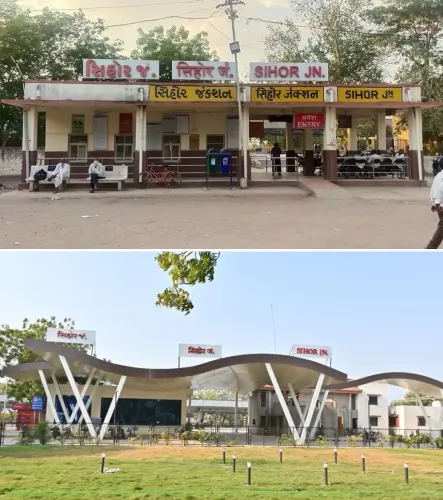
Are 60 Railway Stations Being Redeveloped in the Northeast?
Synopsis
Discover how Indian Railways is transforming the northeastern region with the redevelopment of 60 railway stations. This initiative under the Amrit Bharat Station Scheme is a key step towards enhancing connectivity and infrastructure in the area.
Key Takeaways
60 railway stations are being redeveloped in the northeast.
Over 1,679 km of railway tracks laid since 2014.
The Bairabi-Sairang line connects Aizawl to the rail network.
Major projects like Sivok-Rangpo are underway.
The USBRL provides all-weather connectivity to the Kashmir Valley.
The New Pamban Railway Bridge is India's first vertical-lift bridge.
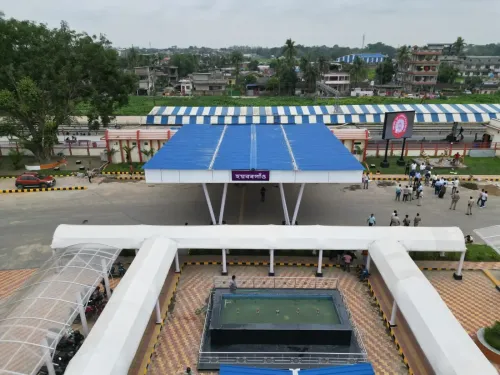
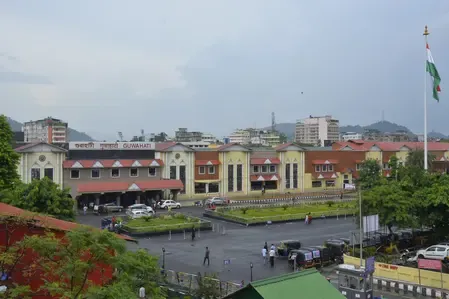
New Delhi, Dec 30 (NationPress) The Indian Railways is experiencing significant advancements in the northeastern part of the country, with 60 railway stations undergoing redevelopment as part of the Amrit Bharat Station Scheme, according to a government announcement on Tuesday.
Since 2014, over 1,679 km of railway tracks have been laid in this region, and more than 2,500 route kilometers have been electrified. The Railways Ministry also reported the construction of over 470 road overbridges and underbridges.
The new Bairabi-Sairang line has been fully operational, marking the first time Aizawl is connected to the rail network. Aizawl is now the fourth capital in the northeast to join the national rail network.
According to the ministry, major projects like Sivok-Rangpo, Dimapur-Kohima, and Jiribam-Imphal are progressing well, enhancing the economic and social integration of the northeast with the rest of India.
Indian Railways is engaged in some of the most ambitious infrastructure projects of the 21st century, aimed at bolstering national integration, improving logistics, and expanding the modern railway network.
From iconic bridges constructed in challenging terrains to high-speed rail and freight corridors, these projects showcase India's growing engineering prowess and long-term vision.
Among the notable projects is the Udhampur-Srinagar-Baramula Rail Link (USBRL), a venture of great strategic and national significance. With an estimated cost of Rs 44,000 crore, this 272-km line traverses the Himalayan region
The project features the Chenab Rail Bridge, recognized as the world’s highest railway arch bridge, towering 359 meters above the river—taller than the Eiffel Tower. This steel arch bridge spans 1,315 meters and is engineered to withstand seismic and wind conditions.
Additionally, it includes India’s first cable-stayed railway bridge over the Anji River, known as the Anji Rail Bridge, along with 36 tunnels (totaling 119 km) and 943 bridges.
The USBRL offers all-weather rail connectivity to the Kashmir Valley, enhancing mobility, tourism, and economic activities in the region.
Another significant accomplishment is the New Pamban Railway Bridge in Tamil Nadu, India's first vertical-lift sea bridge.
Constructed at around Rs 550 crore, the 2.08 km bridge consists of 100 spans, with 99 spans measuring 18.3 meters each and a main span of 72.5 meters.
This bridge features a sturdy substructure system with 333 piles and 101 pile caps, ensuring structural integrity and includes 99 approach girders designed for effective load distribution.
The new bridge guarantees rail connectivity to Rameswaram, an essential pilgrimage and tourism hub. Reflecting its advanced design and engineering excellence, the New Pamban Railway Bridge has been awarded the Steel Structures & Metal Buildings Award 2024 in the Bridge Design category.
The Indian Railways is also advancing in the realm of high-speed rail, with the Mumbai-Ahmedabad High-Speed Rail Project being executed by NHSRCL.
As of December 21, 2025, 331 km of viaduct work has been finished out of a total alignment of 508 km, with pier work completed for 410 km, as reported by the ministry.
vd
Point of View
I believe the ongoing redevelopment of railway stations in the northeast signifies a pivotal move towards national integration and economic growth. This initiative reflects the government's commitment to enhancing infrastructure, ultimately benefiting the local population and fostering greater connectivity across regions.
NationPress
1 Oct 2026
Frequently Asked Questions
How many railway stations are being redeveloped in the northeast?
A total of 60 railway stations are undergoing redevelopment under the Amrit Bharat Station Scheme.
What is the Amrit Bharat Station Scheme?
The Amrit Bharat Station Scheme is a government initiative aimed at redeveloping railway stations across India to improve infrastructure and connectivity.
What major projects are underway in the northeast?
Key projects include Sivok-Rangpo , Dimapur-Kohima , and Jiribam-Imphal , which aim to enhance economic and social integration in the region.
What is the significance of the Udhampur-Srinagar-Baramula Rail Link?
The USBRL is of high strategic importance, connecting the Kashmir Valley with all-weather rail services and boosting economic activity.
What is the New Pamban Railway Bridge?
The New Pamban Railway Bridge is India’s first vertical-lift sea bridge, enhancing connectivity to Rameswaram.