CM Yogi: 600+ UP Police Officers Trained in Forensic Evidence
Synopsis
Uttar Pradesh CM Yogi Adityanath announced that over 600 state police officers are now trained in forensic evidence collection, advancing UP's compliance with India's 2023 criminal law reforms that made forensic involvement in serious crimes mandatory.
Key Takeaways
CM Yogi Adityanath announced that over 600 Uttar Pradesh Police officers have been trained in forensic evidence collection.
The training drive responds to the Bharatiya Nagarik Suraksha Sanhita (2023) , which mandates forensic expert involvement in serious offences.
The new criminal laws came into force in 2024 , making state-level forensic capacity a legal requirement, not an option.
The announcement fits Uttar Pradesh's broader police modernisation pattern under the Adityanath government since 2017.
Compliance audits and forensic lab upgrade reports will be the next key indicators of real-world implementation.
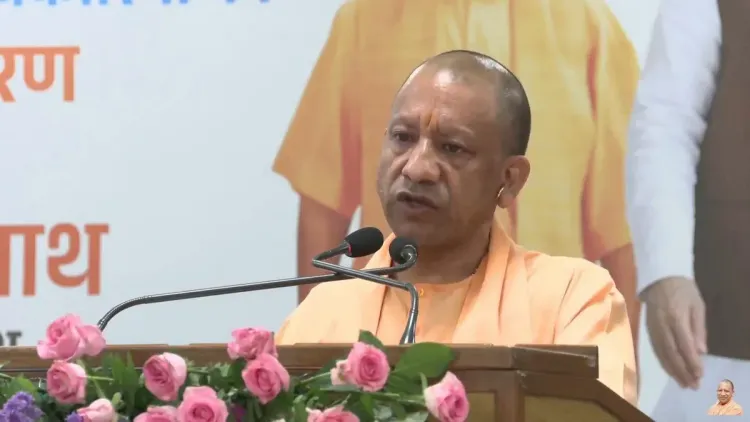
Uttar Pradesh Chief Minister Yogi Adityanath has spotlighted a significant milestone in the state's police modernisation push — over 600 police officers trained in forensic evidence collection, a capability that sits at the heart of India's sweeping new criminal law framework. The announcement signals that Uttar Pradesh, India's most populous state, is not merely complying with the mandate but pressing ahead of it.
The 600-officer benchmark and what it means on the ground
In his post, Chief Minister Adityanath stated: 'हमारे पास फॉरेंसिक एविडेंस कलेक्शन के लिए 600 से अधिक पुलिस अधिकारी प्रशिक्षित हो चुके हैं' — 'We now have more than 600 police officers trained in forensic evidence collection.' That number matters in practice: when a serious crime scene is processed by a forensic-trained officer, the chain of custody is cleaner, the evidence is court-ready, and convictions become harder to overturn on procedural grounds.
The Uttar Pradesh Police is the enforcement arm of a state that runs roughly the size of a mid-sized country. Getting even a fraction of its officers to forensic standard is a logistical undertaking — and the CM is framing it as a deliverable, not a promise.
Why the new criminal laws made forensics non-negotiable
The Bharatiya Nagarik Suraksha Sanhita, passed in 2023 and rolled into force in 2024, introduced a mandatory requirement: forensic experts must be involved in the investigation of serious offences. The intent was to push Indian policing away from confession-led investigations and toward science-backed prosecution. But the law only works if trained personnel actually exist at the district and tehsil level. Without them, the mandate stalls on paper.
Uttar Pradesh's training drive is a direct response to that gap — building the human infrastructure the law demands before compliance audits begin in earnest.
A modernisation pattern Lucknow has been building since 2017
This announcement fits a consistent thread running through the Adityanath administration since it took office in 2017: repeated emphasis on scientific investigation, anti-organised-crime operations backed by forensic evidence, and the positioning of policing reform as a governance credential. Each upgrade — from CCTV networks to crime labs — has been publicised as proof that law enforcement in UP has moved beyond the old, opaque model.
What to watch next: state-level forensic lab capacity reports and compliance audits under the new criminal procedure code will reveal whether the trained officers have the lab infrastructure to match their field skills.
Six hundred officers trained is a start — the question now is whether the labs, the equipment, and the courtroom procedures can keep pace with the badge count.
Point of View
Showcasing forensic training numbers is a governance optics play: it converts an abstract legal obligation into a countable, communicable achievement ahead of any state election cycle. The deeper test, however, is whether lab infrastructure and judicial familiarity with forensic evidence can match the field-officer head count — a gap that could make or break conviction rates under the new code.
NationPress
5 Nov 2026
Frequently Asked Questions
How many UP Police officers have been trained in forensic evidence collection?
CM Yogi Adityanath stated that more than 600 Uttar Pradesh Police officers have been trained in forensic evidence collection.
Why is forensic training mandatory for Indian police now?
The Bharatiya Nagarik Suraksha Sanhita, passed in 2023 and in force since 2024, requires forensic experts to be involved in investigations of serious offences, making trained personnel a legal necessity.
What is the Bharatiya Nagarik Suraksha Sanhita?
It is the new criminal procedure law passed in 2023 that replaced the older Code of Criminal Procedure, introducing reforms including mandatory forensic involvement in serious crime investigations.
What is Uttar Pradesh doing to modernise its police force?
Under CM Yogi Adityanath, UP has pursued a consistent police modernisation drive since 2017, including scientific investigation training, forensic capacity building, and technology upgrades aligned with the new national criminal law framework.
What comes next for UP Police forensic implementation?
State-level forensic laboratory upgrades and compliance audits under the new criminal procedure code will determine how effectively the trained officers can apply their skills in real investigations.