CM Sai: 6,691 Chhattisgarh Villages in Tribal Utkarsh Drive
Synopsis
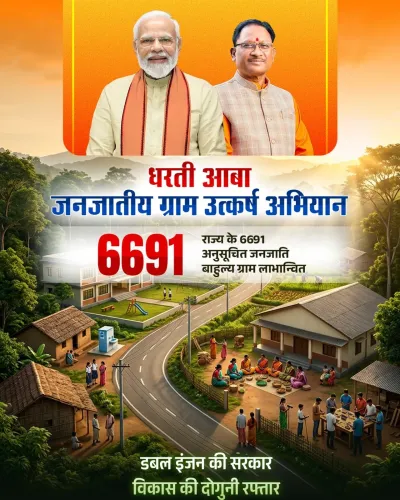
PM Modi's Dharti Aaba Janjatiya Gram Utkarsh Abhiyan has enrolled 6,691 Chhattisgarh villages for expanded basic infrastructure in tribal areas, CM Vishnu Dev Sai announced on Janjatiya Gaurav Diwas, linking the launch to a broader chain of tribal welfare policy from Vanbandhu Kalyan Yojana to PM JANMAN.
Key Takeaways
6,691 villages in Chhattisgarh are enrolled in the Dharti Aaba Janjatiya Gram Utkarsh Abhiyan launched by PM Narendra Modi .
The scheme targets expansion of basic facilities and development works in tribal areas across Fifth Schedule regions.
The announcement was made on Janjatiya Gaurav Diwas (15–16 November) , the birth anniversary of tribal icon Birsa Munda .
The abhiyan builds on the policy lineage of Vanbandhu Kalyan Yojana (2014) and PM JANMAN (2023) , widening the scope to broader tribal villages beyond PVTGs.
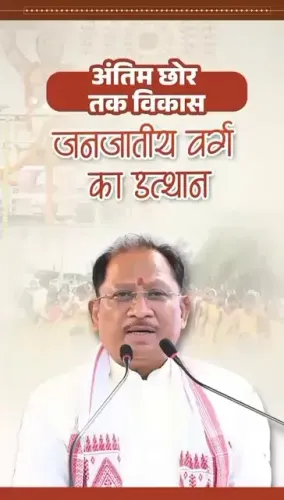
CM Vishnu Dev Sai framed the scheme as central to holistic development of Chhattisgarh's large tribal population.
State delivery across challenging terrain in Bastar and Surguja divisions will be the real test of the scheme's impact.
Thousands of tribal villages across Chhattisgarh are set for a wave of infrastructure investment after Prime Minister Narendra Modi launched the Dharti Aaba Janjatiya Gram Utkarsh Abhiyan — a central government push to close the development gap in India's most underserved Fifth Schedule areas. The Chief Minister's Office of Chhattisgarh confirmed on Monday, 16 November 2026 that the state has 6,691 villages enrolled in the campaign, with Chief Minister Vishnu Dev Sai framing it as a transformative step for the state's large tribal population.
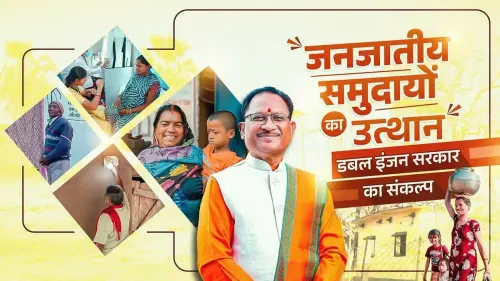
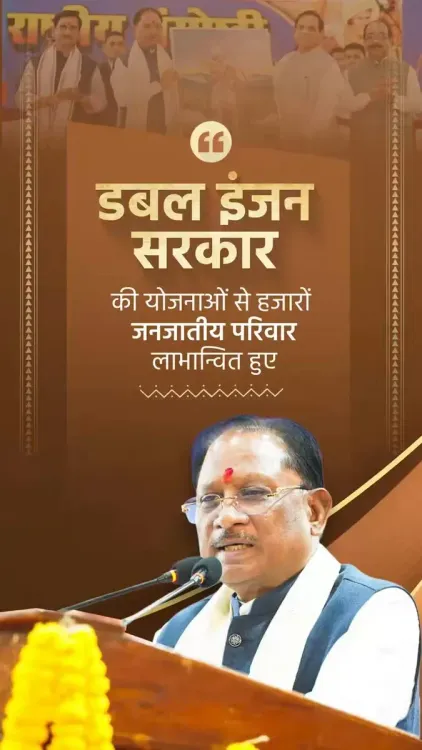
Posting on behalf of Chief Minister Sai, the CMO wrote: 'Pradhan Mantri Shri Narendra Modi ji ne janjatiya samaj ke samagra vikas ke liye Dharti Aaba Janjatiya Gram Utkarsh Abhiyan ki shuruaat ki hai' — 'Prime Minister Narendra Modi has launched the Dharti Aaba Janjatiya Gram Utkarsh Abhiyan for the holistic development of the tribal community.' The post explicitly names 6,691 villages in Chhattisgarh where basic facilities and development works are being expanded under the scheme.
What the Abhiyan targets — and why Chhattisgarh is central
Chhattisgarh is home to one of India's largest concentrations of Scheduled Tribe communities, spread across its forested central and southern districts. That demographic reality makes it a recurring focal state whenever New Delhi rolls out tribal welfare programming. The Dharti Aaba Janjatiya Gram Utkarsh Abhiyan follows the logic of its predecessors: plug infrastructure gaps — roads, water, electricity, connectivity — that standard rural schemes have historically failed to reach inside Fifth Schedule areas.
The campaign's name itself carries political weight. 'Dharti Aaba' — meaning 'Father of the Earth' — is the honorific given to Birsa Munda, the 19th-century tribal freedom fighter whose birth anniversary, 15 November, is observed as Janjatiya Gaurav Diwas. The timing of this announcement, tagged with #JanjatiyaGauravDiwas, is deliberate: it anchors the scheme's launch to a moment of maximum tribal cultural resonance.
A policy chain from Vanbandhu to PM JANMAN to Utkarsh
This abhiyan does not arrive in a vacuum. The Vanbandhu Kalyan Yojana, introduced in 2014, was designed to improve socio-economic conditions across tribal belts. Nearly a decade later, PM JANMAN — launched in 2023 — narrowed the focus further, targeting infrastructure deficits specifically in habitations of Particularly Vulnerable Tribal Groups (PVTGs). The Dharti Aaba Abhiyan appears to widen that net again, extending the development push to a broader set of tribal villages beyond PVTG clusters alone.
Chhattisgarh's enrollment of 6,691 villages gives a concrete scale to what could otherwise remain an abstract central directive. That number will now become the benchmark against which state-level delivery is measured — in assembly debates, in budget allocations, and in the lived experience of communities waiting for roads that connect and taps that run.
What the state's delivery record will decide
Announcing villages is the easy part. The harder test is convergence — whether departments handling roads, water, housing, health, and digital connectivity can operate in sync inside geographically challenging tribal terrain. Chhattisgarh has historically struggled with last-mile delivery in its Bastar and Surguja divisions, where Left-Wing Extremism and difficult topography compound administrative challenges.
Chief Minister Sai's CMO is clearly positioning this as a governance milestone for the BJP-led state government, associating itself closely with the Prime Minister's brand of tribal outreach. Whether the 6,691 villages see measurable change will ultimately be answered not in posts, but in progress reports from the Chhattisgarh assembly's next budget session.
Sixty-six hundred villages, one abhiyan, and a constitutional promise that is decades old — Chhattisgarh now has the numbers on the board; the state must make them count.
Point of View
But with delivery outcomes that have been uneven. Anchoring the launch to Janjatiya Gaurav Diwas is a sharp political move: it fuses governance optics with cultural identity at a moment of maximum tribal community engagement. For Chhattisgarh specifically, the 6,691-village figure creates a measurable accountability target that opposition benches in the state assembly will likely use to scrutinise progress. The deeper structural question — whether central scheme design can overcome last-mile terrain and administrative fragmentation in areas like Bastar — remains the enduring challenge no hashtag can resolve.
NationPress
16 Nov 2026
Frequently Asked Questions
What is the Dharti Aaba Janjatiya Gram Utkarsh Abhiyan?
It is a central government scheme launched by PM Narendra Modi for the holistic development of tribal communities, focusing on expanding basic infrastructure and development works in tribal villages across India.
How many villages in Chhattisgarh are covered under this scheme?
6,691 villages in Chhattisgarh are enrolled in the Dharti Aaba Janjatiya Gram Utkarsh Abhiyan, as confirmed by the Chief Minister's Office on 16 November 2026.
What does 'Dharti Aaba' mean?
'Dharti Aaba' means 'Father of the Earth' in tribal tradition and is the honorific given to Birsa Munda , the 19th-century tribal freedom fighter. His birth anniversary, 15 November , is celebrated as Janjatiya Gaurav Diwas.
How is this scheme different from PM JANMAN?
PM JANMAN , launched in 2023 , specifically targeted infrastructure in Particularly Vulnerable Tribal Group (PVTG) habitations. The Dharti Aaba Abhiyan appears to extend the development push to a wider set of tribal villages beyond PVTG clusters.
Who is the Chief Minister of Chhattisgarh?
Vishnu Dev Sai is the Chief Minister of Chhattisgarh. He made the announcement about the scheme's coverage in the state through the official CMO account on 16 November 2026.