6,905 of 9,479 Northeast villages get banking access: Scindia
Synopsis
More than 6,900 villages in India's Northeast now have banking or postal access, but 2,574 remain cut off. At the Aizawl conclave, Union Minister Scindia lowered the branch-eligibility population threshold to 2,000, set CD Ratio targets for three states, and called for 40 actionable paths forward — signalling that the government's financial inclusion push in the region is entering a more granular, metrics-driven phase.
Key Takeaways
6,905 of 9,479 identified villages in the Northeast have been linked to banking or postal services as of 13 October 2026 .
131 new bank branches and 126 new ATMs were added across the region between December 2024 and March 2026 .
The minimum population threshold for opening a bank branch has been cut from 3,000 to 2,000 specifically for Northeastern states.
90.2 per cent of non-branch transactions in the Northeast are conducted via UPI .
CD Ratio targets set: Tripura to 60%, Arunachal Pradesh to 60%, Mizoram to 67% — the latter currently at 55.83 per cent .
2,574 villages still lack any banking or postal connectivity and remain a priority for accelerated outreach.
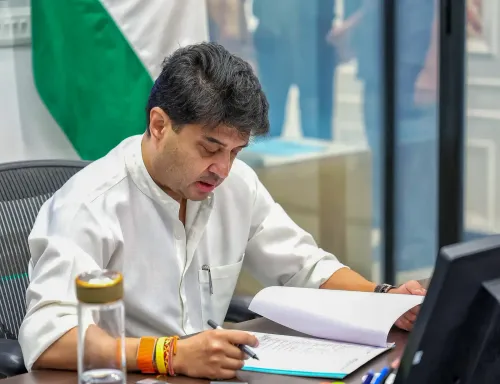
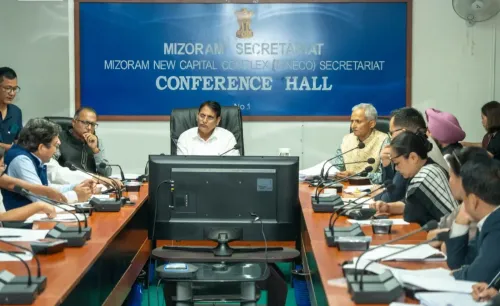
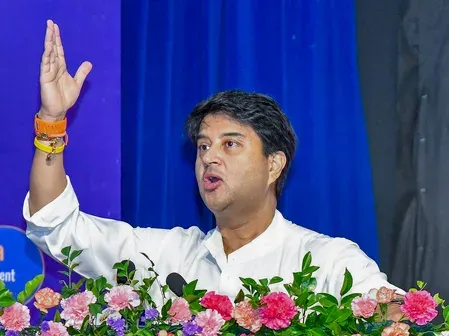
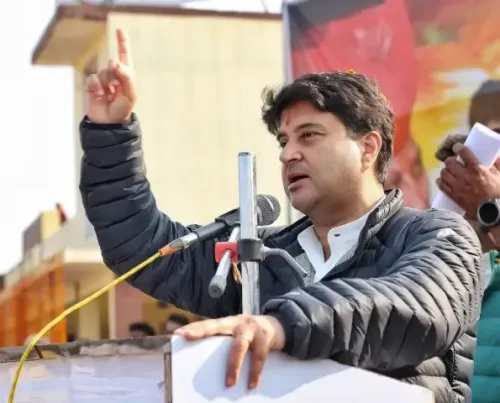
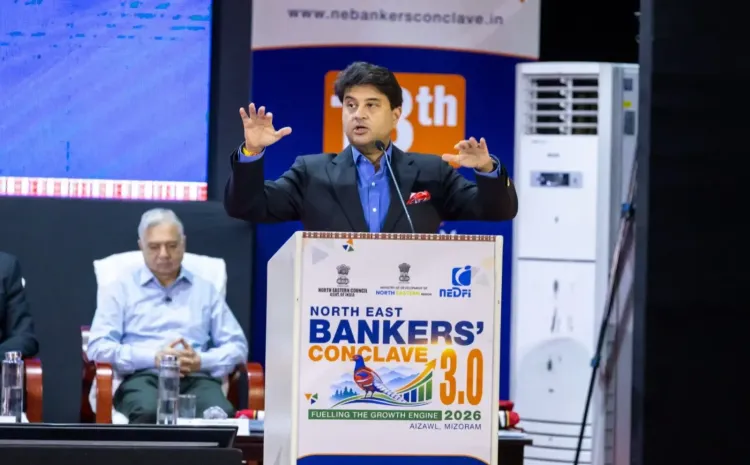
Union Minister for Development of North Eastern Region (DoNER) Jyotiraditya Scindia on Tuesday, 13 October 2026, revealed that 6,905 of the 9,479 villages identified for banking and postal connectivity in the Northeast have already been covered, with 131 new bank branches opened and 126 new ATMs installed across the region between December 2024 and March 2026. He made the announcement while addressing the North East Bankers' Conclave 3.0 in Aizawl, Mizoram.
Key Developments at the Conclave
Scindia announced a significant policy revision aimed at deepening financial inclusion in the region: the minimum population threshold required to establish a brick-and-mortar bank branch has been reduced from 3,000 to 2,000, exclusively for the Northeastern states. This move is expected to unlock banking infrastructure in smaller, remote settlements that previously fell below the eligibility bar.
The Minister also noted that 90.2 per cent of non-branch transactions in the Northeastern states are conducted through the Unified Payments Interface (UPI), underscoring the region's rapid pivot to digital payments despite ongoing infrastructure gaps.
Credit-Deposit Ratio Targets Set for Three States
Scindia outlined specific Credit-Deposit (CD) Ratio targets for three states: Tripura from 47 per cent to 60 per cent, Arunachal Pradesh to 60 per cent, and Mizoram to 67 per cent. He emphasised that raising the CD Ratio increases money circulation within a state and described it as a key driver of development, quipping that 'CD' could stand for 'Credit for Development.'
During the 2025-26 fiscal year, Assam led among Northeastern states with a CD Ratio of 73.52 per cent, followed by Nagaland at 61.1 per cent and Tripura at 61 per cent, while Mizoram lagged at 55.83 per cent.
The Push to Cover Remaining 2,574 Villages
Despite the progress, 2,574 villages across the Northeast remain unconnected to any banking or postal service. Scindia stressed the urgency of accelerating outreach to these settlements, calling on banks and the government to deepen collaboration. He noted that this marks his 35th visit to the Northeastern states during his 2 years and 8 months as DoNER Minister.
The conclave's deliberations were structured around four themes — Last Mile, Loans, Livelihoods, and Lifelines — covering unbanked village connectivity, MSME and women entrepreneur lending, sustainable farmer livelihoods, and infrastructure development. Scindia asked participants to formulate ten recommendations from each session, yielding 40 actionable paths, with clear timelines and measurable metrics.
Mizoram CM Calls for Expanded Banking Footprint
Mizoram Chief Minister Lalduhoma addressed the conclave, describing banks and financial institutions as 'crucial drivers of state development' and 'pillars of support for entrepreneurs.' He urged banks to expand their footprint beyond Aizawl into other districts and rural areas to improve accessibility.
Lalduhoma acknowledged Mizoram's below-average CD Ratio and pointed to a target of scaling it to 67 per cent by the 2028-29 fiscal year. He highlighted that Mizoram's high loan recovery rate is an underutilised asset that banks should leverage more aggressively. He also praised the state's successful implementation of digital payments and schemes such as the Pradhan Mantri Jeevan Jyoti Bima Yojana (PMJJBY) and Pradhan Mantri Suraksha Bima Yojana (PMSBY).
The next edition, North East Bankers' Conclave 4.0, is expected to review progress on the targets set at Tuesday's event.
Point of View
574 villages still unbanked, the easy wins are largely done — what remains is structurally harder: smaller, more remote, less commercially viable settlements. Lowering the branch-eligibility threshold to 2,000 is a meaningful concession from the regulator, but it only works if banks see a business case, not just a compliance checkbox. The CD Ratio gap is equally telling: Mizoram's 55.83 per cent against Assam's 73.52 per cent shows that deposit mobilisation has raced ahead of lending in some states, meaning savings flow in but credit does not flow back. Without credit, financial inclusion is only half the job. The four-theme conclave structure — Last Mile, Loans, Livelihoods, Lifelines — is a sensible framework, but India has a long record of well-framed conclaves that produce recommendations without enforcement teeth. The real test is whether the 40 actionable paths Scindia demanded come with budgets and accountability, not just timelines on a slide deck.
NationPress
14 Oct 2026
Frequently Asked Questions
How many Northeast villages have been linked to banking services so far?
As of the North East Bankers' Conclave 3.0 on 13 October 2026, 6,905 of the 9,479 identified villages in the Northeastern region have been connected to banking or postal services. The remaining 2,574 villages are yet to receive any such access.
What is the new population threshold for opening a bank branch in Northeast India?
The minimum population requirement for establishing a brick-and-mortar bank branch in the Northeastern states has been reduced from 3,000 to 2,000. This revision applies exclusively to the Northeast to help extend banking infrastructure to smaller, remote communities.
What are the Credit-Deposit Ratio targets set for Northeastern states?
Targets have been set to raise the Credit-Deposit Ratio to 60 per cent for Tripura (up from 47 per cent), 60 per cent for Arunachal Pradesh, and 67 per cent for Mizoram (currently at 55.83 per cent) by the 2028-29 fiscal year. A higher CD Ratio indicates that more of the deposits collected locally are being lent within the state, boosting economic activity.
What is the North East Bankers' Conclave and why was it held in Aizawl?
The North East Bankers' Conclave is a platform convened by the DoNER Ministry to align banks, state governments, and financial institutions on expanding credit, branch networks, and digital payment infrastructure in the Northeastern states. The third edition, Conclave 3.0, was held in Aizawl, Mizoram on 13 October 2026, following earlier editions in Agartala. Aizawl was chosen in part to spotlight Mizoram's financial inclusion gaps and high loan recovery record.
How widely is UPI used in the Northeast compared to branch-based banking?
According to Union Minister Scindia, 90.2 per cent of non-branch transactions in the Northeastern states are conducted through UPI. This points to strong digital payment adoption even in areas where physical banking infrastructure remains thin.