Acid spill kills woman, injures two children in MP's Barwani

Synopsis
A five-litre acid can, stored for farm irrigation maintenance and knocked over by rats at 4 am, killed a 24-year-old mother and left her two children with severe burns in a Barwani village. The tragedy has put a spotlight on the dangers of storing agricultural chemicals inside rural homes with no formal safety protocols.
Key Takeaways
Pinky , aged 24 , died after a five-litre acid can spilled over her and her children in Mohanpura village , Barwani , on 29 May .
The accident occurred at approximately 4:00 am ; police say rats knocked the can off a rack inside the home.
Pinky succumbed to her burns while being transported to the District Hospital, Barwani .
Her two children are admitted to the hospital's burn ward in a stable but serious condition.
Police have registered a case and are investigating whether proper acid-storage protocols were followed.
The district administration has assured full medical and family support to the bereaved household.
A 24-year-old woman died and her two children sustained severe burns after a five-litre can of acid spilled over the sleeping family in Mohanpura village, Barwani district, Madhya Pradesh, in the early hours of Friday, 29 May. The woman, identified as Pinky, succumbed to her injuries while being transported to hospital.
How the Accident Unfolded
The tragedy struck at approximately 4:00 am when the acid can, stored on a rack inside the family's home, toppled over. According to police officials, the nocturnal movement of rats inside the house caused the container to fall, sending the corrosive chemical directly onto Pinky and her children as they slept nearby.
The family had been living in a house built on their agricultural land in Salkheda village. Pinky's husband, Vijay Chauhan, had stored the acid for cleaning drip irrigation lines on their farmland — a routine practice in the region. The can had been placed on the rack as a precautionary measure, but it proved insufficient.
Medical Response and Condition of Children
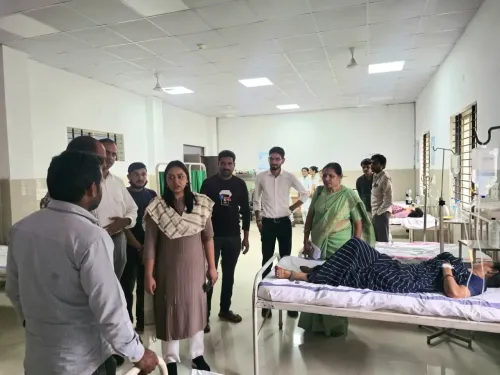
Family members rushed the injured to the Rajpur Health Centre immediately after the incident. Given the critical nature of the burns, doctors referred them to the District Hospital in Barwani. Pinky did not survive the journey. Her two children, who suffered extensive burns, have been admitted to the hospital's burn ward and are currently reported as stable but serious, with a team of doctors closely monitoring their condition.
Police Investigation and Safety Questions
Police have registered a case and launched an investigation into the incident. Authorities are also examining whether proper safety protocols were observed while storing the acid. The district administration has assured full support to the bereaved family, including medical assistance for the injured children.
Wider Concern Over Hazardous Chemical Storage
Local residents have expressed grief over what many are calling an avoidable tragedy, drawing attention to the risks of keeping hazardous chemicals inside residential spaces. This incident underscores a broader gap in rural safety awareness around agricultural chemicals — acids used for irrigation maintenance are not uncommon in farming households across central India, yet formal guidelines on their domestic storage remain poorly enforced. How the children recover, and whether the investigation surfaces any lapses in storage norms, will determine what follow-up action the district administration takes.
Point of View
Often with no labelling, no lockable containers, and no awareness of hazard protocols. The state's investigation into 'storage safety compliance' is a step, but it addresses the symptom. The deeper failure is systemic: neither the agriculture department nor local panchayats have a workable framework for hazardous-chemical handling at the household level. Until that gap is closed, the next such tragedy is a matter of when, not if.
NationPress
24 Sept 2026
Frequently Asked Questions
What happened in the Barwani acid spill incident?
A five-litre can of acid stored inside a home in Mohanpura village, Barwani district, fell from a rack after rats disturbed it at around 4:00 am on 29 May, spilling onto a sleeping mother and her two children. The mother, Pinky, 24, died from her burns; her two children were hospitalised with severe injuries.
Why was acid stored inside the house?
The family used acid to periodically clean the drip irrigation lines on their farmland, a common agricultural practice in the region. The can had been placed on an indoor rack for safekeeping by Pinky's husband, Vijay Chauhan.
What is the current condition of the injured children?
The two children are admitted to the burn ward of the District Hospital in Barwani. Their condition is reported as stable but serious, and a team of doctors is closely monitoring them.
What action have police taken?
Police have registered a case and initiated an investigation. Authorities are also examining whether proper safety protocols were followed in storing the corrosive chemical inside a residential space.
What support is the family receiving?
The district administration has assured full support to the family, including medical assistance for the injured children. Local officials are in contact with the bereaved household following the incident.