Adani Green Energy EBITDA up 41% in H1 FY27, energy sales hit 25.75 BU
Synopsis
Adani Green Energy posted a 41% EBITDA jump and a 32% energy-sales surge in H1 FY27 — but the headline number is the Khavda battery facility: at 6.63 GWh, it is the world's largest single-location battery storage installation, making AGEL the operator of more than half of India's operational BESS capacity, a milestone that reframes the company's story from pure solar developer to grid-scale storage player.
Key Takeaways
AGEL reported EBITDA from power supply of ₹7,957 crore in H1 FY27 , up 41 per cent year-on-year .
Energy sales grew 32 per cent to 25.75 billion units ; revenue from power supply rose 36 per cent to ₹8,299 crore .
EBITDA margin stood at 92.9 per cent ; cash profit grew 35 per cent to ₹4,176 crore .
Capex of ₹17,160 crore was deployed in H1 FY27, a 38 per cent increase year-on-year; net debt to run-rate EBITDA at 5.6x .
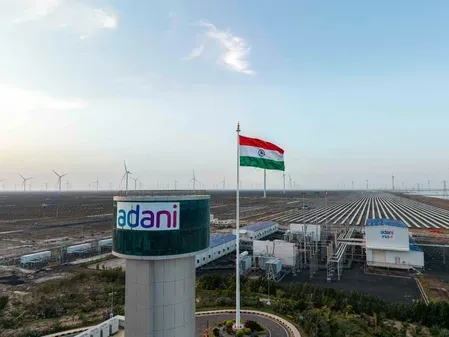
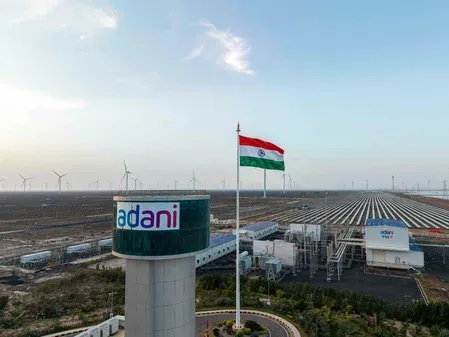
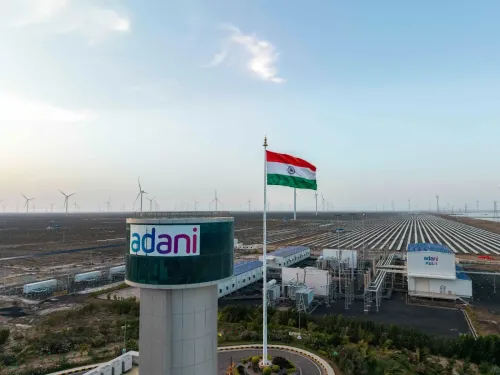
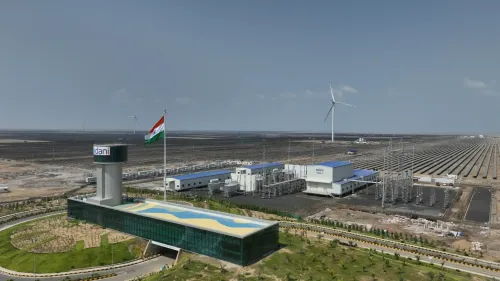
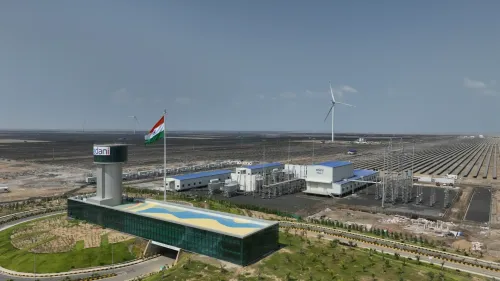
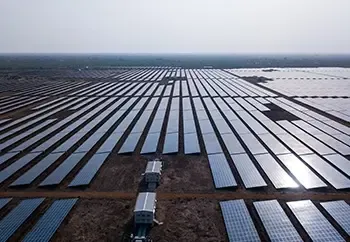
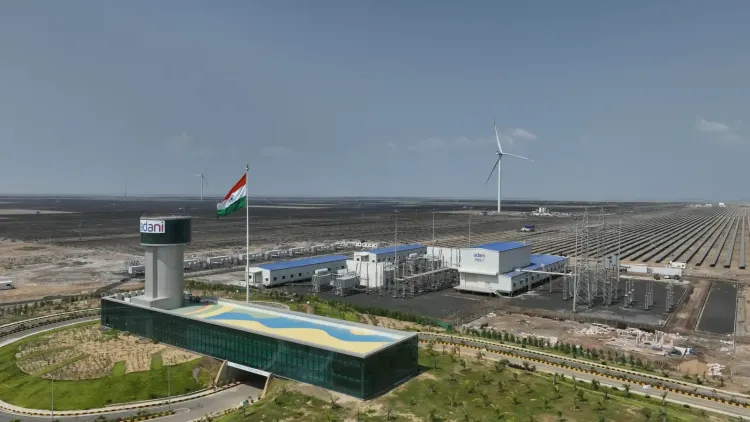
AGEL expanded BESS capacity at Khavda to 6.63 GWh — described as the world's largest single-location battery storage installation.
In Q2 FY27 , quarterly EBITDA surged 51 per cent to ₹3,835 crore ; cash profit rose 45 per cent to ₹1,951 crore .
Adani Green Energy Limited (AGEL) on Wednesday, 21 October 2026, reported a 41 per cent year-on-year jump in EBITDA from power supply to ₹7,957 crore in the first half of FY27, driven by a 32 per cent surge in energy sales to 25.75 billion units and broad-based capacity additions across its renewable energy portfolio. The Ahmedabad-headquartered company's results, filed with stock exchanges, underline the pace at which India's largest utility-scale solar developer is scaling up operations.
Revenue and Margin Highlights
Revenue from power supply rose 36 per cent year-on-year to ₹8,299 crore in H1 FY27, while the EBITDA margin held at a notably high 92.9 per cent, according to the company's stock exchange filing. Cash profit for the period grew 35 per cent year-on-year to ₹4,176 crore, reflecting the operational leverage inherent in large-scale renewable generation assets.
Capital expenditure for the half-year stood at ₹17,160 crore, a 38 per cent increase over the same period last year, signalling that AGEL is accelerating its build-out rather than consolidating. Net debt to run-rate EBITDA, a closely watched leverage metric, stood at 5.6 times.
Q2 FY27 Performance
For the second quarter of FY27, AGEL reported a 33 per cent increase in energy sales to 12,090 million units. Revenue from power supply surged 45 per cent year-on-year to ₹4,019 crore, while EBITDA from power supply climbed 51 per cent to ₹3,835 crore. Quarterly cash profit rose 45 per cent to ₹1,951 crore.
World's Largest Battery Storage Milestone
Chief Executive Officer Ashish Khanna highlighted a landmark achievement in energy storage, noting that AGEL expanded its operational Battery Energy Storage System (BESS) capacity at Khavda to 6.63 GWh — which the company describes as the world's largest single-location battery storage installation. 'We also achieved a significant milestone in energy storage, expanding our operational BESS capacity at Khavda to 6.63 GWh — the world's largest single-location battery storage installation,' Khanna said.
He added that the development makes AGEL India's largest BESS operator, accounting for more than half of the country's operational battery storage capacity. 'We remain focused on scaling up storage deployment while closely monitoring the availability of transmission infrastructure,' Khanna noted.
What Is Driving the Growth
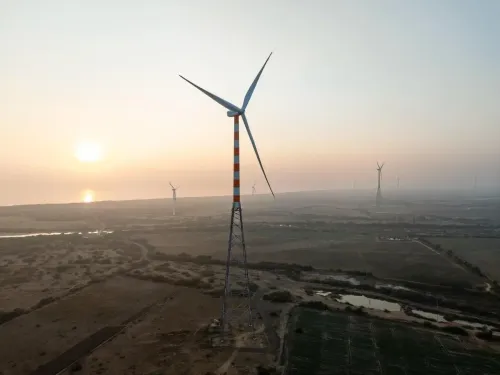
According to the company, the strong uptick in revenue and profitability was underpinned by consistent capacity expansion, adoption of advanced renewable energy technologies, and improved operating performance across project sites. This comes amid India's broader push to reach 500 GW of non-fossil energy capacity by 2030, a target that requires sustained investment at exactly the scale AGEL is deploying. The company's BESS push is particularly significant given the grid intermittency challenges that have historically limited the bankability of large solar projects.
Notably, AGEL's ₹17,160 crore capex in a single half-year places it among the most capital-intensive infrastructure deployers in the country, and the 92.9 per cent EBITDA margin suggests the operating model is maturing even as construction activity accelerates.
Point of View
And it reflects the structural advantage of locked-in, long-term power purchase agreements rather than merchant exposure. The more strategically significant number, however, is the 6.63 GWh BESS at Khavda — storage at that scale shifts the renewables conversation from intermittency liability to dispatchable asset, which is precisely the credibility the sector needs to attract the next wave of infrastructure financing. The risk worth watching is the net debt-to-run-rate EBITDA ratio of 5.6 times: large but not unusual for capital-intensive renewables; however, any transmission bottleneck — flagged by CEO Ashish Khanna himself — could slow energy offtake and test that leverage assumption.
NationPress
21 Oct 2026
Frequently Asked Questions
What were Adani Green Energy's H1 FY27 financial results?
AGEL reported a 41 per cent year-on-year rise in EBITDA from power supply to ₹7,957 crore in H1 FY27, with revenue from power supply up 36 per cent to ₹8,299 crore and cash profit up 35 per cent to ₹4,176 crore. Energy sales grew 32 per cent to 25.75 billion units during the period.
What is the Khavda battery storage milestone announced by AGEL?
AGEL expanded its operational BESS capacity at Khavda, Gujarat, to 6.63 GWh, which the company describes as the world's largest single-location battery storage installation. This makes AGEL India's largest BESS operator, holding more than half of the country's operational battery storage capacity.
How did Adani Green Energy perform in Q2 FY27 specifically?
In Q2 FY27, AGEL recorded a 33 per cent increase in energy sales to 12,090 million units, a 45 per cent surge in revenue from power supply to ₹4,019 crore, and a 51 per cent jump in EBITDA to ₹3,835 crore. Quarterly cash profit rose 45 per cent to ₹1,951 crore.
How much did Adani Green Energy invest in capital expenditure in H1 FY27?
AGEL invested ₹17,160 crore in capital expenditure during H1 FY27, a 38 per cent increase over the corresponding period last year. Net debt to run-rate EBITDA stood at 5.6 times as of the period-end.
Why is AGEL's EBITDA margin significant?
AGEL's EBITDA margin from power supply stood at 92.9 per cent in H1 FY27, which is exceptionally high and reflects the cost structure of utility-scale renewable energy assets underpinned by long-term power purchase agreements. Such margins indicate strong operating efficiency and limited variable-cost exposure once plants are commissioned.