Adani Green Energy Q4 Profit Surges 34% to Rs 514 Crore, 19.3 GW Capacity Hit
Synopsis
Adani Green Energy posted a 34% profit jump to Rs 514 crore in Q4 FY26 and added 5.1 GW of greenfield capacity, one of the largest single-year expansions globally outside China, taking its total to 19.3 GW. The Khavda mega-plant and a 1,376 MWh battery storage deployment signal India's clean energy ambitions scaling at unprecedented speed.
Key Takeaways
Adani Green Energy's Q4 FY26 net profit rose 34% year-on-year to Rs 514 crore , up from Rs 383 crore in Q4 FY25.
Full-year FY26 energy sales surged 34% to 37,567 million units , with power supply revenue up 22% to Rs 11,602 crore.
The company added 5.1 GW of greenfield capacity in FY26 , 1.5x more than FY25, taking total operational capacity to 19.3 GW .
EBITDA margin from power supply stood at 91% , one of the highest in the global renewable energy sector, with EBITDA at Rs 10,865 crore.
The Khavda project hosts 1,376 MWh of BESS , among the world's largest single-location battery storage deployments, with a target of 10,000 MWh by FY27 .
Adani Green's portfolio now powers 8.7 million homes and avoids 36 million tonnes of CO2 emissions annually .
Adani Green Energy delivered a landmark financial performance in the fourth quarter of FY26, with its consolidated net profit surging 34 per cent year-on-year to Rs 514 crore, driven by aggressive capacity expansion, record energy sales, and industry-leading operational efficiency. The Ahmedabad-headquartered renewable energy giant announced its results on Friday, April 25, 2025, reinforcing its status as India's largest renewable energy company. The results signal a structural acceleration in India's clean energy transition, with Adani Green now powering over 8.7 million homes annually.
Q4 FY26 Financial Highlights
In the January-March 2025 quarter, Adani Green Energy reported a net profit of Rs 514 crore, compared to Rs 383 crore in the same quarter of the previous financial year, a jump of 34 per cent. Revenue from core operations climbed 14 per cent to Rs 3,502 crore, up from Rs 3,073 crore in Q4 FY25, as per the company's stock exchange filing.
The quarter's strong showing was underpinned by robust EBITDA growth, reflecting both higher energy generation and disciplined cost management across its expanding portfolio of solar and wind assets.
Full-Year FY26 Performance: Record Numbers Across the Board
For the full financial year FY26, Adani Green Energy posted impressive growth across every key metric. Energy sales rose 34 per cent year-on-year to 37,567 million units, while revenue from power supply increased 22 per cent to Rs 11,602 crore.
EBITDA from power supply grew 23 per cent to Rs 10,865 crore, with the company sustaining an industry-leading EBITDA margin of 91 per cent, a figure that few global renewable energy players can match. Cash profit for FY26 rose 11 per cent to Rs 5,399 crore, according to its regulatory filing.
These numbers are particularly significant given the headwinds the broader Adani Group faced in late 2023 and early 2024 following international scrutiny. The operational rebound underscores the resilience of the underlying energy business, which is backed by long-term power purchase agreements with state utilities and central agencies.
Capacity Expansion: 5.1 GW Added in FY26, One of the Largest Globally
Adani Green Energy's total operational capacity expanded 35 per cent year-on-year to 19.3 GW by the end of FY26, cementing its position as the undisputed leader in India's renewable energy sector. The company commissioned 5.1 GW of greenfield capacity during the year, 1.5 times more than FY25, making it one of the highest annual capacity additions by any single company globally, outside of China.
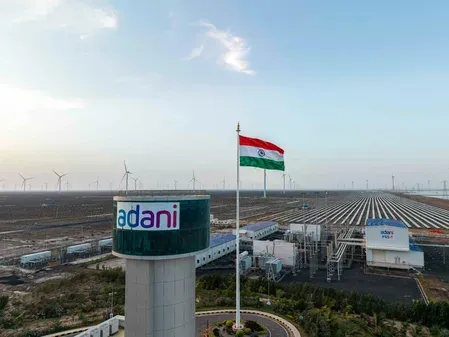
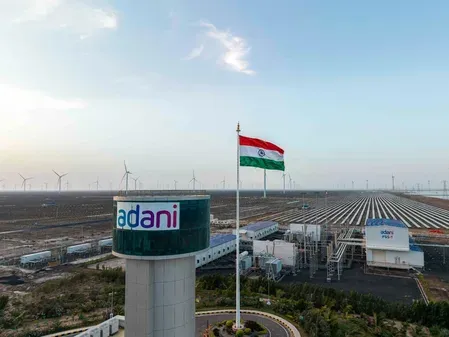
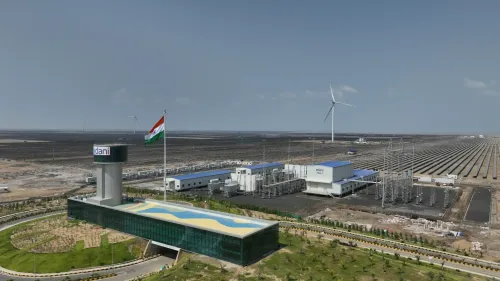
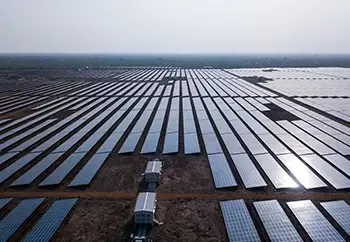
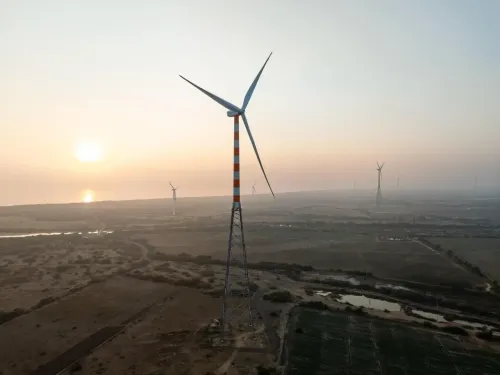
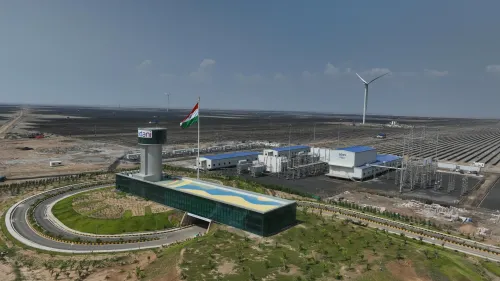
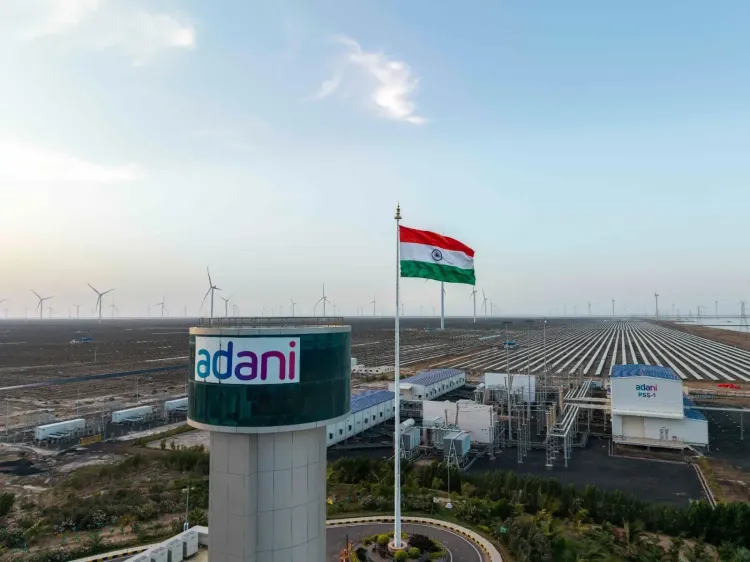
A significant share of this expansion came from projects in Gujarat's Khavda region and Rajasthan, both of which offer exceptional solar irradiance and wind resources. The Khavda Renewable Energy Park, widely described as the world's largest renewable energy plant, remains the centrepiece of Adani Green's growth strategy.
To put this in context, India's total renewable energy capacity crossed 200 GW in 2024, and Adani Green alone now accounts for nearly 10 per cent of that installed base, a concentration of clean energy assets that has few parallels globally at the company level.
Battery Storage Push: 1,376 MWh at Khavda, 10,000 MWh Target by FY27
Beyond generation, Adani Green Energy is making a strategic push into battery energy storage systems (BESS). The company installed 1,376 MWh of BESS capacity at Khavda, one of the largest single-location deployments of battery storage anywhere in the world. It is targeting over 10,000 MWh of storage capacity by FY27.
This is a critical development for India's grid stability. Renewable energy's intermittent nature has historically been a bottleneck for deeper penetration into the national grid. Large-scale storage at source addresses this challenge directly, reducing curtailment and enabling round-the-clock renewable supply, a prerequisite for India to meet its 500 GW non-fossil capacity target by 2030.
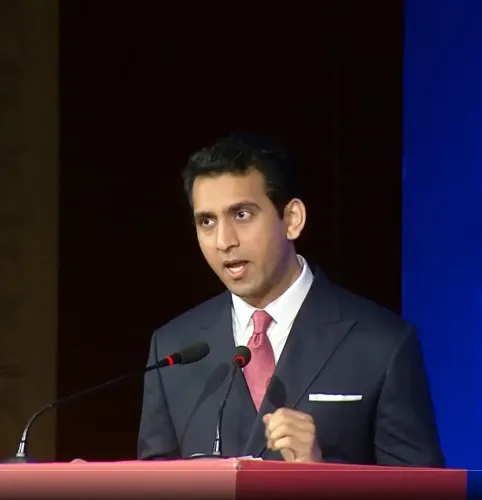
Executive Director Sagar Adani highlighted the significance of the year: The company, on the back of robust project and operational excellence, commissioned 5.1 GW of greenfield capacity, thereby reaching 19.3 GW of total operational capacity. He also noted the company's ESG recognition, adding that the continued recognition of ESG efforts reaffirms the commitment to sustainable growth and accelerating India's energy transition.
Broader Impact: Emissions Avoided, Homes Powered, and India's Energy Future
Adani Green Energy's total operational portfolio of 19,294 MW now has the capacity to power more than 8.7 million homes while helping avoid approximately 36 million tonnes of carbon emissions annually. This is equivalent to taking roughly 7.8 million cars off Indian roads each year, based on standard emissions equivalence data.
The company's trajectory also carries significant implications for India's energy security. With domestic coal prices volatile and global LNG markets uncertain, the rapid scaling of utility-grade solar and wind capacity reduces India's dependence on imported fossil fuels, a strategic priority that has gained urgency since the Russia-Ukraine conflict disrupted global energy markets in 2022.
Looking ahead, with 19.3 GW operational and an aggressive pipeline of projects under development, Adani Green Energy is well-positioned to approach its long-stated target of 50 GW by 2030. The pace of capacity addition, combined with the BESS scale-up, will be closely watched by investors, policymakers, and India's state electricity boards in the quarters ahead.
Point of View
The 91% EBITDA margin, and the Khavda battery storage deployment collectively signal that utility-scale renewables in India have crossed the threshold from aspiration to industrial reality. What the mainstream narrative misses is the geopolitical dimension: every gigawatt of domestic solar capacity commissioned is a direct hedge against India's chronic energy import dependency. The real question now is whether India's grid infrastructure and state DISCOMs can absorb this supply at the pace it is being created, because the bottleneck is no longer generation, it is transmission and payment security.
NationPress
15 Oct 2026
Frequently Asked Questions
What was Adani Green Energy's net profit in Q4 FY26?
Adani Green Energy reported a consolidated net profit of Rs 514 crore in Q4 FY26, a 34 per cent increase compared to Rs 383 crore in the same quarter of FY25. The growth was driven by higher energy sales, capacity additions, and strong EBITDA performance.
How much capacity did Adani Green Energy add in FY26?
Adani Green Energy added 5.1 GW of greenfield capacity in FY26, taking its total operational capacity to 19.3 GW, a 35 per cent year-on-year increase. This is considered one of the largest annual renewable capacity additions globally outside China.
What is the Khavda renewable energy project?
The Khavda Renewable Energy Park in Gujarat is widely described as the world's largest renewable energy plant, being developed by Adani Green Energy. It is a key driver of the company's capacity growth and also hosts one of the largest single-location battery energy storage deployments globally at 1,376 MWh.
What is Adani Green Energy's EBITDA margin for FY26?
Adani Green Energy maintained an industry-leading EBITDA margin of 91 per cent from power supply operations in FY26, with EBITDA growing 23 per cent to Rs 10,865 crore. This margin is among the highest for any large-scale renewable energy company globally.
What is Adani Green Energy's battery storage target by FY27?
Adani Green Energy is targeting over 10,000 MWh of battery energy storage system capacity by FY27, up from 1,376 MWh already deployed at Khavda. This push into storage is aimed at enabling round-the-clock renewable energy supply and strengthening grid stability.