AgriVoltaics World Conference 2026: States unveil 1 GW targets, blended finance push
Synopsis
Five Indian states put real numbers on the table at the AgriVoltaics World Conference 2026 — Odisha's 1 GW target and a 25-year PPA guarantee, UP's plan to solarise 16 lakh tubewells, and Madhya Pradesh's completed battery-storage tenders. With the World Bank, KfW, and IREDA in the room discussing blended finance, this is no longer a policy aspiration: it is beginning to look like a fundable market.
Key Takeaways
Odisha is finalising an Agrivoltaics Policy 2026 with a 1 GW target by 2030 , mandating 90% cultivable land and offering 25-year PPAs through GRIDCO .
Uttar Pradesh plans to solarise all 16 lakh agricultural tubewells whose electricity bills have been waived, using dedicated grid infrastructure.
Madhya Pradesh has completed battery-storage project tendering and declared 2026 the Year of Farmer Welfare .
The Agrivoltaics Pitch-Hub , curated by NSEFI , showcased next-gen technologies including semi-transparent PV modules and micro-climate soil sensors by Fraunhofer ISE and Sunseed APV .
Multilateral lenders including the World Bank , KfW , European Investment Bank , and IREDA examined blended finance structures to mobilise private capital for agrivoltaic deployment.
The ministerial track was co-organised by IISD and CEEW , with ministers from Odisha , Madhya Pradesh , Uttar Pradesh , Rajasthan , and Bihar .
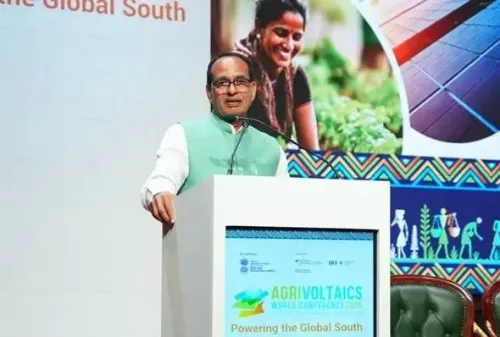
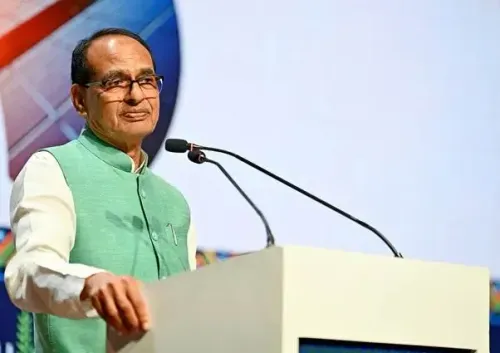
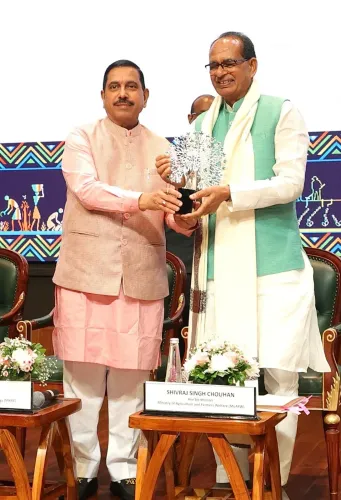
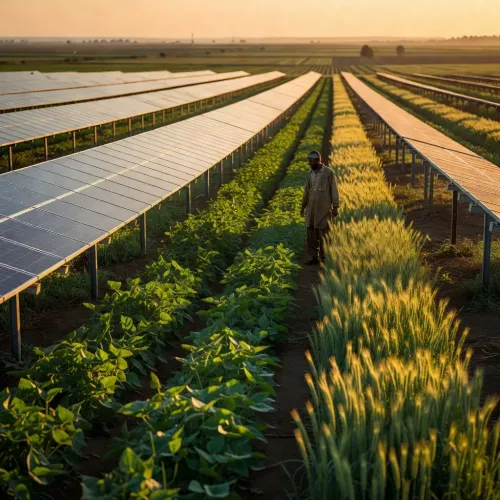
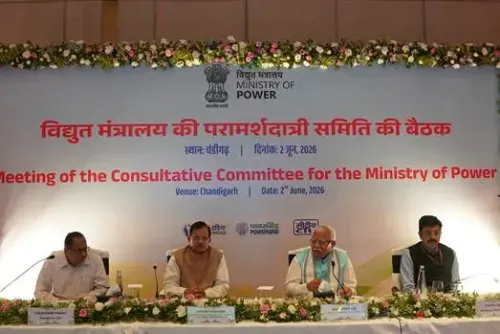
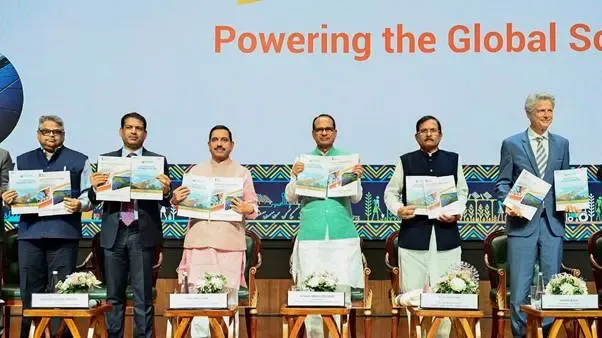
The second day of the AgriVoltaics World Conference 2026 in New Delhi on 22 October 2026 drew state ministers, global technology firms, multilateral lenders, and private investors into a focused cross-sectoral push to scale dual-use solar-agriculture systems across India. A dedicated ministerial track, co-organised by the International Institute for Sustainable Development (IISD) and the Council on Energy, Environment and Water (CEEW), positioned sub-national governments as the primary enablers of agrivoltaic expansion.
State Leadership Takes Centre Stage
Energy and Agriculture ministers from Odisha, Madhya Pradesh, Uttar Pradesh, Rajasthan, and Bihar outlined state-specific deployment roadmaps, tariff incentives, and adaptations of the PM-KUSUM scheme to local crop profiles. The session underscored how state-level policy architecture is increasingly driving national agrivoltaic ambition.
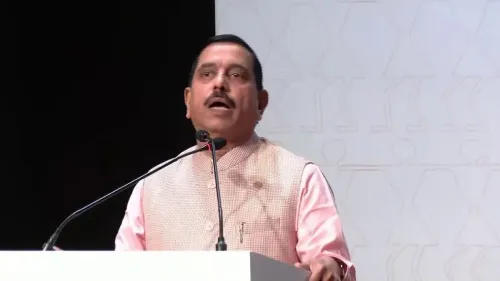
Surya Pratap Shahi, Minister of Agriculture, Uttar Pradesh, announced the state's plan to solarise all 16 lakh agricultural tubewells whose electricity bills have been waived, backed by dedicated grid infrastructure. He proposed deploying Krishi Vigyan Kendras, agricultural universities, and technical institutions to build farmers' capacity and integrate agrivoltaics with diversification programmes. Stressing the primacy of the farming community, he said, 'The agriculture of Uttar Pradesh and its farmers are, in a way, the lifeblood of our economic system.' He also assured that land ownership would remain protected.
Rakesh Shukla, Minister of New and Renewable Energy, Madhya Pradesh, highlighted the state's advances in solar deployment and battery storage as part of its farmer-welfare agenda. Notably, 2026 is observed as the Year of Farmer Welfare in Madhya Pradesh, lending political urgency to agrivoltaic rollout. Cultivation beneath solar panels has reportedly begun at several locations, and tendering for battery-storage projects has been completed.
Odisha Finalises Dedicated Agrivoltaics Policy with 1 GW Target
Kanak Vardhan Singh Deo, Deputy Chief Minister of Odisha, announced that the state is finalising its Agrivoltaics Policy 2026, with a target of 1 GW by 2030. The proposed policy mandates that at least 90 per cent of project sites remain cultivable, safeguards farmer consent and crop insurance, and permits farmers to own projects or lease land while continuing cultivation.
To attract long-term investment, Odisha plans to offer 25-year power purchase agreements through GRIDCO, alongside grid connectivity and financial incentives. Highlighting investor confidence as a priority, Singh Deo said, 'It gives investors certainty for 25 years.' This is among the most detailed state-level agrivoltaic policy frameworks announced in India to date.
Technology Innovations and Start-Up Pitches
The Agrivoltaics Pitch-Hub, curated by the National Solar Energy Federation of India (NSEFI), gave early-stage innovators and start-ups a platform to present bankable dual-use solutions before a jury comprising national institutes — NISE and NIBE — venture capitalists, and industry leaders.
Fraunhofer ISE and Sunseed APV demonstrated next-generation technologies including advanced solar tracking systems, dynamic panel tilting, semi-transparent photovoltaic (PV) modules, and micro-climate soil sensors engineered for tropical and arid conditions. These technologies are designed to maximise both energy yield and crop output on the same land parcel, addressing a key concern of Indian farmers.
Private Sector and Global Industry Dialogue
A session hosted by the Indo-German Chamber of Commerce brought together Indian and international developers — including NTPC Green Energy, First Solar, and leading European firms — to discuss supply chain localisation, standards development, and market certainty. The conversation reflected growing private-sector appetite for a standardised agrivoltaic procurement framework in India.
Blended Finance Structures Examined by Multilateral Lenders
An executive roundtable convened representatives from multilateral development banks, financial institutions, and commercial lenders, including the World Bank, KfW, the European Investment Bank, and IREDA. Participants examined risk-mitigation instruments, concessional lending facilities, and blended finance structures aimed at mobilising private capital at scale for agrivoltaic projects.
This comes amid a broader global push to align climate finance with food security — dual-use land models like agrivoltaics are increasingly seen as a structural solution to the land-use tensions that have dogged India's renewable energy expansion. The conference is expected to feed recommendations into national and state policy processes in the months ahead.
Point of View
Which is a healthy dynamic but also a risk of fragmented standards. Odisha's 25-year PPA commitment is the most investor-legible signal yet from any Indian state, but the 90% cultivable-land requirement will test project economics that are still maturing globally. The deeper challenge is that the PM-KUSUM framework was not designed for agrivoltaics, and until the Centre issues dedicated technical standards, state ambitions — however well-intentioned — remain ahead of the regulatory infrastructure needed to make them bankable at scale.
NationPress
22 Oct 2026
Frequently Asked Questions
What is agrivoltaics and why is it significant for India?
Agrivoltaics is the practice of co-locating solar panels and agricultural cultivation on the same land, generating electricity while continuing food production. For India, where land constraints have slowed large-scale solar deployment and farmer income stress is acute, dual-use models offer a path to reconcile energy and food security goals simultaneously.
What did Odisha announce at the AgriVoltaics World Conference 2026?
Odisha's Deputy Chief Minister Kanak Vardhan Singh Deo announced the state is finalising a dedicated Agrivoltaics Policy 2026 targeting 1 GW by 2030. The policy will mandate that at least 90% of project sites remain cultivable, protect farmer consent and crop insurance, and offer 25-year power purchase agreements through GRIDCO.
What is Uttar Pradesh's plan for solar energy in agriculture?
Uttar Pradesh plans to solarise all 16 lakh agricultural tubewells whose electricity bills have been waived, supported by dedicated grid infrastructure. Agriculture Minister Surya Pratap Shahi also proposed using Krishi Vigyan Kendras and agricultural universities to build farmer capacity in agrivoltaics.
Which financial institutions are involved in funding agrivoltaics in India?
An executive roundtable at the conference brought together the World Bank , KfW , the European Investment Bank , and IREDA , among other multilateral and commercial lenders. Discussions focused on risk-mitigation instruments, concessional lending, and blended finance structures to mobilise private capital at scale.
What technologies were showcased at the AgriVoltaics World Conference 2026?
Fraunhofer ISE and Sunseed APV demonstrated advanced solar tracking systems, dynamic panel tilting, semi-transparent PV modules, and micro-climate soil sensors designed for tropical and arid conditions. Early-stage start-ups also pitched dual-use agrivoltaic solutions at the NSEFI-curated Pitch-Hub before a jury of national institutes and venture capitalists.