Haveli Sangeet wins national honour: Ahmedabad scholar gets Bismillah Khan Yuva Puraskar 2025
Synopsis
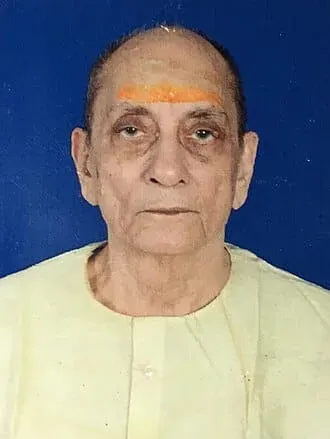
For the first time since Independence, Haveli Sangeet — a 550-year-old devotional music tradition performed in Pushtimarg temple havelis — has received national recognition. The Sangeet Natak Akademi's Ustad Bismillah Khan Yuva Puraskar 2025 goes to 32-year-old Acharya Ranchhodlal Goswami, a 16th-generation custodian who has already composed over 22,000 devotional verses.
Key Takeaways
Acharya Ranchhodlal Goswami of Ahmedabad has been selected for the Ustad Bismillah Khan Yuva Puraskar 2025 by the Sangeet Natak Akademi .
He is the 16th-generation Acharya of the 450-year-old Goswami Haveli in Doshiwada ni Pol, Kalupur .
At 32 , Goswami has composed over 22,000 devotional verses and authored eight books across six languages.
Haveli Sangeet is rooted in the Pushtimarg tradition established by Mahaprabhu Vallabhacharya approximately 550 years ago .
This is reportedly the first national recognition for Haveli Sangeet since Independence .
Goswami has called for full-time university courses, research documentation, and seminars to ensure the tradition's long-term survival.
Acharya Ranchhodlal Goswami, an Ahmedabad-based scholar of Haveli Sangeet, has been selected for the Ustad Bismillah Khan Yuva Puraskar 2025 by the Sangeet Natak Akademi under the Union Ministry of Culture, marking what is reportedly the first national-level recognition for this centuries-old devotional music tradition since Independence. The award, announced for the 2024-25 cycle, honours Goswami's work in preserving and advancing a genre rooted in the Pushtimarg sect established by Mahaprabhu Vallabhacharya roughly 550 years ago.
A Living Tradition, Now Nationally Recognised
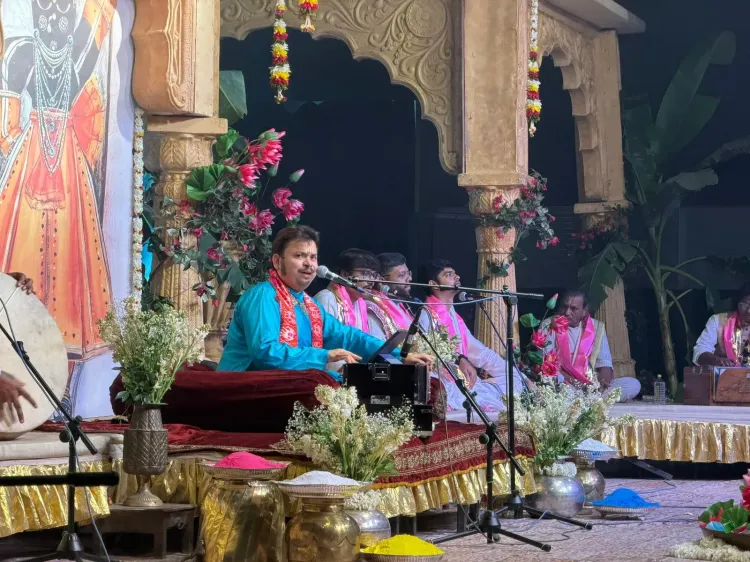
Haveli Sangeet is a devotional musical form performed daily within Pushtimarg temple havelis through service-kirtans rendered in specific ragas aligned to the time of day and the changing seasons. Distinct musical traditions have evolved for spring, summer, the monsoon month of Shravan, and autumn, giving the genre a layered, calendar-driven identity that sets it apart from mainstream classical forms.
Goswami serves as the 16th-generation Acharya of the approximately 450-year-old Goswami Haveli in Doshiwada ni Pol, within Ahmedabad's old city quarter of Kalupur. He described the award as collective rather than personal: 'This award is a recognition of India's rich tradition of devotion, music and culture. The soul of India resides in Haveli Sangeet,' he said.
The Scholar Behind the Award
At just 32 years of age, Goswami has composed more than 22,000 devotional verses and authored eight books. His compositions span Vrajbhasha, Gujarati, Sanskrit, Charani, Mewari, and Marwari. He received his initial training through the traditional guru-shishya system before completing a postgraduate degree and M.Phil. in music from the Upasana School of Performing Arts at Gujarat University, where he is currently pursuing doctoral research. He also contributes as an expert to Gujarat University's Haveli Sangeet curriculum.
Deep Roots in Indian Classical Music
Goswami traces Haveli Sangeet's lineage to some of the oldest forms of Indian classical music, noting that ancient structures such as Prabandha, Dhrupad, and Dhamar — which later shaped the development of Khayal singing — have been preserved within this tradition. Compositions by the Ashtachhap poets, including Surdas and Parmananddas, dating to the era of Mahaprabhu Vallabhacharya and Vitthalnath, continue to be performed as living devotional practice.
'Since the time of Mahaprabhu Vallabhacharya and Vitthalnath, the compositions of Ashtachhap poets, including Surdas and Parmananddas, have been sung as part of the tradition, making it not merely an art form but a living medium of devotion and worship,' Goswami said.
Reach and the Road Ahead
The tradition is active not only in Gujarat and Rajasthan but also in Madhya Pradesh, Maharashtra, and Punjab. Goswami has called for sustained preservation efforts, including full-time university courses, authoritative textual documentation, expanded research, comparative academic studies, and regular seminars and workshops to draw younger generations into the tradition. This national recognition, he noted, could serve as a catalyst for that institutional push.
Point of View
Yet it has remained invisible to national cultural institutions for decades. The award arrives at a moment when India's intangible heritage faces twin pressures: declining practitioner numbers and the absence of structured academic pathways. Goswami's call for university curricula and authoritative texts is the right ask, but institutional follow-through from the Sangeet Natak Akademi and the Ministry of Culture has historically been slow. The real measure of this recognition will be whether it triggers policy, not just applause.
NationPress
7 Oct 2026
Frequently Asked Questions
What is the Ustad Bismillah Khan Yuva Puraskar?
It is a national award conferred by the Sangeet Natak Akademi under the Union Ministry of Culture to recognise young artists for outstanding contributions to Indian performing arts. The 2025 award for the 2024-25 cycle has been given to Ahmedabad's Acharya Ranchhodlal Goswami for his work in Haveli Sangeet.
What is Haveli Sangeet?
Haveli Sangeet is a centuries-old devotional music tradition performed in Pushtimarg temple havelis, featuring daily service-kirtans in specific ragas tied to the time of day and season. It traces its origins to the Pushtimarg sect established by Mahaprabhu Vallabhacharya approximately 550 years ago and preserves ancient forms such as Prabandha, Dhrupad, and Dhamar.
Who is Acharya Ranchhodlal Goswami?
He is a 32-year-old Haveli Sangeet scholar and the 16th-generation Acharya of the approximately 450-year-old Goswami Haveli in Doshiwada ni Pol, Ahmedabad. He has composed over 22,000 devotional verses, authored eight books, and holds an M.Phil. in music from Gujarat University, where he is currently pursuing a doctorate.
Why is this award significant for Haveli Sangeet?
According to Goswami, this is reportedly the first time since Independence that Haveli Sangeet has received recognition at such a high national level. The award brings visibility to a tradition active across Gujarat, Rajasthan, Madhya Pradesh, Maharashtra, and Punjab, but largely absent from mainstream cultural institutions.
What steps has Goswami called for to preserve Haveli Sangeet?
Goswami has urged the creation of full-time university courses, preparation of authoritative texts, expanded research and documentation, comparative academic studies, and the organisation of seminars, workshops, and lecture series to engage younger generations with the tradition.