Kishan Reddy hails AIIMS Delhi's first in-utero spinal surgery
Synopsis
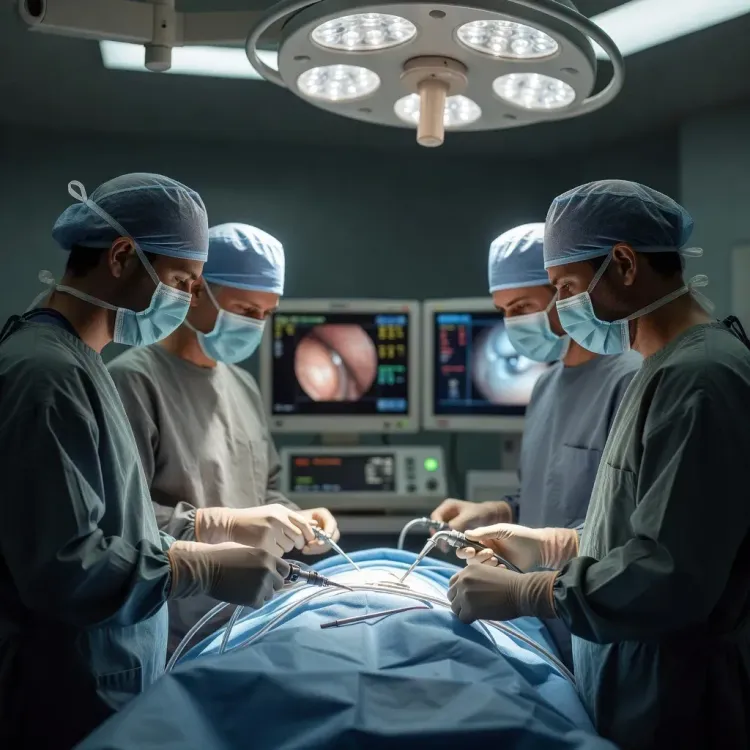
Union Minister G. Kishan Reddy hailed AIIMS Delhi for performing India's first in-utero spinal surgery on a 25-week foetus at zero cost under the Janani Shishu Suraksha Karyakram, framing it as proof of the Modi government's commitment to universal healthcare.
Key Takeaways
AIIMS Delhi surgeons performed what is described as India's first in-utero spinal surgery on a foetus at 25 weeks of gestation .
The procedure was delivered at zero cost to the patient's family under the Janani Shishu Suraksha Karyakram (JSSK) .
JSSK was launched in June 2011 under the National Health Mission to eliminate out-of-pocket expenses for pregnant women and sick newborns in government hospitals.
Kishan Reddy framed the milestone as evidence of PM Modi's commitment to universal, poverty-blind healthcare.
The broader policy pattern combines new AIIMS campuses and upgraded institutes with free-entitlement schemes to extend complex care to all income groups.
No official announcement has been made on scaling foetal surgery services to other public hospitals; a Health Ministry notification would be the key next step.
A 25-week foetus received a rare spinal surgery inside the womb — and surgeons at AIIMS Delhi performed it without charging the family a single rupee. Union Coal and Mines Minister G. Kishan Reddy celebrated the milestone on Sunday, 15 November 2026, calling it a new chapter in India's medical history written under Prime Minister Narendra Modi's leadership.
Posting in Telugu, Kishan Reddy wrote: 'దేశ వైద్యరంగంలో మరో అద్భుత మైలురాయి!' — 'Another extraordinary milestone in the country's medical sector!' — highlighting that the procedure was delivered free of cost under the central government's Janani Shishu Suraksha Karyakram (JSSK) scheme. 'Irrespective of poverty, providing the best healthcare to every citizen is the resolve of the Modi government,' he added.What made the AIIMS surgery a first
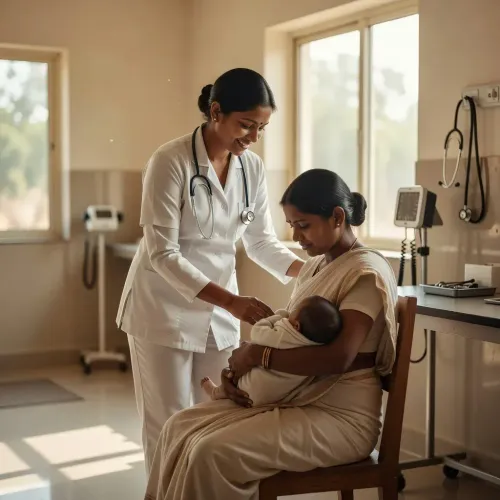
In-utero foetal surgery — operating on an unborn child while still inside the mother's womb — is among the most technically demanding procedures in modern medicine. Performing it on a foetus at just 25 weeks of gestation, specifically to correct a spinal anomaly, pushes the boundary of what Indian public-sector hospitals have attempted. AIIMS New Delhi, the country's apex central government medical institute, has long been the site of procedures that subsequently filter down to other public hospitals across India.
The significance is amplified by the financial dimension: the family bore no out-of-pocket cost. The JSSK framework, operative under the National Health Mission, mandates zero-fee entitlements — including free delivery, transport, diagnostics and treatment — for pregnant women and sick newborns at government facilities.
Janani Shishu Suraksha Karyakram: the scheme behind the surgery
Launched in June 2011, the Janani Shishu Suraksha Karyakram was designed to eliminate out-of-pocket expenditure as a barrier to institutional delivery and neonatal care. Under the scheme, government hospitals cannot charge mothers or newborns for drugs, diagnostics, blood, diet, or transport. Extending that zero-cost guarantee to a complex foetal intervention of this magnitude represents a qualitative leap in what the scheme now covers in practice.
Successive governments have expanded tertiary capacity through new AIIMS campuses across states and upgraded existing institutes, while continuing to layer free-entitlement schemes over that infrastructure. The pairing — advanced surgical capability plus a no-fee framework — is precisely the model the Ministry of Health has pointed to when arguing for public-sector investment over pure insurance-linked models.
What this signals for foetal medicine in India
The immediate question is whether the procedure will be formalised into a replicable protocol. Foetal surgery for spinal conditions such as spina bifida has been performed at select centres in Europe and North America for over two decades, but public-sector capacity in India has lagged. A successful, documented first at AIIMS Delhi typically sets the template for rollout — to other AIIMS campuses first, then to medical colleges under central grants.
Kishan Reddy's post frames the achievement squarely within the government's equity narrative: 'ప్రతి ప్రాణానికి భరోసా.. ప్రతి ఇంటికి ఆరోగ్య భద్రత!' — 'Assurance for every life… health security for every home!' That framing will almost certainly appear in campaign messaging as the BJP positions its healthcare record ahead of upcoming state elections in Telangana and beyond.
When a premier public hospital performs a world-class surgery on an unborn child — and sends the family home without a bill — the policy argument writes itself.
Point of View
Who holds the BJP's Telangana state presidency, amplifying a Telugu-language health post serves a dual purpose: it speaks directly to a Telugu-speaking electorate while signalling that Delhi's resources flow to ordinary citizens regardless of which party governs the state. The broader policy arc is the deliberate pairing of tertiary-care expansion (new AIIMS campuses, upgraded institutes) with zero-cost entitlement schemes — a model that insulates public health spending from the political critique that quality care is only for the wealthy. Whether AIIMS formalises foetal surgery as a replicable protocol will be the real policy test of this milestone.
NationPress
15 Nov 2026
Frequently Asked Questions
What surgery did AIIMS Delhi perform for the first time in India?
AIIMS Delhi surgeons performed a rare spinal surgery on a 25-week foetus still inside the mother's womb — described as the first in-utero spinal procedure carried out in India.
Was the AIIMS in-utero surgery done for free?
Yes. The procedure was provided at no cost to the family under the central government's Janani Shishu Suraksha Karyakram (JSSK), which entitles pregnant women and sick newborns to zero-fee care at government hospitals.
What is the Janani Shishu Suraksha Karyakram?
The Janani Shishu Suraksha Karyakram is a central scheme launched in June 2011 under the National Health Mission. It guarantees free delivery, diagnostics, drugs, blood, diet and transport to pregnant women and sick newborns in public health facilities.
Who is G. Kishan Reddy?
G. Kishan Reddy is India's Union Minister of Coal and Mines and the BJP's Telangana state president. He represents the Secunderabad constituency in Parliament.
Will other hospitals in India perform foetal surgery after the AIIMS Delhi success?
No official rollout has been announced yet. Historically, path-breaking procedures at AIIMS Delhi set the template for other AIIMS campuses and medical colleges, so a formal protocol notification from the Health Ministry would be the next step to watch.