AIIMS Delhi study maps 30 years of childhood cancer survival data in India
Synopsis
For the first time, India has a consolidated survival baseline for childhood cancers — built from 30 years of data, 182 studies, and nearly 23,000 children. The AIIMS Delhi-led review in JCO Global Oncology reveals stark variation: from 97% three-year survival in chronic myeloid leukaemia to just 44.9% two-year survival in extraocular retinoblastoma. The numbers are not just statistics — they are the starting point for holding India's paediatric cancer system accountable.
Key Takeaways
AIIMS New Delhi led a review published in JCO Global Oncology consolidating 30 years of childhood cancer survival data from India.
The study screened 6,802 articles and included 182 studies covering 22,886 children across treatment centres nationwide.
Five-year survival estimates: 67.1% for acute lymphoblastic leukaemia, 93.1% for Hodgkin lymphoma, 76.8% for retinoblastoma, 78.8% for Wilms tumour.
Children with extraocular retinoblastoma had a significantly lower pooled two-year survival of 44.9% , highlighting the need for early diagnosis.
India's 2030 goals — aligned with WHO targets — include 100% access to care, 100% financial protection, and at least 60% survival for children with cancer.
Experts including former NITI Aayog Member Vinod Paul called for stronger registries, multicentre research, and standardised outcome reporting.
A landmark review led by AIIMS New Delhi has, for the first time, consolidated three decades of published childhood cancer survival evidence from across India, giving policymakers a comprehensive baseline to measure progress and identify gaps in the country's fight against paediatric cancers. The study was published in JCO Global Oncology.
Scope and Methodology
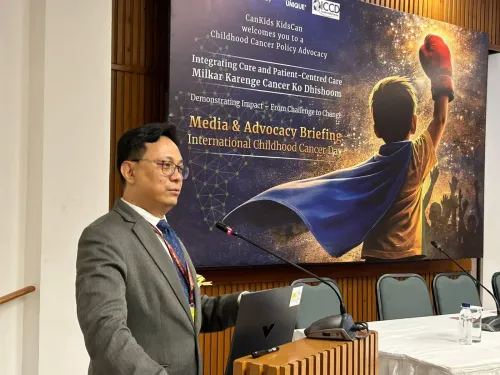
Researchers screened 6,802 published articles up to December 2023 and ultimately included 182 studies drawn from treatment centres nationwide. The combined dataset covered 22,886 children, making it the most extensive synthesis of its kind undertaken in India. The review was led by Sameer Bakhshi, Professor and Head of the Department of Medical Oncology at AIIMS New Delhi, in collaboration with CanKids…KidsCan, the World Health Organisation (WHO), and St. Jude Children's Research Hospital in the United States.
Key Survival Estimates
The exploratory pooled estimates revealed substantial variation in outcomes across cancer types. Five-year overall survival was estimated at 67.1% for acute lymphoblastic leukaemia, 93.1% for Hodgkin lymphoma, 76.8% for retinoblastoma, and 78.8% for Wilms tumour.
Three-year overall survival stood at 60.9% for acute myeloid leukaemia, 97% for chronic myeloid leukaemia, 56.9% for neuroblastoma, and 60.3% for osteosarcoma. The review additionally reported a median overall survival of 43.9 months for medulloblastoma and 21.2 months for Ewing sarcoma. Notably, outcomes were significantly poorer for children with extraocular retinoblastoma, where pooled two-year overall survival fell to 44.9% — underscoring the critical importance of early detection.
What Researchers and Experts Said
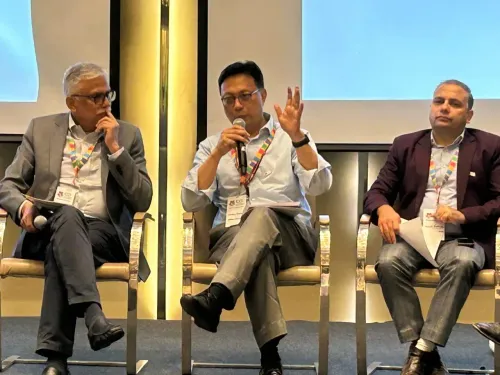
Bakhshi said, 'We hope this work will stimulate stronger cancer registries, multicentre collaborative research and standardised outcome reporting, enabling India to measure progress more effectively and continuously improve outcomes for children with cancer.'
Poonam Bagai, Founder-Chairman of CanKids…KidsCan, contextualised the findings within India's broader health targets. 'India's driving 2030 goals, aligned with the UNGA 80 call, the WHO Global Initiative for Childhood Cancer and Universal Health Coverage, are 100 per cent access to care, 100 per cent financial protection and at least 60 per cent survival,' she said. Bagai stressed that without a survival evidence baseline, measuring progress or identifying where children were being left behind would be impossible.
Vinod Paul, former Member (Health) at NITI Aayog, called it a 'landmark study' that gives India 'an important evidence base for childhood cancer survival.' He added that a patient-centred system 'must measure not only whether a child reaches treatment, but whether the child remains in care, completes treatment, survives and thrives.'
Why This Matters for Policy
India lacks a unified, real-time childhood cancer registry, and survival data has historically been fragmented across individual institutions. This review addresses that gap by creating a consolidated national picture — one that advocates say is essential for directing resources, benchmarking treatment quality, and holding the healthcare system accountable. This comes amid growing international momentum: the WHO's Global Initiative for Childhood Cancer aims to achieve at least 60% survival for children with cancer in all countries by 2030.
What Comes Next
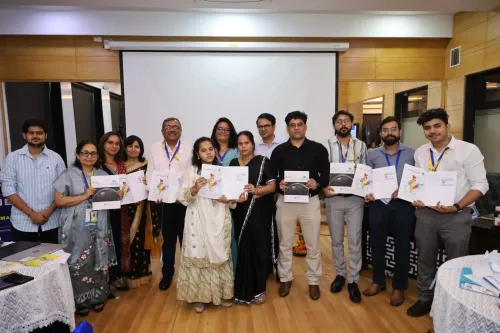
The authors and collaborators are calling on government agencies, clinicians, researchers, and civil society to use these findings to strengthen cancer registries and accelerate equitable access to treatment. The study's authors hope it will catalyse multicentre collaborative research and standardised reporting frameworks that allow India to track improvement continuously — not just at the level of individual hospitals, but across the healthcare system as a whole.
Point of View
Making it structurally impossible to know whether outcomes are improving or stagnating. The variation in survival rates across cancer types also signals something uncomfortable: access to quality treatment is not uniform, and the gap between the best and worst outcomes likely reflects geography and economics as much as biology. The 2030 targets — 60% survival, 100% access — are ambitious against a backdrop where even data collection has been inconsistent. Whether this review translates into policy action or remains a well-cited academic milestone will depend on whether the Centre treats childhood cancer registries as infrastructure, not paperwork.
NationPress
26 Jul 2026
Frequently Asked Questions
What is the AIIMS New Delhi childhood cancer survival study?
It is the first comprehensive review of published childhood cancer survival evidence from India, led by AIIMS New Delhi and published in JCO Global Oncology. The study analysed 182 studies covering 22,886 children, drawing on data published over three decades up to December 2023.
What survival rates did the study find for childhood cancers in India?
Five-year survival was estimated at 67.1% for acute lymphoblastic leukaemia, 93.1% for Hodgkin lymphoma, 76.8% for retinoblastoma, and 78.8% for Wilms tumour. Three-year survival stood at 97% for chronic myeloid leukaemia and 60.9% for acute myeloid leukaemia, among others.
Why does this study matter for India's healthcare policy?
India previously lacked a consolidated national baseline for childhood cancer survival, making it difficult to measure progress or allocate resources effectively. This review provides policymakers with the evidence needed to identify gaps, strengthen accountability, and align with WHO's 2030 targets for paediatric cancer care.
Which childhood cancer had the worst survival outcomes in the study?
Children with extraocular retinoblastoma — where the cancer has spread beyond the eye — had a pooled two-year overall survival of just 44.9%, significantly lower than other cancers in the review. Ewing sarcoma also showed a low median overall survival of 21.2 months.
What are India's 2030 goals for childhood cancer?
India's 2030 goals, aligned with the WHO Global Initiative for Childhood Cancer and Universal Health Coverage, target 100% access to care, 100% financial protection, and at least 60% survival for children with cancer. Experts say this study provides the baseline evidence needed to track progress toward those targets.