Childhood cancer in India: Health Ministry vows to 'break the barrier' on survival
Synopsis
India diagnoses roughly 75,000 children with cancer every year, yet only 60% survive — a gap the Health Ministry now says it intends to close. At a landmark ICCI workshop in New Delhi, officials called for a dedicated National Childhood Cancer Programme, a disease registry, and PM-JAY-linked financing, backed by a WHO estimate that every dollar spent on childhood cancer returns three dollars in economic value.
Key Takeaways
The Union Health Ministry has committed to 'break the barrier' on childhood cancer survival, speaking at an ICCI workshop in New Delhi on 21 May .
An estimated 75,000 new childhood cancer cases are diagnosed in India annually, with a survival rate of approximately 60% .
Swasticharan called for declaring childhood cancer a notifiable disease and establishing a national registry, with work ongoing with ICMR .
WHO cited a return of $3 for every $1 spent on childhood cancer, making the case for sustainable financing.
A September 2022 Rajya Sabha Parliamentary Standing Committee report had already backed a dedicated National Childhood Cancer Comprehensive Management Policy .
The ICCI , launched in 2023 , is now building a structured roadmap for government adoption.
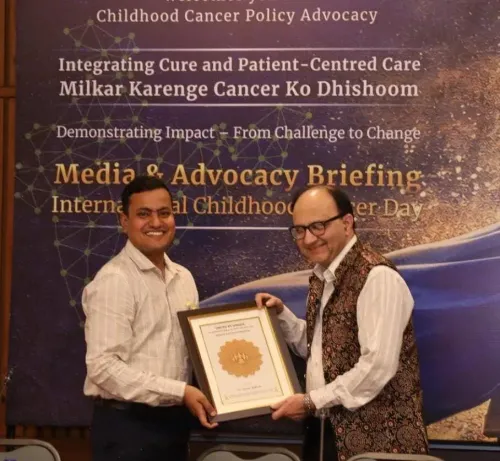
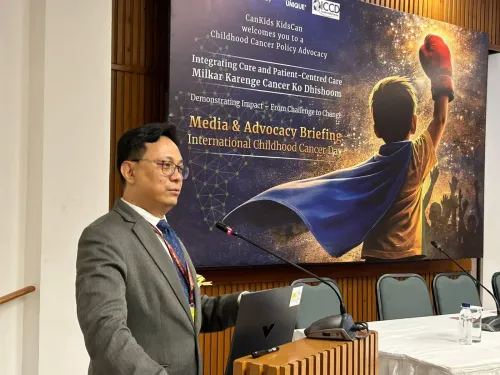
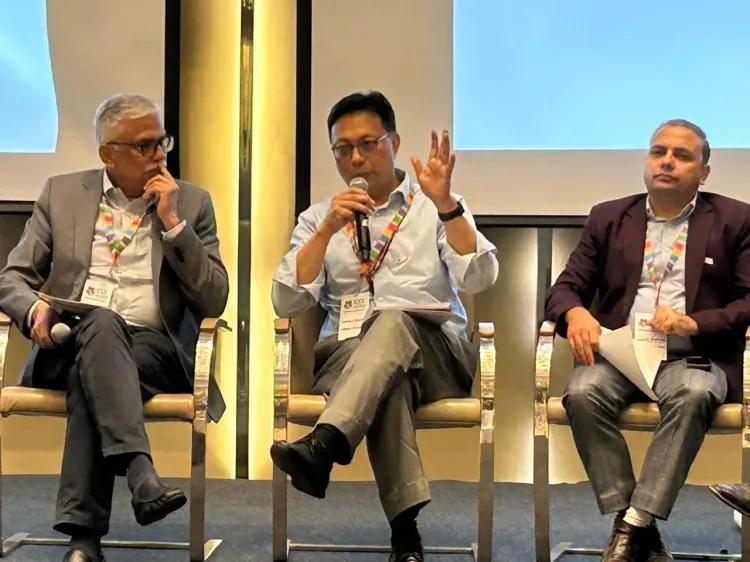
The Union Health Ministry has pledged to 'break the barrier' in childhood cancer care, committing to a framework where every diagnosed child survives, said L. Swasticharan, Deputy Director General of the Directorate General of Health Services (DGHS), at a workshop in New Delhi on Thursday, 21 May. The event, organised by the Indian Childhood Cancer Initiative (ICCI), focused on shaping a roadmap for a dedicated National Childhood Cancer Programme.
Where India Stands on Childhood Cancer
According to ICCI and supporting studies, approximately 75,000 new childhood cancer cases are diagnosed in India every year, with a survival rate of around 60% — well below outcomes achieved in high-income countries. Swasticharan described childhood cancer as 'the low hanging fruit' in terms of government programmes aimed at patient survival, citing the existing scope within the Non-Communicable Diseases (NCD) programme. 'The NCD programme already has a cancer component. The priority is that a childhood cancer patient should be detected early and ensuring financial support and medical care,' he said.
Key Policy Gaps and Proposals
A critical gap identified at the workshop is the absence of a formal disease registry. 'Setting up a registry for childhood cancer — declaring it a notifiable disease — is an issue. We are still working with ICMR on this. The aim is not to miss any patient,' Swasticharan noted. He also called for adopting models developed by Kerala and Tamil Nadu, which have successfully engaged self-help groups and leveraged Pradhan Mantri Jan Arogya Yojana (PM-JAY) financing structures to improve access.
Swasticharan stressed that post-treatment survivor support must become a policy priority. 'All our heroic acts of curing a patient should continue and not end with survival. We need to take up survivor support by engaging community and multi-stakeholder coalitions,' he said.
WHO's Case for Investment
Bishnu Giri, Technical Officer (Cancer Control) at WHO's South-East Asia Region, made a pointed economic argument for prioritising childhood cancer spending. 'Expenditure on childhood cancer is not a fancy or wasteful expenditure, as there is huge monetary gain of $3 from every dollar spent on the disease. The gain is even more in developing nations, apart from social gains,' he said. Giri called for sustainable financing through flexible funding sources to improve care and outcomes.
Abhishek Kunwar, National Professional Officer for NCD at WHO India, urged integration over fragmentation — arguing that a separate standalone programme is unnecessary if childhood cancer is woven effectively into existing NCD infrastructure. He outlined capacity building, task-sharing, decentralised care, and cost-effective financing as essential pillars.
Industry and Clinical Voices
Ramandeep Arora, paediatric oncologist at Max Hospital and member of the ICCI governing council, said clinical facilities and medical expertise are now available domestically. 'A National Childhood Cancer Programme and an MoU with the WHO to make India a partner will further bring in global best practices and technology to the country,' he said, adding that only modest government support is needed to scale outcomes on the ground.
The workshop drew attention to a September 2022 report by the Parliamentary Standing Committee on Health and Family Welfare (Rajya Sabha, 139th Report), which formally recognised the need for a dedicated childhood cancer policy framework. The report noted that the government agreed the Ministry must work towards a National Childhood Cancer Comprehensive Management Policy covering early diagnosis, shared care, and integrated paediatric oncology palliative care across public health facilities.
What Comes Next
The ICCI, launched in 2023 as a national multi-stakeholder platform, is now consolidating workshop inputs to present a structured roadmap to government decision-makers. Stakeholders called on all participants to share ground-level experiences so that key inputs can be embedded into the existing health system. With ICMR consultations ongoing and parliamentary backing on record, the push for a formal National Childhood Cancer Programme appears closer than at any previous point — though a timeline for policy notification has not yet been announced.
Point of View
The parliamentary mandate is on record since 2022, and the WHO has put a dollar figure on the return on investment. What is missing is a notifiable-disease classification and a funded national programme — neither of which requires a new law, only administrative will. The Kerala and Tamil Nadu models show that community financing works at scale; the Centre's reluctance to replicate them nationally is the real barrier being left unbroken.
NationPress
19 Sept 2026
Frequently Asked Questions
What is the proposed National Childhood Cancer Programme in India?
It is a dedicated federal policy framework being advocated by the Indian Childhood Cancer Initiative (ICCI) and supported by the Union Health Ministry to improve early detection, treatment access, and survivor support for children with cancer in India. The programme would integrate with existing NCD infrastructure and potentially include an MoU with the WHO for global best practices.
How many children are diagnosed with cancer in India each year?
According to ICCI and supporting studies, approximately 75,000 new childhood cancer cases are diagnosed in India annually. The current survival rate stands at around 60%, significantly lower than outcomes in high-income countries.
Why is declaring childhood cancer a notifiable disease important?
Making childhood cancer a notifiable disease would mandate reporting of every diagnosed case to a central registry, ensuring no patient is missed and enabling data-driven policy. DGHS official L. Swasticharan confirmed that consultations with ICMR on this are ongoing.
How does PM-JAY relate to childhood cancer treatment access?
Pradhan Mantri Jan Arogya Yojana (PM-JAY) provides health cover to economically vulnerable families and is being explored as a financing model for childhood cancer care. Officials cited Kerala and Tamil Nadu as states that have successfully used PM-JAY-linked support alongside self-help groups to improve access.
What did the 2022 Parliamentary Standing Committee report say about childhood cancer?
The Rajya Sabha Parliamentary Standing Committee on Health and Family Welfare, in its 139th Report of September 2022, formally acknowledged the need for a dedicated childhood cancer policy and noted government agreement to formulate a National Childhood Cancer Comprehensive Management Policy covering early diagnosis, shared care, and integrated palliative care.