Akhilesh Yadav calls out national media, backs 'Grounded Journalism'
Synopsis
Samajwadi Party president Akhilesh Yadav declared on 29 July 2026 that India's national media faces the same accountability crisis as the central government, calling for a shift to 'Main Street Media' and championing local and YouTube journalists as the authentic future of Indian journalism.
Key Takeaways
Akhilesh Yadav posted on 29 July 2026 arguing that national media's accountability crisis mirrors that of the central government.
He called on 'Mainstream Media' to become 'Main Street Media' — rooted in ordinary people's realities.
Yadav turned the government's own 'Vocal for Local' (2020) slogan into a critique of national media, saying audiences will naturally prefer local news they trust.
He championed local reporters and YouTube journalists as practitioners of maati patrakarita (Grounded Journalism) — the future of credible news.
He declared the era of patron-driven media — 'jiska daana, uska gaana' — is in its final phase.
The post reflects a broader pattern of regional parties questioning national media concentration and relevance to Hindi-belt audiences.
A youth movement has just handed India's national media a mirror — and Samajwadi Party president Akhilesh Yadav is making sure they look into it. In a sharp post on Wednesday, 29 July 2026, Yadav argued that the same accountability crisis gripping the central government now squarely faces what he called 'so-called national media.'
From 'Mainstream Media' to 'Main Street Media'
Yadav's central argument is a pointed reframe: 'Mainstream Media ko Main Street Media banana hoga' — 'Mainstream Media must become Main Street Media.' He contends that national outlets have turned news into a product, polished and packaged for optics, and in doing so have drifted from the streets where ordinary Indians actually live. His charge is not rhetorical — it is structural.
He invokes the government's own 'Vocal for Local' slogan, launched in 2020 as part of the Atmanirbhar Bharat economic package, and turns it back on the establishment. The argument: if you tell people to trust local products over national brands, do not be surprised when they extend that logic to local news over national channels. 'Those who promoted the slogan,' he writes, 'did not realise it would not stay limited to a product.'
The 'Grounded Journalism' that audiences are migrating toward
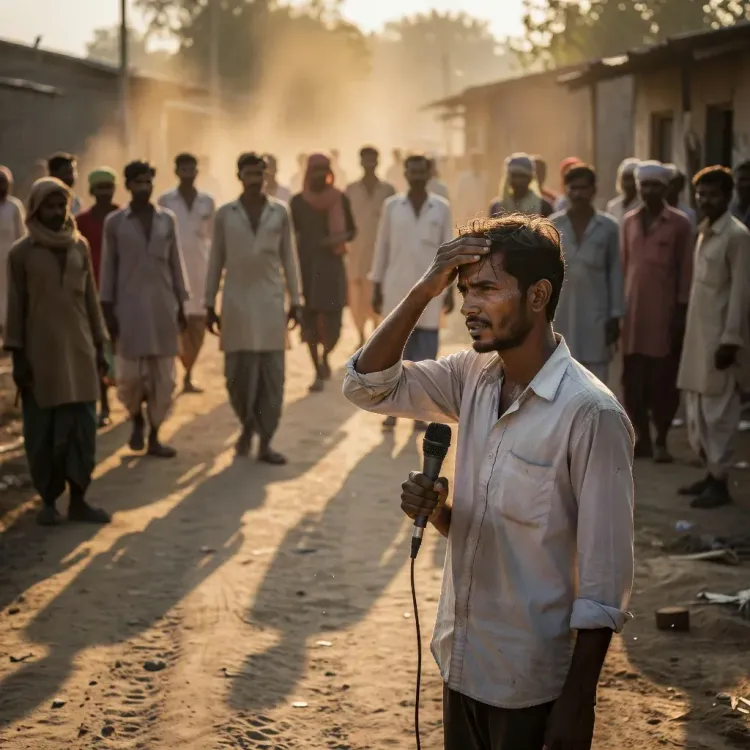
Yadav draws a vivid contrast between corporate media and what he calls 'maati patrakarita' — 'soil journalism' or Grounded Journalism. Local reporters and YouTube journalists, he argues, hold a microphone in one hand and wipe sweat with their gamchha (a coarse cotton towel) in the other. That daily, visible struggle is itself a signal of credibility to audiences who feel unseen by glossy national broadcasts.
He describes these smaller outlets as 'aakar mein chote lekin vichaar mein bade' — 'small in size but large in thought' — and credits them with raising genuine public issues rather than performing what he dismisses as 'cosmetic journalism.' The implication is clear: trust, not technology or corporate backing, is the real infrastructure of journalism.
The era of 'whoever feeds the singer sets the tune' is ending
Yadav's sharpest line is a cultural reference: 'Jiska daana, uska gaana' — 'whoever provides the grain, sets the song' — a phrase invoking the tradition of court poets who sang the praises of their patrons. He declares this 'charan yug,' the age of sycophantic media, is now in its 'final phase.' The public, he writes, no longer wants 'dramatic, meaningless debate' — it wants 'real, meaningful dialogue.'
The post lands at a moment when the expansion of vernacular digital platforms and independent YouTube journalism has already reshaped media consumption patterns across Uttar Pradesh and other Hindi-belt states. Regional parties, including the Samajwadi Party, have long argued that national media coverage skews toward Delhi-centric narratives at the expense of ground realities in states like UP.
Whether national media organisations respond — or whether this critique finds its way into parliamentary debates on media regulation — is the next question worth watching. Yadav has fired the opening salvo. The newsrooms he is targeting will have to decide whether to answer it, or prove his point by ignoring it.
Point of View
Including the press, is visibly eroding. By framing national media and the central government as twin accountability failures, he attempts to occupy the moral high ground without naming a single opponent directly. The 'Vocal for Local' pivot is particularly sharp: it weaponises a government slogan against the government's own media ecosystem. If the vernacular digital media boom in Uttar Pradesh continues, this argument could carry genuine electoral resonance in the Hindi belt.
NationPress
13 Sept 2026
Frequently Asked Questions
What did Akhilesh Yadav say about national media?
Akhilesh Yadav said national media faces the same accountability crisis as the central government, arguing it has turned news into a packaged product and lost public trust to local and YouTube journalists.
What does 'Main Street Media' mean in Akhilesh Yadav's post?
'Main Street Media' is Yadav's call for national outlets to move away from glossy, corporate-backed journalism and reconnect with ordinary people's concerns, language, and daily realities.
What is 'maati patrakarita' or Grounded Journalism?
Yadav used the term maati patrakarita — literally 'soil journalism' — to describe local reporters and YouTube journalists who cover ground-level public issues without corporate or government backing.
What is the 'Vocal for Local' connection Akhilesh Yadav made?
Yadav argued that the central government's own 2020 'Vocal for Local' slogan inadvertently taught people to prefer local alternatives over national brands — and audiences have applied the same logic to local news over national channels.
What did Akhilesh Yadav mean by 'jiska daana, uska gaana'?
The phrase means 'whoever provides the grain sets the song' — a reference to patron-driven media that sings the praises of its funders. Yadav declared this era of sycophantic journalism is now in its final phase.