Akhilesh flags vanaspati price surge in sharp jibe

Synopsis
Samajwadi Party president Akhilesh Yadav used a sharp Hindi idiom on 25 June 2026 to flag soaring vanaspati prices, continuing the opposition's sustained campaign against food inflation and the rising cost of essential kitchen commodities for ordinary Indian households.
Key Takeaways
Akhilesh Yadav posted on 25 June 2026 using the Hindi idiom 'वनस्पति चढ़ गई तार पर' to signal that vanaspati prices have surged sharply.
Vanaspati is a hydrogenated vegetable oil widely used by low- and middle-income households and is closely tied to global crude palm oil prices.
The central government had cut edible oil import duties multiple times between 2021 and 2022 to moderate domestic prices amid global supply disruptions.
The Samajwadi Party has consistently used social media to highlight food inflation, particularly in Uttar Pradesh , where the commodity affects a large consumer base.
Monthly retail inflation data from the Ministry of Statistics will be a key indicator of whether the price rise is broad-based or localised.
Samajwadi Party president Akhilesh Yadav took to social media on Thursday, 25 June 2026, to flag a sharp rise in vanaspati (vegetable shortening) prices, posting a pointed Hindi quip that translates as: 'Vanaspati has climbed the wire' — a colloquial expression implying prices have shot through the roof.
Context
The one-line post — '"वनस्पति" चढ़ गई तार पर' ('Vanaspati has climbed the wire') — uses a popular Hindi idiom to suggest that the retail price of vanaspati, a hydrogenated vegetable oil widely used in low- and middle-income Indian households, has become unaffordable. The post was accompanied by a video, indicating Yadav may be referencing a specific market or data point, though the video content has not been independently verified.
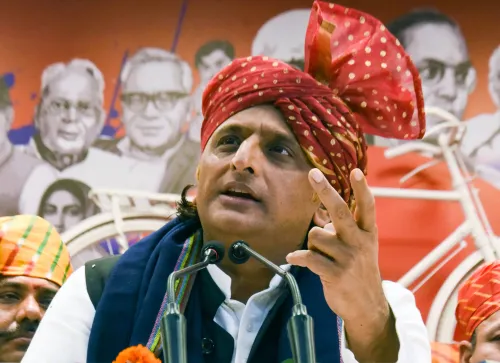
Akhilesh Yadav, who leads the Samajwadi Party from Lucknow and represents Kannauj in the Lok Sabha, has consistently used social media to amplify cost-of-living concerns, particularly those affecting households in Uttar Pradesh.
Policy Backdrop
Vanaspati is derived from edible oils — chiefly palm oil — and its retail price is closely linked to global crude palm oil rates and domestic import duty structures. The central government had reduced import duties on crude palm oil and other edible oils multiple times between 2021 and 2022 to cushion domestic consumers from global supply shocks triggered by the Russia-Ukraine conflict and disruptions in Indonesia, the world's largest palm oil exporter.
Despite those duty cuts, edible oil prices remained volatile. Vanaspati, which is used extensively in street food, bakery products, and budget cooking, is a bellwether commodity for food inflation among lower-income groups. Opposition parties, including the Samajwadi Party, have repeatedly pressed the central government to do more to stabilise prices of essential kitchen commodities.
Stakeholders and Impact
Urban households and small consumers — particularly in densely populated states like Uttar Pradesh, Bihar, and West Bengal — are the most directly affected by vanaspati price movements. Small dhabas, street vendors, and home cooks who rely on vanaspati as a cheaper alternative to refined oils bear the sharpest pinch when prices rise.
Indian opposition leaders routinely use social media to spotlight spikes in prices of essential kitchen commodities, and such commentary forms part of a long-standing pattern of political pressure on the ruling dispensation over retail inflation and cost-of-living concerns. Yadav's post fits squarely within that tradition, keeping the issue in the public discourse ahead of any formal parliamentary or state-level response.
What's Next
Attention will now turn to the monthly retail inflation and food-price index data released by the Ministry of Statistics and Programme Implementation, which will either corroborate or contextualise the claim that vanaspati prices have risen sharply. Parliamentary questions on edible-oil pricing and any state-level responses from the Uttar Pradesh government are also likely to follow.
If inflation data confirm an upward trend in edible-oil prices, the political pressure on the central government to revisit import duties or invoke buffer-stock mechanisms is likely to intensify, with the Samajwadi Party well-positioned to lead that charge in the run-up to any legislative session.
Point of View
Bypassing traditional press channels. With Uttar Pradesh being India's most populous state and a crucial electoral battleground, keeping food-price grievances in the public eye serves a dual purpose of political accountability and voter mobilisation. The effectiveness of this strategy will ultimately depend on whether official data validates the price-spike narrative in the coming weeks.
NationPress
24 Sept 2026
Frequently Asked Questions
Why did Akhilesh Yadav post about vanaspati prices?
Akhilesh Yadav used the Hindi idiom 'vanaspati has climbed the wire' to signal that retail vanaspati prices have risen sharply, continuing his party's sustained critique of the central government's handling of food inflation.
What is vanaspati and why does its price matter?
Vanaspati is a hydrogenated vegetable shortening widely used in low- and middle-income Indian households, dhabas, and bakeries as a cheaper alternative to refined oils; price spikes directly affect household budgets and small food businesses.
What has the government done about edible oil prices in India?
The central government reduced import duties on crude palm oil and other edible oils multiple times between 2021 and 2022 to moderate domestic prices amid global supply disruptions, but prices have remained volatile.
How does vanaspati price relate to palm oil?
Vanaspati is primarily derived from palm oil, so its retail price is closely linked to global crude palm oil rates, import duty levels, and supply conditions in major producer countries.
What will indicate if vanaspati prices have genuinely risen?
The monthly retail inflation and food-price index data published by the Ministry of Statistics and Programme Implementation will provide official confirmation of any broad-based rise in vanaspati and edible oil prices.