Akhilesh Yadav flags 90% vs 10% imbalance in UP administration
Synopsis
SP president Akhilesh Yadav alleged a sharp administrative representation imbalance in Uttar Pradesh on 2 November 2026, claiming communities forming 90% of the population hold only 10% of bureaucratic posts — calling it a 'great injustice' and invoking his PDA coalition framework.
Key Takeaways
Akhilesh Yadav alleged on 2 November 2026 that 90% of UP's population controls only 10% of administrative representation.
He called the inversion — where a 10% community reportedly holds 90% of posts — a 'great injustice' (bahut nainsafi).
The charge was framed around the PDA (Pichhda, Dalit, Alpasankhyak) coalition, the SP's core political identity.
Yadav specifically noted that even a constituency whose MP belongs to the PDA community is not immune to this imbalance.
The post signals the SP's intent to make bureaucratic representation a live electoral issue ahead of the 2027 UP assembly elections .
A stark arithmetic of exclusion — Samajwadi Party president Akhilesh Yadav on Monday, 2 November 2026 turned a statistic into a political indictment, charging that communities making up 90 per cent of the population hold barely 10 per cent of administrative representation in Uttar Pradesh, while a 10 per cent minority commands 90 per cent of the posts.
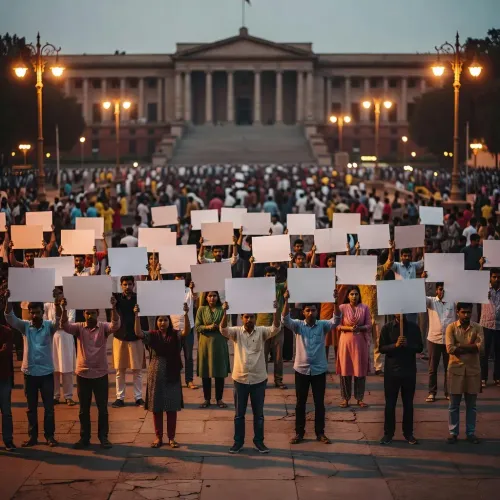
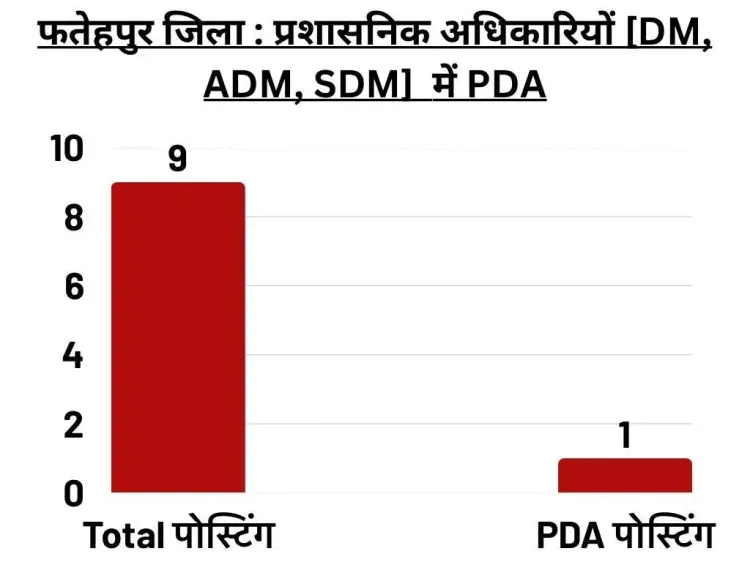
Posting on X with an image, Yadav wrote: 'jo samaj 10% hai uska prashasan mein pratinidhitva 90% hai aur jo 90% hai uska pratinidhitva keval 10% hai… bahut nainsafi hai!' — 'The community that is 10% holds 90% representation in administration, and the one that is 90% has only 10% representation… This is a great injustice!'
The PDA frame and the MP's constituency
Yadav sharpened the charge with a pointed rhetorical pivot: if a constituency whose own Member of Parliament belongs to the PDA — his coalition shorthand for Pichhda (backward classes), Dalit, and Alpasankhyak (minorities) — already shows this imbalance, the situation elsewhere in the state must be far worse. The argument is structural: elected representation at the top has not translated into bureaucratic presence on the ground where decisions are actually made.
The PDA framework has been central to the Samajwadi Party's political positioning ahead of and since the 2024 Lok Sabha elections, in which the party made significant gains in Uttar Pradesh. Yadav, himself a Lok Sabha MP and former Chief Minister of the state, has repeatedly used the PDA lens to argue that OBC, Dalit, and minority communities remain structurally sidelined in governance machinery despite their overwhelming numerical strength.
Representation gap — the broader political charge
The 90-10 inversion Yadav describes touches one of the most persistent debates in Indian administrative reform: the gap between constitutional reservation in public employment and the actual demographic composition of the officer-level bureaucracy, especially at the district and divisional levels in large states like UP. While reservation exists in recruitment, critics have long argued that promotions, postings, and discretionary appointments skew heavily toward dominant groups.
By anchoring his claim to a specific parliamentary constituency represented by a PDA-community MP, Yadav is doing something deliberate — he is making the grievance local, verifiable, and personal. The implication is clear: if the ruling party's allies on the ground cannot shift the needle in their own turf, the promise of PDA governance remains hollow.
With the 2027 Uttar Pradesh assembly elections looming on the political horizon, the representation question is unlikely to stay in the abstract for long. Yadav is laying a marker — and demanding an answer.
Point of View
He is not merely making a statistical claim but placing the burden of proof on the ruling dispensation to show where PDA presence in politics has actually shifted power on the ground. The charge fits a longer arc of OBC-Dalit mobilisation in UP politics and is designed to energise exactly the communities the SP needs to consolidate ahead of 2027. Whether the numbers are independently verifiable matters less in political terms than the visceral resonance of the inversion itself.
NationPress
2 Nov 2026
Frequently Asked Questions
What did Akhilesh Yadav say about UP administration representation?
Akhilesh Yadav claimed that communities forming 90% of UP's population hold only 10% of administrative representation, while a group that is 10% of the population holds 90% of posts — calling it a 'great injustice.'
What is the PDA framework Akhilesh Yadav refers to?
PDA stands for Pichhda (backward classes), Dalit, and Alpasankhyak (minorities). It is the coalition identity the Samajwadi Party has built its political strategy around, arguing these groups form the numerical majority but remain underrepresented in power structures.
Why did Akhilesh Yadav mention a PDA MP's constituency?
Yadav used a constituency represented by a PDA-community MP as a benchmark to argue that even where PDA communities have electoral success, administrative representation has not followed — implying the problem is worse elsewhere in Uttar Pradesh.
Is bureaucratic representation a live political issue in Uttar Pradesh?
Yes. The gap between reserved recruitment and actual demographic composition at officer levels in UP's district and divisional administration has been debated for decades, and the Samajwadi Party has made it a central plank ahead of the 2027 state assembly elections.
When did Akhilesh Yadav post this on X?
Akhilesh Yadav posted this on X on Monday, 2 November 2026, at 9:13 PM IST.