Ambala borewell tragedy: 4-year-old Nirbhay pulled out dead after 21-hour rescue
Synopsis
A 21-hour rescue operation involving the NDRF, Indian Army, and SDRF ended in heartbreak in Haryana's Ambala on Wednesday as four-year-old Nirbhay, who had fallen into a 220-foot-deep borewell, was declared dead on arrival at hospital. The tragedy renews urgent questions about why open borewells in India's agricultural fields continue to claim young lives despite repeated court directives.
Key Takeaways
Four-year-old Nirbhay fell into a 220-foot-deep , nine-inch-wide open borewell in Dhanaura village, Ambala , at around 6:30 a.m. on Tuesday, 1 July .
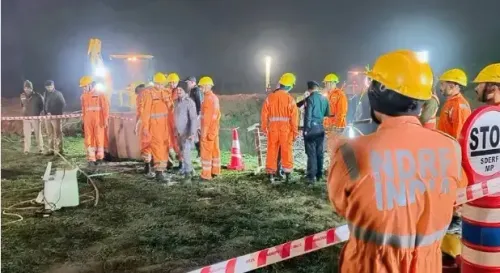
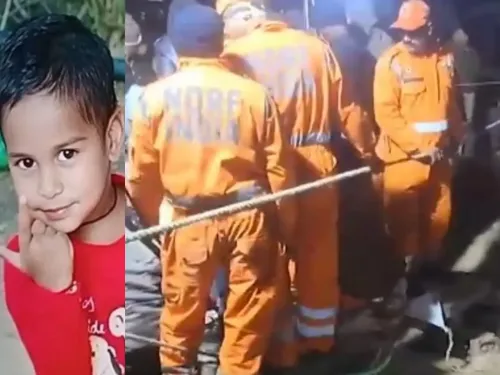
A 21-hour rescue operation involving NDRF , SDRF , the Indian Army , and district administration was launched immediately.
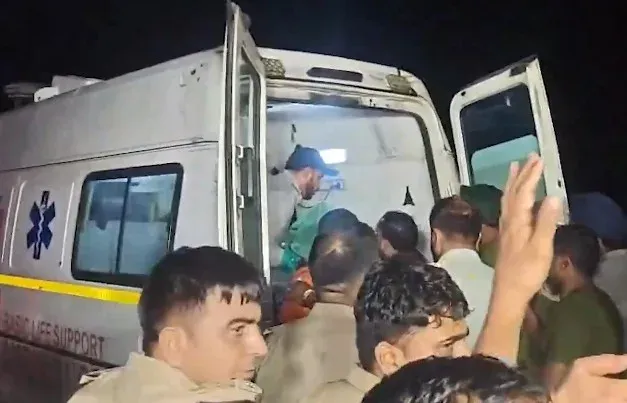
Nirbhay was extracted at approximately 3:30 a.m. on Wednesday and rushed to Ambala City Civil Hospital , where he was declared 'brought dead'.
Medical Officer Dr Rishipal confirmed death via ECG; the exact cause awaits a post-mortem examination.
The child's remains are at Ambala Cantonment Civil Hospital mortuary, pending handover to the family after post-mortem.
The incident revives calls for stricter enforcement of open borewell safety regulations across Haryana and rural India.
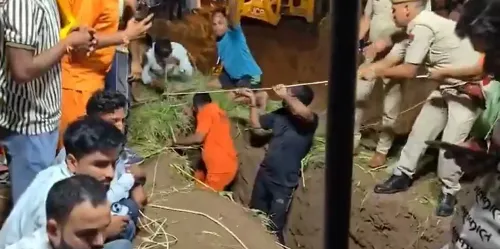
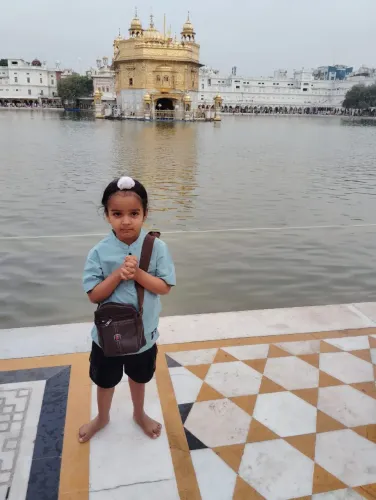
A four-year-old boy identified as Nirbhay was declared dead early Wednesday after he was retrieved from a 220-foot-deep open borewell in Dhanaura village, Ambala district, Haryana, following a gruelling 21-hour multi-agency rescue operation. Doctors at Ambala City Civil Hospital confirmed he was 'brought dead' when he arrived at approximately 3:30 a.m., ending a desperate overnight effort that had mobilised the National Disaster Response Force (NDRF), the State Disaster Response Force (SDRF), the Indian Army, and district administration personnel.
How the Accident Happened
Nirbhay had accompanied his father, Manjit, to the family's agricultural fields in Dhanaura village under Barara at around 6:30 a.m. on Tuesday. Manjit had gone to deliver breakfast to the child's grandfather, Karnail Singh, who had been working the fields since early morning. The boy was reportedly playing nearby when he noticed the open borewell and began tossing handfuls of soil into it.
According to officials, the ground around the borewell had turned wet and slippery. While leaning forward to peer into the shaft, Nirbhay is believed to have lost his balance and plunged into the approximately nine-inch-wide opening. His father and grandfather rushed to the spot immediately, calling out his name repeatedly, but the narrow bore made any manual rescue attempt impossible.
The 21-Hour Rescue Operation
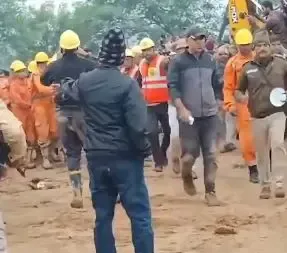
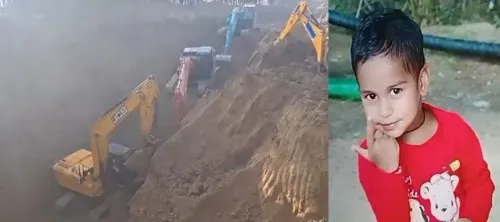
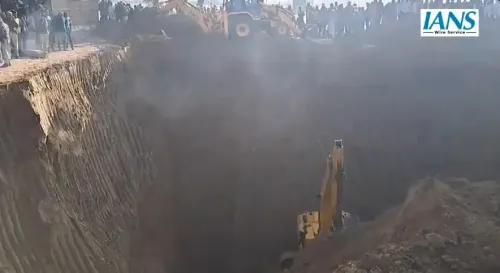
Rescue teams comprising NDRF, SDRF, the Indian Army, and district administration officials launched an extensive operation that stretched through Tuesday and into the early hours of Wednesday. The narrow diameter of the borewell posed severe technical challenges, slowing progress significantly.
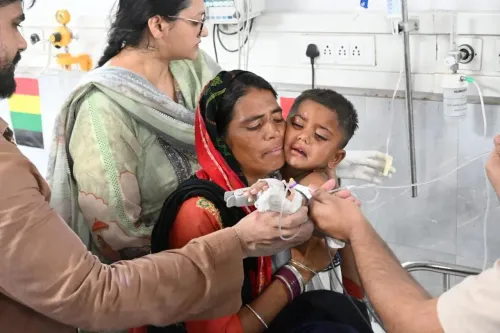
When Nirbhay was finally extracted at around 3:30 a.m. on Wednesday, he was rushed to Ambala City Civil Hospital. Medical Officer Dr Rishipal said: 'After several hours of continuous efforts, the child was finally brought out and immediately shifted to the emergency department. Even at the rescue site, we observed that the child's condition was extremely critical. When he was brought to the hospital, we conducted an ECG, which confirmed that the child had already passed away. The body has now been shifted to the mortuary.'
Dr Rishipal added: 'The exact cause of the death would only be known after a post-mortem examination.'
Family and Community Response
Before the medical verdict was delivered, the family had expressed satisfaction with the rescue effort. Nirbhay's uncle told reporters: 'The administration extended full support to us. The villagers, the police, the Army, and all the rescue teams helped us throughout the operation. The villagers also cooperated wholeheartedly. The child was finally brought out, and the medical team immediately took him.'
The mortal remains have been kept in the mortuary at Ambala Cantonment Civil Hospital and will be handed over to the family after the post-mortem examination is completed.
A Recurring Tragedy Across India
Open borewells in agricultural fields have claimed children's lives in multiple states over the years, each incident triggering calls for mandatory capping of disused shafts. Despite repeated Supreme Court directives and state-level advisories urging farmers and authorities to seal open borewells, enforcement remains inconsistent across rural India. The Ambala incident is the latest in a long pattern of preventable tragedies, renewing pressure on the Haryana government and district administrations to enforce borewell safety regulations more rigorously.
Point of View
India watches the same tragedy unfold in real time — cameras at a borewell, rescuers drilling through the night, a nation holding its breath — and then the worst. The Ambala case is not an anomaly; it is a policy failure on repeat. Supreme Court orders to cap disused borewells exist. State advisories exist. What does not exist, evidently, is enforcement with teeth. Until district administrations are held accountable for every uncapped shaft in their jurisdiction, the 21-hour rescue operation will remain India's ritual of grief rather than a problem solved.
NationPress
29 Sept 2026
Frequently Asked Questions
What happened in the Ambala borewell incident on 1 July 2025?
Four-year-old Nirbhay fell into a 220-foot-deep open borewell in Dhanaura village, Ambala district, Haryana, at around 6:30 a.m. on Tuesday. After a 21-hour rescue operation involving the NDRF, SDRF, and the Indian Army, he was pulled out at 3:30 a.m. on Wednesday and declared dead at Ambala City Civil Hospital.
Who carried out the rescue operation?
The rescue was conducted by the National Disaster Response Force (NDRF), the State Disaster Response Force (SDRF), the Indian Army, and the district administration. Villagers and local police also assisted throughout the operation.
Why was the rescue so difficult?
The borewell was approximately nine inches wide and 220 feet deep, making it physically impossible to lower a rescuer or use conventional extraction methods. The narrow shaft required specialised drilling and retrieval equipment, which significantly slowed the operation.
What did the doctors say about Nirbhay's condition?
Medical Officer Dr Rishipal stated that the child's condition appeared extremely critical even at the rescue site. On arrival at Ambala City Civil Hospital, an ECG confirmed he had already passed away. The exact cause of death will be determined by a post-mortem examination.
What steps are needed to prevent such tragedies?
Courts and state governments have repeatedly issued directives requiring farmers and local authorities to cap or seal disused open borewells. However, enforcement has remained inconsistent across rural India. The Ambala incident has renewed calls for stricter accountability at the district administration level.