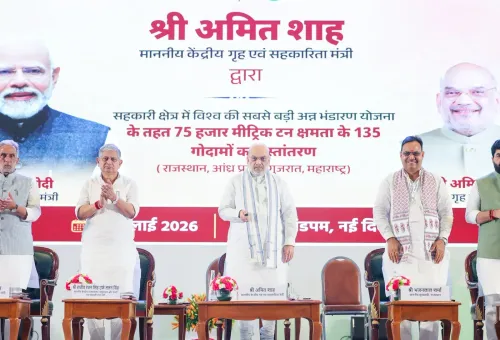
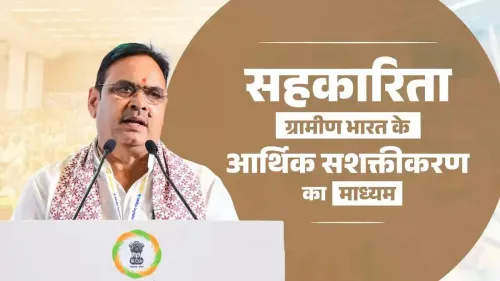
Amit Shah marks 5 years of cooperative growth under Modi govt
Synopsis
Union Home Minister Amit Shah has marked five years of the cooperative movement under PM Modi, crediting 30 crore members and over 8.5 lakh cooperative institutions as pillars of rural transformation through the Sahkar Se Samriddhi initiative.
Key Takeaways
Union Home Minister Amit Shah posted on 6 July 2026 marking five years of cooperative sector growth under PM Narendra Modi .
The cooperative sector now covers 30 crore members across more than 8.5 lakh cooperative institutions , per the post.
The Ministry of Cooperation was established in July 2021 as India's first dedicated central ministry for the cooperative sector.
Key reforms include computerisation of PACS , model bye-laws, and integration with the Atmanirbhar Bharat agenda.
The government is expected to unveil a new National Cooperative Policy and possible amendments to the Multi-State Cooperative Societies Act .
Union Home Minister and Minister of Cooperation Amit Shah on Monday, 6 July 2026 highlighted the transformative impact of the cooperative sector under Prime Minister Narendra Modi's leadership, citing outreach to 30 crore members and more than 8.5 lakh cooperative institutions as the movement completes five years under a dedicated ministry.
Context
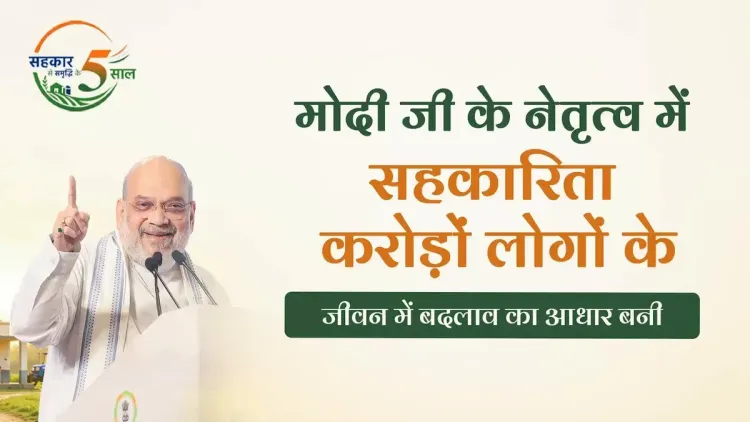
Shah's post, shared under the hashtag #SahkarSeSamriddhiKe5Saal ('Five years of prosperity through cooperation'), credited Modi's decision-making as the foundation for change and achievement in the lives of crores of Indians. The Hindi post translates: 'Modi ji's decision made cooperation the basis of transformation and achievement in the lives of crores of people through 30 crore members and more than 8.5 lakh cooperative institutions.'
The post was accompanied by a video, underscoring the government's effort to document and publicise milestones of the cooperative movement over the past five years.
Policy Backdrop
In July 2021, the Government of India carved out a dedicated Ministry of Cooperation — the first of its kind at the central level — to give focused policy attention to a sector that had previously been managed under the Agriculture Ministry. Amit Shah was appointed its first minister, signalling the political priority the BJP-led government placed on cooperative reform.
Since its formation, the ministry has pursued structural changes including computerisation of Primary Agricultural Credit Societies (PACS), introduction of model bye-laws, and integration of cooperatives into the broader Atmanirbhar Bharat framework. The Sahkar Se Samriddhi ('Prosperity Through Cooperation') initiative was launched as the overarching programme to channel these reforms into measurable outcomes.
Stakeholders and Impact
The cooperative sector in India serves as a critical economic backbone for rural households, farmers, dairy producers, and marginalised communities. With 8.5 lakh-plus cooperative societies operating across the country, the network spans credit, dairy, marketing, housing, and fisheries — touching daily livelihoods at the grassroots level.
A membership base of 30 crore makes India's cooperative movement one of the largest in the world. Government reforms aimed at improving governance and financial transparency in these institutions are intended to unlock greater economic participation for low-income rural members who depend on cooperatives for credit and market access.
What's Next
The five-year milestone is expected to be followed by the rollout of a new National Cooperative Policy, which the ministry has been working on to provide a long-term legislative and regulatory framework for the sector. Possible amendments to the Multi-State Cooperative Societies Act are also anticipated in an upcoming parliamentary session, which could further expand the central government's role in regulating large cooperative entities that operate across state boundaries.
As the Sahkar Se Samriddhi programme marks its fifth year, the government is likely to use this moment to announce the next phase of cooperative expansion, with emphasis on new-age cooperatives in areas such as organic farming, exports, and digital services.
Point of View
' Shah reinforces the centralised-leadership narrative that has been a consistent BJP electoral motif. The sheer membership figure of 30 crore, if sustained by ground-level data, would represent one of the most significant expansions of state-linked rural economic infrastructure in recent Indian history. The timing also signals that the government intends to use cooperative reform as a counter-narrative to opposition criticism on agrarian distress.
NationPress
5 Oct 2026
Frequently Asked Questions
What is Sahkar Se Samriddhi?
'Sahkar Se Samriddhi' translates to 'Prosperity Through Cooperation' and is the Government of India's flagship initiative to promote and reform the cooperative sector, launched after the creation of the dedicated Ministry of Cooperation in July 2021.
When was the Ministry of Cooperation formed in India?
The Ministry of Cooperation was established in July 2021 by the Modi government as India's first dedicated central ministry for the cooperative sector, with Amit Shah as its inaugural minister.
How many cooperative societies are there in India?
According to Amit Shah's post on 6 July 2026, there are more than 8.5 lakh (850,000) cooperative institutions in India, serving a membership base of 30 crore people.
What is PACS computerisation in India?
PACS computerisation refers to the government's programme to digitise Primary Agricultural Credit Societies, improving transparency, governance, and financial access for rural members who rely on these grassroots cooperative bodies for credit.
What comes after Sahkar Se Samriddhi's five-year mark?
The government is expected to announce a new National Cooperative Policy and potentially move amendments to the Multi-State Cooperative Societies Act in parliament, expanding the regulatory framework for the sector.