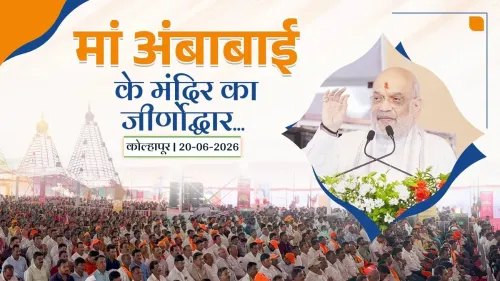
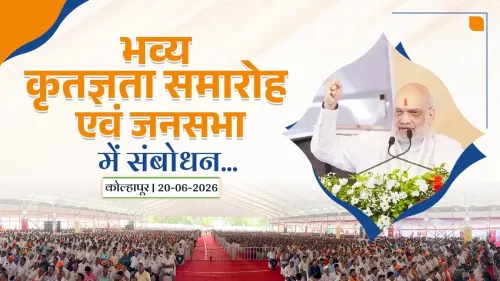
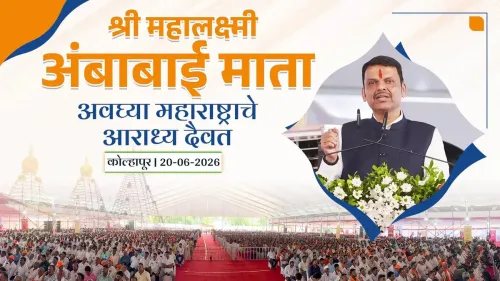
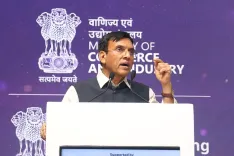
Amit Shah addresses Maharashtra from Kolhapur's Ambabai shrine
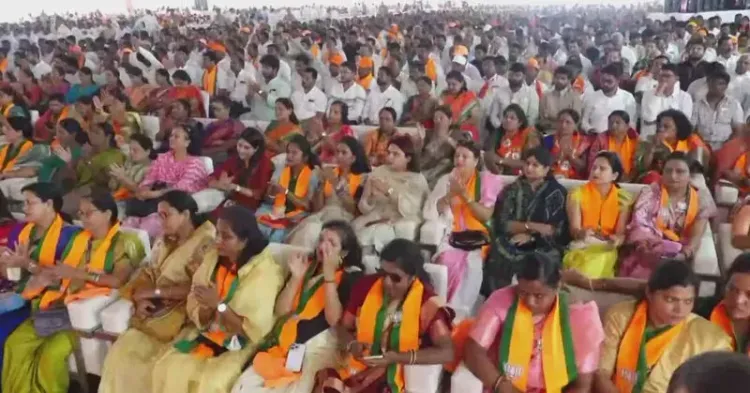
Synopsis
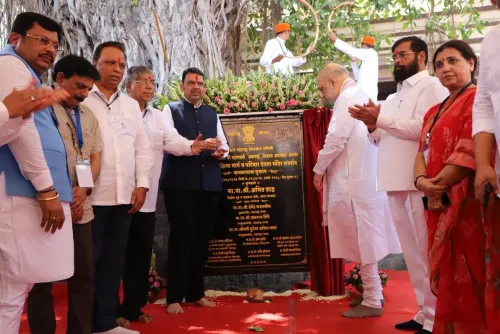
Union Home Minister Amit Shah addressed Maharashtra residents from the Ambabai (Mahalaxmi) temple in Kolhapur on June 20, 2026, citing 12 years of development and heritage preservation under PM Modi's leadership during a live public interaction.
Key Takeaways
Union Home Minister Amit Shah held a live public interaction from the Ambabai (Mahalaxmi) temple in Kolhapur, Maharashtra on June 20, 2026 .
Shah described the last 12 years under PM Narendra Modi as a 'beautiful confluence of development and heritage.' The Ambabai temple is one of the 51 Shakti Peethas and a major pilgrimage destination in western India.
The central government's PRASAD and HRIDAY schemes, both launched in 2015 , have directed funds toward pilgrimage and heritage city development, including sites in Maharashtra.
The visit is part of a broader pattern of BJP senior leaders conducting outreach at historically and religiously significant sites in Maharashtra.
Follow-up announcements on central funding for Kolhapur's heritage and temple infrastructure are anticipated.
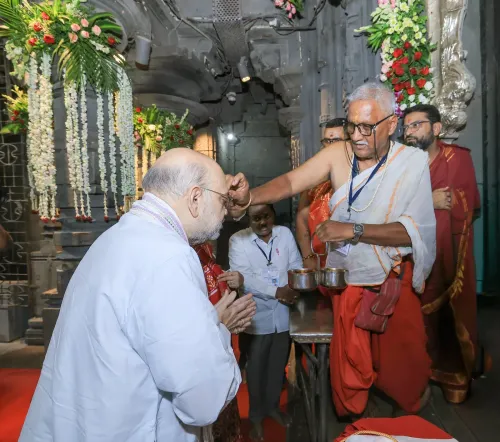
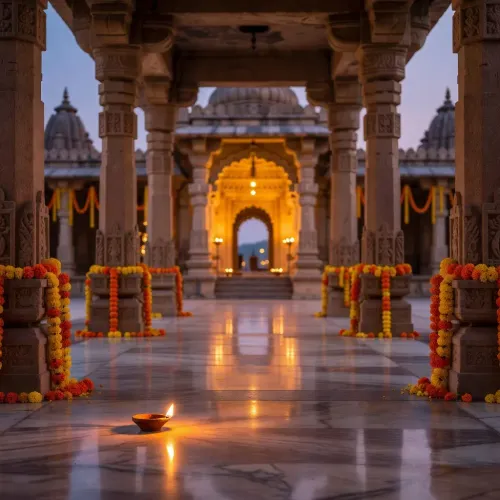
Union Home Minister Amit Shah addressed residents of Maharashtra on Saturday, June 20, 2026, speaking from the sacred precincts of the Ambabai (Mahalaxmi) temple in Kolhapur, one of the 51 Shakti Peethas and among the most revered pilgrimage sites in western India. Shah conducted a live public interaction, invoking the spiritual significance of the site as a backdrop for his outreach to the people of the state.
Posting on X, Shah wrote in Hindi and Marathi: 'मां अंबाबाई के तीर्थ क्षेत्र कोल्हापुर में प्रदेशवासियों से संवाद कर रहा हूं' ('I am conversing with the people of the state from the pilgrimage site of Maa Ambabai in Kolhapur'). He added that under Prime Minister Narendra Modi's leadership over the 'गेल्या १२ वर्षांत' ('last 12 years'), the country has witnessed 'a beautiful confluence of development and heritage.'
Context
The Ambabai temple in Kolhapur is an ancient Mahalaxmi shrine that draws lakhs of devotees each year from across Maharashtra and neighbouring states. Kolhapur, situated in the southwestern corner of Maharashtra, holds deep cultural and religious importance for Marathi-speaking communities. Shah's choice of this venue for a public address underscores the site's symbolic weight in the state's social and political life.
The interaction was broadcast live, with Shah reaching out directly to Maharashtra residents through a public platform. Such direct outreach from a senior Union minister at a prominent religious site reflects a pattern of combining cultural resonance with political communication.
Policy Backdrop
The central government has, since 2014, pursued twin schemes aimed at upgrading pilgrimage and heritage infrastructure. The PRASAD scheme (Pilgrimage Rejuvenation and Spiritual Augmentation Drive), launched in 2015, directed central funds toward developing amenities at major religious sites, including those in Maharashtra. The HRIDAY scheme (Heritage City Development and Augmentation Yojana), also announced in 2015, provided grants for conserving the built heritage of historic cities.
Shah's reference to a 'beautiful confluence of development and heritage' aligns with the BJP-led government's stated policy narrative — that economic infrastructure growth and cultural preservation are complementary goals, not competing ones. Kolhapur, with its ancient temple complex and growing urban economy, is frequently cited within this framework.
Stakeholders and Impact
The primary audience of Saturday's address was Maharashtra's general public, particularly residents of the Kolhapur region and pilgrims associated with the Ambabai temple. The outreach is also politically significant: Maharashtra is a large and electorally consequential state where the BJP and its allies have maintained a governing presence, and visits by senior Union ministers carry both administrative and political weight.
Temple pilgrims, local traders dependent on religious tourism, and civic bodies overseeing heritage infrastructure in Kolhapur all stand to watch for any follow-up announcements on central funding or development projects tied to the site.
What's Next
Observers will watch for any concrete announcements on central funding for the Ambabai temple precinct or broader heritage and infrastructure projects in Kolhapur. Statements made during such high-profile ministerial visits often precede formal policy or budgetary decisions at the next Maharashtra legislative session or in Union budget allocations. Shah's continued engagement with Maharashtra signals sustained attention to the state ahead of future electoral and legislative cycles.
Point of View
A state with a complex coalition landscape and significant electoral weight, receives sustained attention from senior Union ministers precisely because it remains a high-stakes political theatre. The invocation of '12 years' of Modi governance is a recurring rhetorical anchor used to consolidate the party's record ahead of future electoral cycles. Whether Saturday's address translates into tangible policy announcements for Kolhapur's temple infrastructure will be the practical test of the visit's significance.
NationPress
20 Jun 2026
Frequently Asked Questions
Why did Amit Shah visit Kolhapur in June 2026?
Amit Shah visited Kolhapur on June 20, 2026, to address Maharashtra residents from the Ambabai (Mahalaxmi) temple, one of the 51 Shakti Peethas, as part of a public outreach interaction broadcast live on social media.
What is the Ambabai temple in Kolhapur?
The Ambabai temple, also known as the Mahalaxmi temple, is an ancient shrine in Kolhapur, Maharashtra, considered one of the 51 Shakti Peethas and one of the most important pilgrimage sites in western India.
What did Amit Shah say about PM Modi's 12 years in government?
Shah said that over the last 12 years under PM Narendra Modi's leadership, the country has witnessed 'a beautiful confluence of development and heritage,' referencing the government's dual focus on infrastructure growth and cultural preservation.
What is the PRASAD scheme and does it cover Kolhapur?
The PRASAD (Pilgrimage Rejuvenation and Spiritual Augmentation Drive) scheme was launched by the central government in 2015 to develop infrastructure at major pilgrimage sites across India, and Maharashtra's religious sites fall within its ambit.
What is the political significance of Amit Shah's Maharashtra outreach?
Maharashtra is a large, electorally significant state where the BJP and its allies govern; visits by senior Union ministers like Shah serve both administrative and political purposes, reinforcing the party's presence and policy narrative in the state.