Amit Shah backs Delhi Green Drive Portal for free saplings
Synopsis
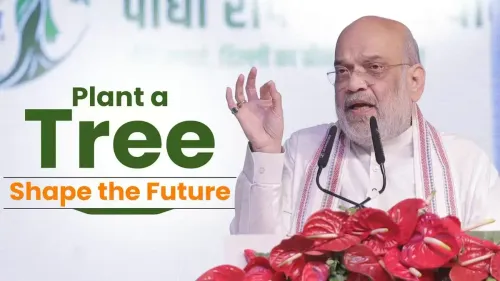
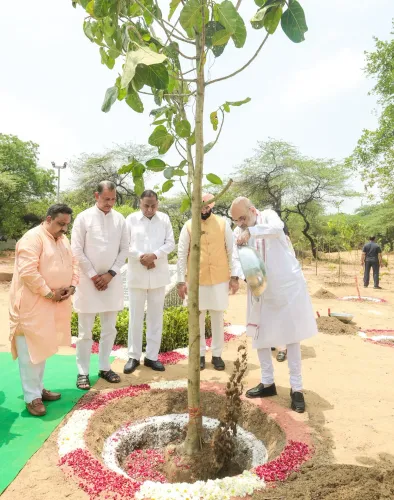
Union Home Minister Amit Shah on 7 July 2026 backed the Delhi government's Green Drive Portal, urging residents to collect free saplings and plant trees on available land during the monsoon season to realise the vision of a greener capital.
Key Takeaways
Union Home Minister Amit Shah on 7 July 2026 publicly endorsed the Delhi government's Green Drive Portal on X.
The portal offers free saplings to Delhi residents for plantation on available land.
Shah called on Delhiites to fulfil the pledge of a 'green Delhi' by planting trees wherever space permits.
The appeal coincides with the 2026 monsoon planting window , the most effective season for sapling survival.
India's Van Mahotsav tradition, dating to 1950 , and the National Mission for a Green India (2014) provide the broader policy backdrop.
Key metrics to watch include sapling distribution numbers and survival rates during the monsoon season.
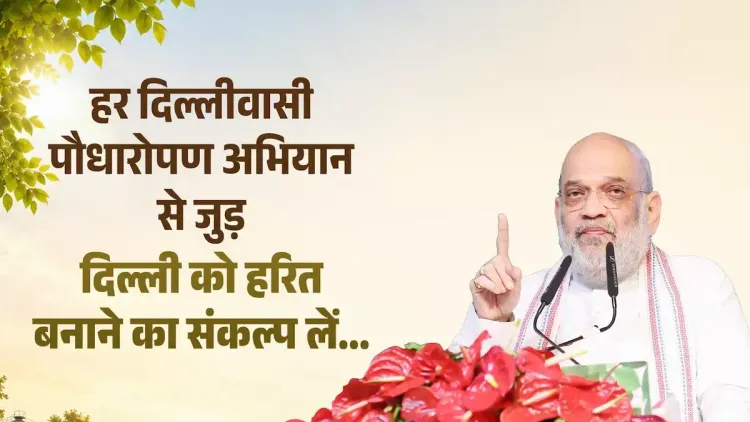
Union Home Minister Amit Shah on Tuesday, 7 July 2026, urged residents of the national capital to participate in the Delhi government's Green Drive Portal, a new initiative that offers free saplings to citizens for plantation on available land. Shah shared the appeal on X, calling on Delhiites to fulfil the pledge of a greener capital by planting trees wherever space permits.
In his post, Shah wrote: 'दिल्ली सरकार ने वृक्षारोपण के लिए ग्रीन ड्राइव पोर्टल शुरू किया है, जिससे मुफ़्त पौधे मिलेंगे।' ['The Delhi government has launched the Green Drive Portal for tree plantation, through which free saplings will be available.'] He added that Delhi residents should plant trees wherever land is available and make the vision of a 'green Delhi' a reality.
Context
The post marks a notable moment of federal alignment on an environmental issue: a senior Union Cabinet minister amplifying an initiative driven by the Delhi government, which is administered by the Aam Aadmi Party. The National Capital Territory of Delhi is governed jointly by an elected state government and the Union Ministry of Home Affairs, which Shah himself heads, making his endorsement both politically and administratively significant.
The appeal comes during the 2026 monsoon planting window, traditionally the most effective season for sapling survival in the Indo-Gangetic plain. India's annual tree-planting festival, Van Mahotsav, launched in 1950, has long anchored public greening campaigns in Delhi and across the country every July.
Policy Backdrop
India's National Mission for a Green India, approved in 2014 under the National Action Plan on Climate Change, set out to increase forest and tree cover as part of the country's climate commitments. Delhi has pursued a series of plantation drives — some court-mandated, others government-led — for over a decade, as the city grapples with chronic air pollution and shrinking urban green cover.
India's obligations under the Paris Agreement include expanding tree and forest cover to create an additional carbon sink. Urban plantation portals that digitise sapling distribution represent a newer, tech-enabled layer of these long-standing policy goals, aiming to lower friction for ordinary citizens who wish to participate.
Stakeholders and Impact
Delhi's roughly 3.3 crore residents stand as the primary beneficiaries of expanded urban green cover, which can reduce ambient temperatures, improve air quality, and support biodiversity. Urban local bodies and resident welfare associations are expected to play a key role in identifying available land for plantation and coordinating with the portal.
Shah's public backing could drive broader citizen awareness and uptake of the portal beyond the usual base of environmental volunteers. Cross-party endorsement of green initiatives, however rare in the current political climate, tends to lend added credibility and reach to civic campaigns.
What's Next
Observers will watch whether the Delhi government and the Union Ministry of Environment, Forest and Climate Change issue any joint coordination statement following Shah's post. Key metrics to track include the number of saplings distributed through the Green Drive Portal during the monsoon season and the survival rate of planted saplings — a figure that has historically varied widely in urban plantation drives across Indian cities.
Should the portal demonstrate measurable uptake, it could serve as a model for other state capitals seeking to scale citizen-led greening efforts within the broader framework of India's national climate commitments.
Point of View
And signals that environmental messaging can occasionally transcend partisan lines. The timing — peak monsoon, when sapling survival rates are highest — reflects an awareness of ecological windows that policy campaigns have historically exploited. More broadly, the post fits a pattern of central ministers using social media to claim credit or alignment on popular civic initiatives, regardless of which tier of government originated them. The real test will be whether this public nudge translates into measurable green cover gains or remains a seasonal gesture.
NationPress
7 Jul 2026
Frequently Asked Questions
What is the Delhi Green Drive Portal?
The Delhi Green Drive Portal is an initiative launched by the Delhi government that allows residents to register and receive free saplings for planting on available land, aimed at expanding the city's green cover.
How can Delhi residents get free saplings through the Green Drive Portal?
Residents can access the Green Drive Portal online, register their details and available planting location, and collect free saplings as offered by the Delhi government during the plantation drive.
Why did Amit Shah post about the Delhi Green Drive Portal?
Union Home Minister Amit Shah shared the initiative on X on 7 July 2026 to encourage Delhi residents to participate in tree plantation during the monsoon season and contribute to the goal of a greener capital.
What is Van Mahotsav and how does it relate to Delhi's tree plantation drives?
Van Mahotsav is India's annual tree-planting festival, launched in 1950, observed every July across the country including Delhi. It forms the historical backdrop to modern plantation campaigns like the Green Drive Portal.
What is India's National Mission for a Green India?
The National Mission for a Green India was approved in 2014 under the National Action Plan on Climate Change. It aims to increase forest and tree cover across the country as part of India's climate commitments, including obligations under the Paris Agreement.