Amit Shah Calls CM Naidu Over Cyclone Murasu Relief

Synopsis
Union Home Minister Amit Shah telephoned Andhra Pradesh CM Nara Chandrababu Naidu to assess damage from Cyclones Arnab and Murasu. Naidu briefed Shah on the compounded crisis, thanked New Delhi for deploying a central team, and formally requested adequate central assistance for the cyclone-hit state.
Key Takeaways
Union Home Minister Amit Shah called CM Nara Chandrababu Naidu on November 3, 2026 to discuss cyclone damage and relief efforts.
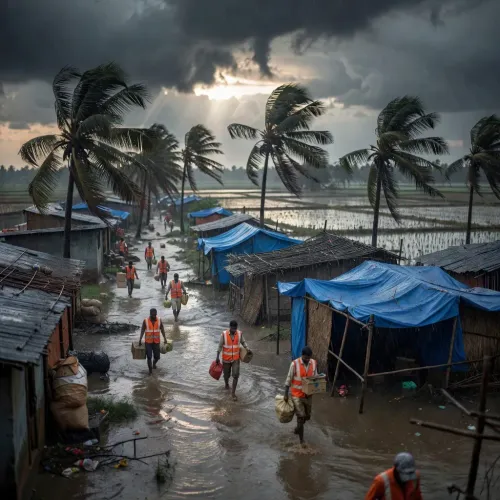
Andhra Pradesh was struck by Cyclone Arnab and then almost immediately by Cyclone Murasu , compounding the humanitarian crisis.
CM Naidu briefed Shah on the damage situation and the state's ongoing relief operations following both storms.
Naidu thanked the Centre for dispatching a central assessment team to survey the affected areas.
The Chief Minister formally requested adequate central financial and material assistance under the NDRF framework.
The central team's field report is the key document that will determine whether additional relief is sanctioned by New Delhi.
With Andhra Pradesh reeling from back-to-back cyclones, Union Home Minister Amit Shah picked up the phone on Tuesday, November 3, 2026 to speak directly with Chief Minister Nara Chandrababu Naidu — a signal that New Delhi is closely tracking the state's mounting crisis.
Two Cyclones, One Battered Coastline
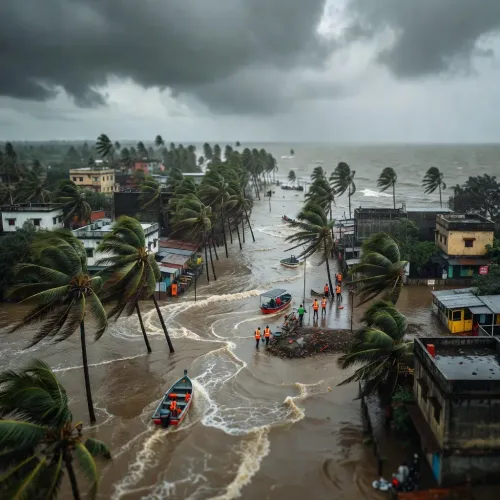
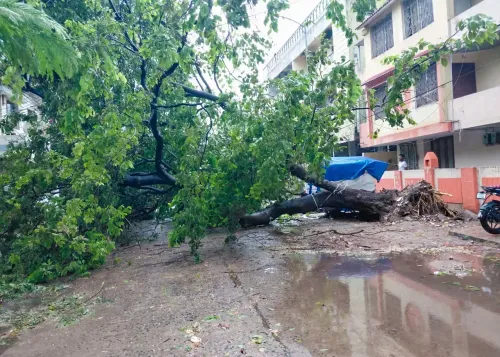
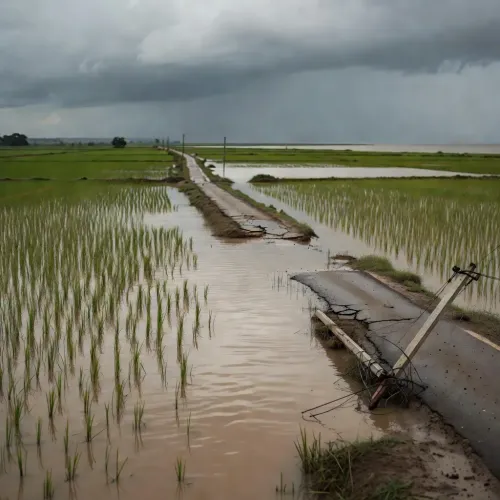
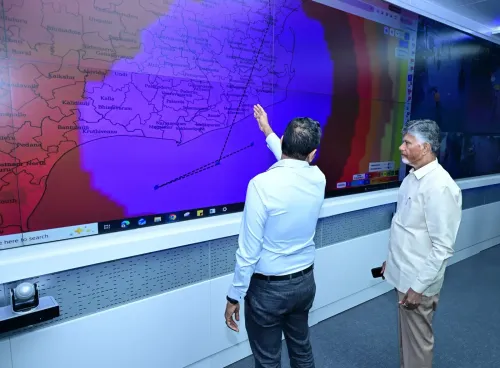
The call came as Andhra Pradesh grappled with the compounded fury of Cyclone Arnab followed almost immediately by Cyclone Murasu — successive strikes that have stretched the state's disaster-response machinery to its limits. CM Naidu walked the Home Minister through the ground situation: the scale of damage from both systems, the ongoing relief operations, and the logistical strain of responding to a second major cyclone before recovery from the first had even begun.
CM Naidu's Two Requests to the Centre
Naidu conveyed two specific points to Shah during the call. First, he expressed gratitude for New Delhi's decision to dispatch a central assessment team to survey the damage — a step that typically precedes the release of funds under the National Disaster Response Fund (NDRF) framework. Second, he formally urged the Centre to step in with 'adequate assistance' given the extraordinary burden of consecutive cyclone strikes, according to the post from the Chief Minister's Office of Andhra Pradesh.
Why the NDRF Framework Matters Here
India's coastal states routinely trigger the NDRF mechanism after major weather events, but back-to-back cyclones present a harder case — damage from the first event has not been fully assessed before the second compounds it. Andhra Pradesh's coastline along the Bay of Bengal has lived this cycle before: after Cyclone Hudhud in 2014, the Centre extended a special assistance package to the then-newly formed state. That precedent will likely inform how quickly New Delhi moves this time. The central team's forthcoming field report will be the critical document that determines whether additional financial or material relief flows to the state.
What Comes Next
All eyes now turn to the central assessment team's report and any subsequent cabinet-level decision on relief. For millions of coastal residents already displaced or impacted by the twin storms, the speed of that decision is not a policy abstraction — it is the difference between a swift recovery and a prolonged humanitarian struggle.
Point of View
Not routine monsoon management. For the TDP-led state government, securing swift central funding is both a governance imperative and a political priority — it demonstrates to coastal constituents that the state's ruling alliance retains influence in New Delhi. The dispatch of a central assessment team is standard procedure, but its speed and the scope of its mandate will reveal how seriously the Union government weighs Andhra Pradesh's compounded loss. Precedents like the Hudhud package of 2014 set a high bar that the state will almost certainly invoke in its formal relief memorandum.
NationPress
3 Nov 2026
Frequently Asked Questions
What did Amit Shah and Chandrababu Naidu discuss in their phone call?
They discussed the damage caused by Cyclones Arnab and Murasu in Andhra Pradesh, the ongoing relief operations, the deployment of a central assessment team, and the state government's request for adequate central financial assistance.
What is Cyclone Murasu and where did it hit?
Cyclone Murasu is a tropical storm that struck Andhra Pradesh following closely after Cyclone Arnab, both causing significant damage along the state's Bay of Bengal coastline.
What is the National Disaster Response Fund and how does Andhra Pradesh use it?
The National Disaster Response Fund (NDRF) is a central government fund used to provide financial assistance to states hit by natural disasters. Andhra Pradesh has formally requested central support under this framework following the back-to-back cyclone strikes.
Has the Centre sent a team to assess cyclone damage in Andhra Pradesh?
Yes. CM Naidu confirmed during his call with Amit Shah that a central assessment team had already been dispatched to Andhra Pradesh, and he thanked the Union government for the step.
What is the precedent for central aid to Andhra Pradesh after cyclones?
After Cyclone Hudhud struck Andhra Pradesh in 2014, the Centre extended a special financial assistance package to the state — a precedent the state government is likely to cite in its current relief request.