Amit Shah: Delhi to convert dairy dung into gas, end Yamuna dumping
Synopsis
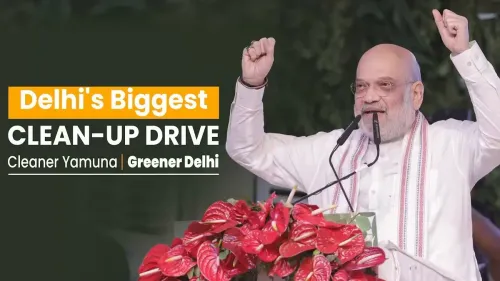
Union Home Minister Amit Shah has accused the Kejriwal-led AAP government of dumping 1,500 metric tonnes of cattle dung daily into the Yamuna, and announced a new Delhi government pact with NDDB to convert that waste into biogas and organic fertiliser — pledging zero dung discharge into the river.
Key Takeaways
Union Home Minister Amit Shah posted on July 7, 2026 accusing the previous Kejriwal government of allowing 1,500 metric tonnes of cattle dung to enter the Yamuna daily.
The current Delhi government has signed an agreement with the National Dairy Development Board (NDDB) to process the dung into biogas and natural fertiliser.
Shah pledged that 'not a single kilogram of dung' will henceforth be discharged into the Yamuna.
The initiative aligns with the central government's GOBAR-DHAN scheme (launched 2018 ) and the Namami Gange programme (launched 2014 ).
Key beneficiaries include Yamuna basin residents and Delhi's urban dairy owners , who will be required to route waste through the new system.
Formal agreement details — timelines, plant locations, and funding — are yet to be made public.
Union Home Minister Amit Shah on Tuesday, July 7, 2026, accused the previous Arvind Kejriwal-led government of allowing 1,500 metric tonnes of cattle dung to be discharged into the Yamuna every day, and announced that the current Delhi government has signed an agreement with the National Dairy Development Board (NDDB) to convert that waste into biogas and organic fertiliser.
Context
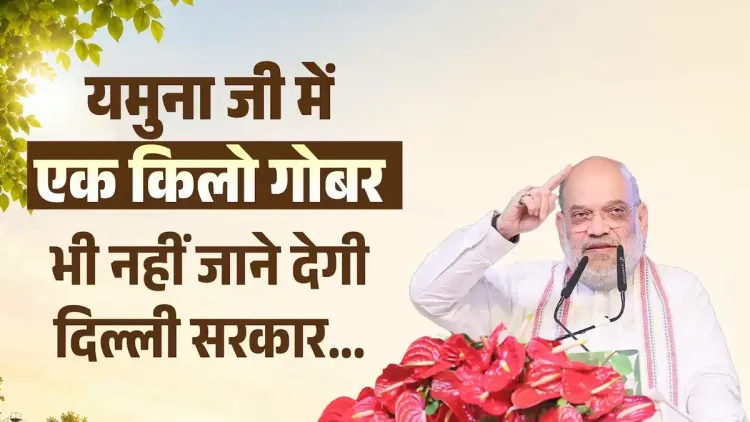
Shah posted in Hindi on X, stating: 'Kejriwal and Company har roz 1,500 metric tonne gobar Yamuna ji mein dalti thi' ('Kejriwal and Company used to dump 1,500 metric tonnes of dung into the Yamuna every day'). He added that the new Delhi government has now partnered with the NDDB so that the same dung will be used to produce gas and natural fertiliser, with 'not a single kilogram of dung' going into the river henceforth.
The claim targets former Chief Minister Arvind Kejriwal and his Aam Aadmi Party (AAP), whose administration governed Delhi until the BJP returned to power in the capital. The Yamuna's pollution load — driven by untreated sewage, industrial effluent, and dairy waste from the city's large urban dairy clusters — has been a persistent political flashpoint.
Policy Backdrop
The NDDB, a statutory body under the Union Ministry of Fisheries, Animal Husbandry and Dairying, has been involved in waste-to-value projects that convert cattle dung into biogas and bio-fertiliser. The GOBAR-DHAN scheme, launched by the central government in 2018, promotes exactly this model — community-level biogas plants that treat animal and agricultural waste as an economic resource rather than a pollutant.
The broader Namami Gange programme, operational since 2014, has sought to reduce pollution entering the Ganga basin, which includes the Yamuna as a major tributary. The NDDB–Delhi government partnership described by Shah represents an extension of these frameworks from rural clusters to the high-density urban dairy concentrations within the National Capital Territory.
Stakeholders and Impact
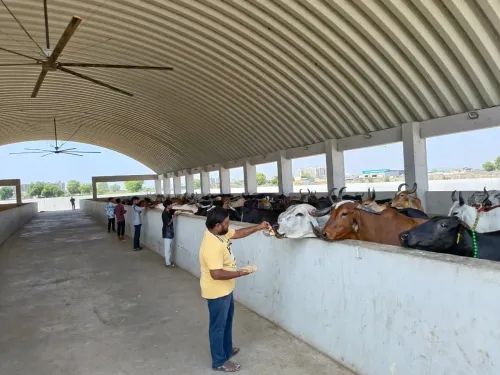
Delhi's urban dairy owners — who operate thousands of small and large cattle units across the city — stand to be directly affected by any new waste-management mandate arising from the agreement. Residents living along the Yamuna in Delhi, who have long borne the burden of the river's degraded water quality, are the primary intended beneficiaries.
If implemented at scale, channelling 1,500 metric tonnes of daily dung output into biogas plants would reduce a significant organic load from the river while generating clean fuel and fertiliser for local use — a dual environmental and economic dividend aligned with the circular-economy goals of GOBAR-DHAN.
What's Next
The formal details of the NDDB–Delhi government agreement — including timelines, plant locations, and investment commitments — are yet to be made public. Observers will watch for Central Pollution Control Board data on Yamuna water-quality parameters at Delhi monitoring stations as a benchmark for measuring the initiative's real-world impact.
The announcement places Yamuna clean-up squarely at the centre of the BJP's governance narrative in Delhi, setting up a direct contrast with the AAP's decade-long tenure and its record on river pollution — a debate that is likely to intensify as implementation details emerge.
Point of View
The messaging is designed to stick with voters who have grown frustrated by years of unfulfilled clean-Yamuna promises. The NDDB tie-up also lets the BJP connect a local urban issue to its existing national schemes — GOBAR-DHAN and Namami Gange — reinforcing a narrative of policy continuity from the Centre to the state. The real test, however, will be whether implementation data from pollution monitoring stations validates the claim, or whether the announcement joins a long list of Yamuna pledges that outlasted their political moment.
NationPress
7 Jul 2026
Frequently Asked Questions
Why was cattle dung being dumped into the Yamuna in Delhi?
Delhi's large urban dairy clusters historically lacked adequate waste-management infrastructure, leading to dung being discharged into drains that flow into the Yamuna. Amit Shah has attributed this specifically to the governance failures of the previous Kejriwal-led AAP administration.
What is the NDDB and what role will it play in cleaning the Yamuna?
The National Dairy Development Board (NDDB) is a statutory body under the Union Ministry of Fisheries, Animal Husbandry and Dairying. Under the new agreement with the Delhi government, it will help convert cattle dung into biogas and organic fertiliser instead of allowing it to enter the river.
What is the GOBAR-DHAN scheme?
GOBAR-DHAN (Galvanising Organic Bio-Agro Resources Dhan) is a central government scheme launched in 2018 that promotes the conversion of cattle dung and agricultural waste into biogas and bio-fertiliser through community plants, treating animal waste as an economic resource.
How much dung was allegedly going into the Yamuna every day?
According to Amit Shah's post, 1,500 metric tonnes of cattle dung were being discharged into the Yamuna daily under the previous Kejriwal government. This specific figure has not yet been independently verified from attributable public records.
What is the Namami Gange programme?
Namami Gange is a central government flagship programme launched in 2014 to reduce pollution in the Ganga river basin, which includes the Yamuna as a major tributary, through drain interception, sewage treatment, and industrial effluent control.